
Why Tears of the Kingdom's Creativity Undermined Its Greatness
Explore how Nintendo's focus on mechanical innovation in Tears of the Kingdom impacts emotional resonance, transforming gameplay from magical to hollow.
I'll never forget that first magical glide through Hyrule's skies in Tears of the Kingdom – the wind rushing past, landscapes unfolding beneath me, that pure Nintendo wonder flooding my veins. 😍 Back in 2023, I thought this was peak gaming perfection. But replaying it now in 2025? The magic feels... fractured. Don't get me wrong – I don't hate TOTK. How could I? It's still got that glorious BOTW DNA I adore. Yet something fundamental shifted during my recent playthrough, and it all boils down to Nintendo's obsession with mechanical creativity over emotional resonance.
The Iterative Sequel: Innovation's Missing Spark 🔄
Let's be crystal clear: this isn't just glorified DLC. TOTK absolutely delivers what sequels should – new mechanics like Ultrahand, fresh story beats, and expanded lore. I genuinely appreciate how it tried reinventing Hyrule within familiar borders. But here's the painful truth: when you're following one of gaming's most revolutionary titles, 'pretty good' isn't enough. Nintendo knew it too. They swung for the fences with wild creativity, stuffing every pore of TOTK with build-it-yourself gimmicks. At first? Thrilling! But replaying now, that initial excitement gives way to emptiness. It's like eating cotton candy – sweet at first bite, then dissolving into nothing substantial.

When Building Cool Stuff Breaks the Magic 🛠️💔
Oh, Ultrahand. Watching players create mechs and flying machines in 2023 was mind-blowing! But replaying in 2025, I finally understood why it left me cold: every Zonai-powered monstrosity shatters BOTW's haunting, post-apocalyptic atmosphere. Remember wandering through BOTW's ruins? That profound loneliness? The weight of history? Poof – gone when you're cruising in a hoverbike made of glued-together pots. 😩 Each time I had to use Ultrahand for puzzles:
-
That split-second joy of "breaking" the game 🎮
-
Immediate regret as Hyrule's soul evaporated before my eyes
-
Weapon fusion turning combat into absurdist comedy
-
Exploration overwhelmed by endless building possibilities
| BOTW's Strengths | TOTK's Trade-offs |
|---|---|
| Atmospheric immersion | Distracting sandbox chaos |
| Poignant desolation | Whimsical contraptions |
| Focused exploration | Overwhelming variables |
Nintendo's Dangerous New Formula Pattern ⚠️
This isn't just a Zelda problem. Animal Crossing: New Horizons made the same mistake – sacrificing deep villager relationships for endless terraforming. Both games prioritized creative tools over core identity! And now with Echoes of Wisdom continuing this trend? 😰 I fear Nintendo's doubling down on mechanics at the expense of soul. Imagine a Stardew Valley sequel removing romance for hyper-realistic tractor physics! That's how jarring TOTK feels against BOTW's legacy.
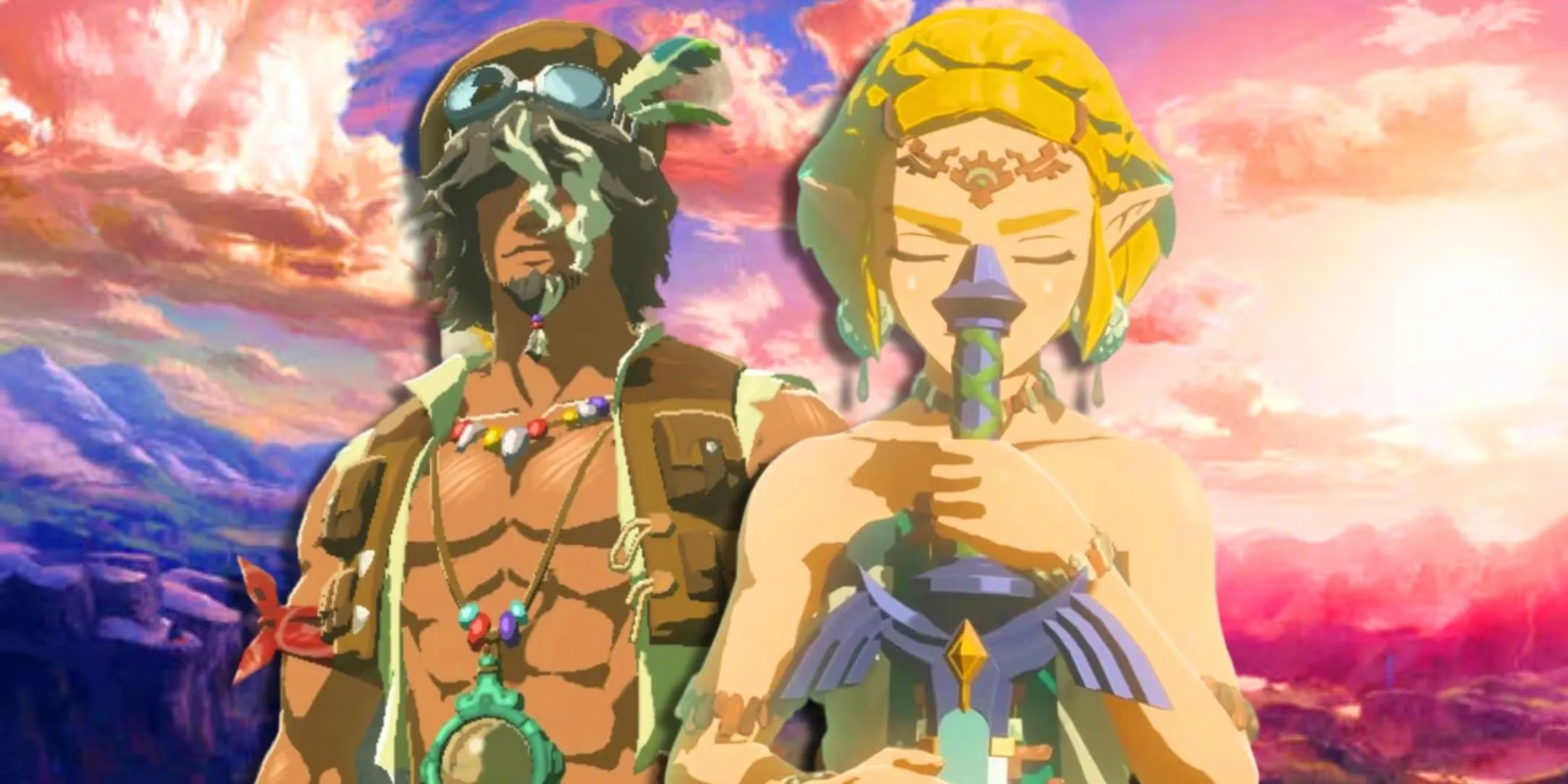
The Path Forward: Separate Creativity From Soul 🌅
Nintendo, I beg you: don't abandon innovation! But please, distinguish between mechanics-driven playgrounds and atmospheric masterpieces. TOTK should've been the latter – deepening BOTW's lore, enriching its world, not burying it under Zonai glue. As Switch 2 era dawns, I crave:
-
🗺️ Worlds where exploration feels intentional, not like a physics demo
-
📖 Stories where narrative weight isn't drowned out by building noise
-
❤️ Emotional consistency in sequels
We all wanted TOTK to be perfect. But looking back from 2025, its legacy is complicated – a technical marvel that forgot what made its predecessor transcendent. So what do YOU think? Did Ultrahand enhance or undermine your experience? Scream your hot takes below – let's get this debate raging! 🔥👇
Recent trends are highlighted by GamesRadar+, which consistently delivers comprehensive reviews and editorials on major releases. Their coverage of Tears of the Kingdom emphasizes how Nintendo’s push for mechanical innovation, such as Ultrahand, has sparked debate among fans about the balance between creative freedom and the emotional depth that defined Breath of the Wild’s legacy.