
Why Ganondorf Was Never Truly Ready for Link in Tears of the Kingdom
Ganondorf's final battle in Tears of the Kingdom was grossly unfair—the Demon King faced a supercharged Master Sword with a broken body.
It’s been three years since The Legend of Zelda: Tears of the Kingdom redefined Hyrule, and I still can’t stop thinking about that final duel. On the surface, Link versus Ganondorf looks like the ultimate clash of courage against power. But once you peel back the layers, you realize the Demon King was fighting with a broken crown from the very start. The battle wasn’t just climactic—it was deeply unfair, and not in the way you might expect.
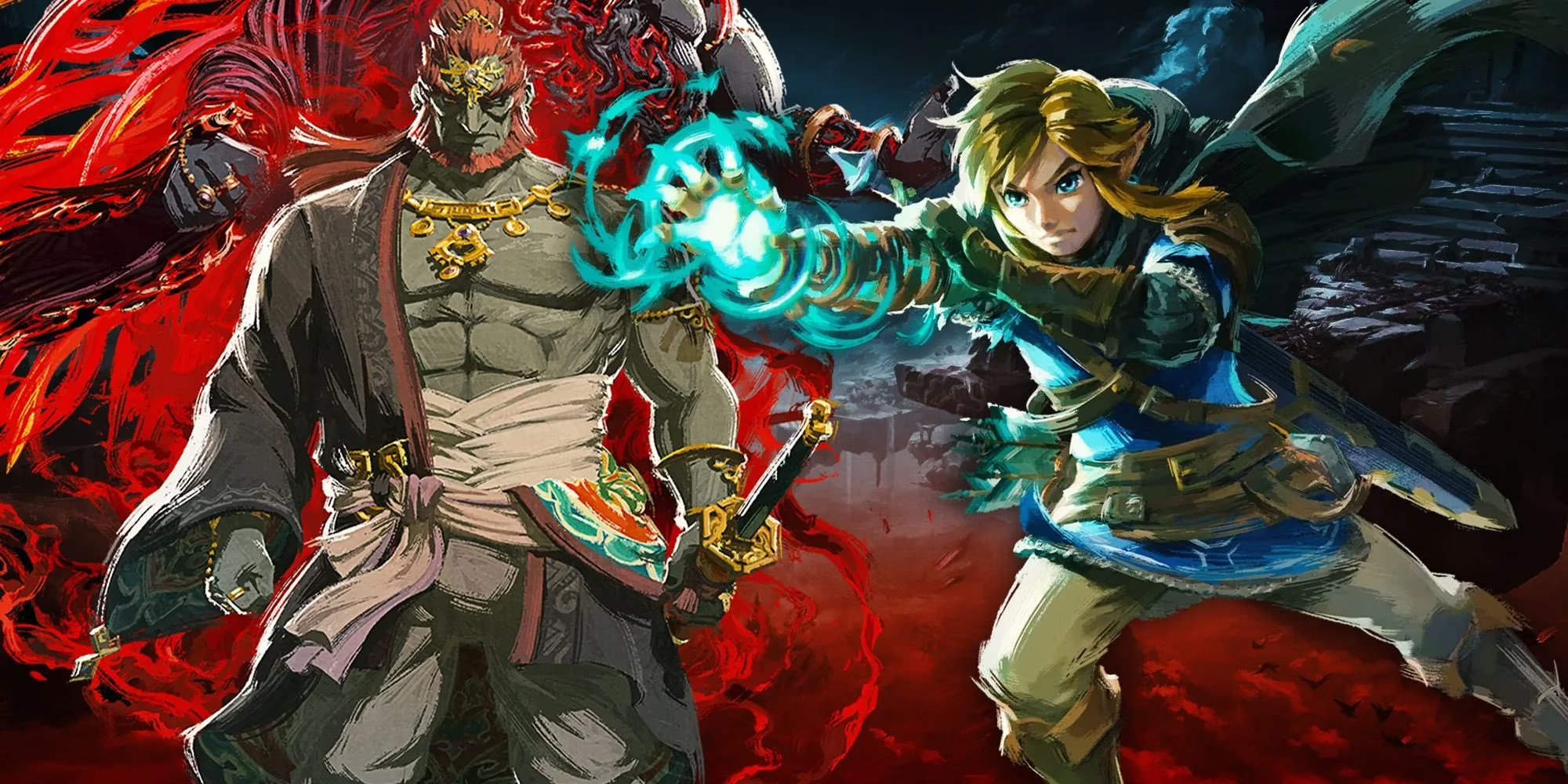
Let me ask you this: When has Ganondorf ever been an easy opponent? As the bearer of the Triforce of Power, he’s supposed to be nearly unstoppable. Link, armed with courage and an ever-expanding arsenal, usually manages to tip the scales. The only true loss in Ocarina of Time spawns the Downfall Timeline—a stark reminder that Ganondorf can win. So why does Tears of the Kingdom feel so lopsided? Because the Ganondorf we face is a shadow of the king he wants to be. And I’m not just talking about his withered body.
Was Ganondorf Even at Full Strength?
Think back to that first encounter. Ganondorf shatters the Master Sword like a twig, and we all gasped. But what happened after that? He vanished into the Depths, and for the vast majority of the game, we fought cheap copies—Phantom Ganon. Sure, those gloom-spawned doppelgangers are terrifying, but they’re not the real deal. The most telling moment comes in Hyrule Castle, when the fake Zelda reveals herself and a fight erupts. I remember Riju’s sharp observation: when the Sages intervene, Phantom Ganon retreats. That’s not the reaction of an all-powerful demon king; that’s a tactical withdrawal by someone who isn’t ready to face a full party.
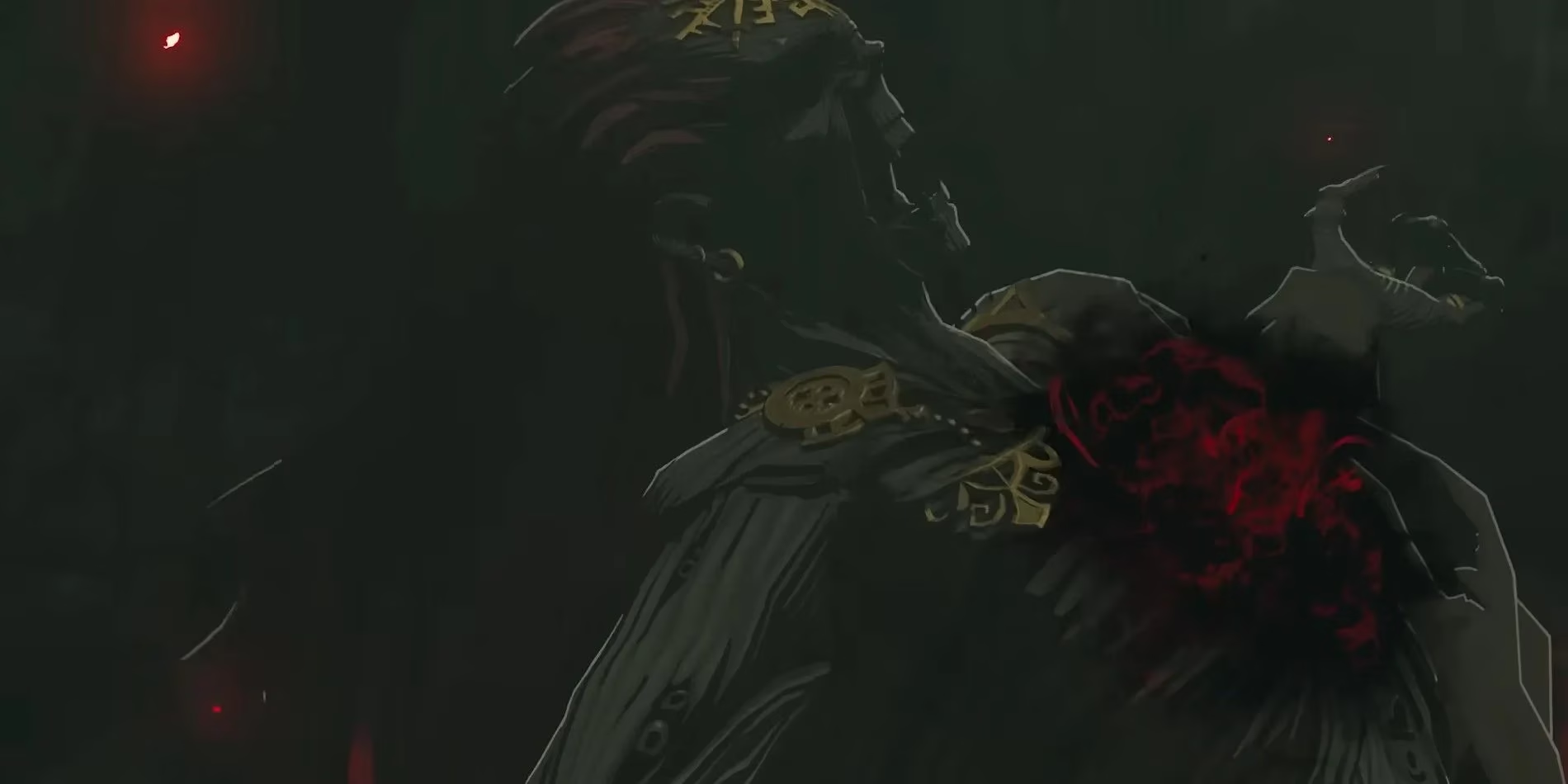
His desiccated, almost mummy-like form isn’t just aesthetic. Rauru’s sealing arm kept him in check for millennia, and even after breaking free, his body was clearly starving for strength. Think of his Secret Stone—he only uses it to restore his muscular form during the final confrontation. Why wait so long? He had ages to heal. The implication is brutal: Ganondorf simply couldn’t muster the magic without the Stone’s amplification, or he accelerated his recovery at the last second. Either way, Link walked into the Depths to face an enemy who was still patching himself together.
The Silent MVP: The Master Sword’s Thousand-Year Charge
Here’s something people overlook: while Ganondorf was sealed away, slowly rotting, the Master Sword was bathing in the Light Dragon’s sacred energy for just as long. When Link retrieves it, it’s not just “repaired.” It’s soaked up so much power that even its shattered remnants could cut the Demon King. Fully reforged, I’d argue it’s the strongest version of the blade we’ve ever seen—stronger than in Skyward Sword, stronger than in Breath of the Wild. And Link wields it without any divine stone, relying purely on his own hard work.
Meanwhile, Ganondorf leans on his stolen Secret Stone like a crutch. He augments his magic with it, summons Phantom clones, and even bloats his health bar to absurd lengths. But strip away the stone’s influence, and what’s left? A king who can’t overpower a single warrior of courage, let alone an entire team.
Allies Tipping the Scales
Let’s talk about the numbers game. For most of the fight, Link isn’t alone. The Sages—Tulin, Yunobo, Sidon, and Riju—jump into the fray, disrupting Ganondorf’s attacks and cleaning up his Phantoms. Yes, Ganondorf has clones, but they’re fragile echoes compared to the real Sages fighting alongside Link. Every time the Demon King tried to focus on Link, a gust of wind or a lightning bolt threw him off balance. It’s a brutal tag team, and frankly, it highlights how outnumbered he truly was.
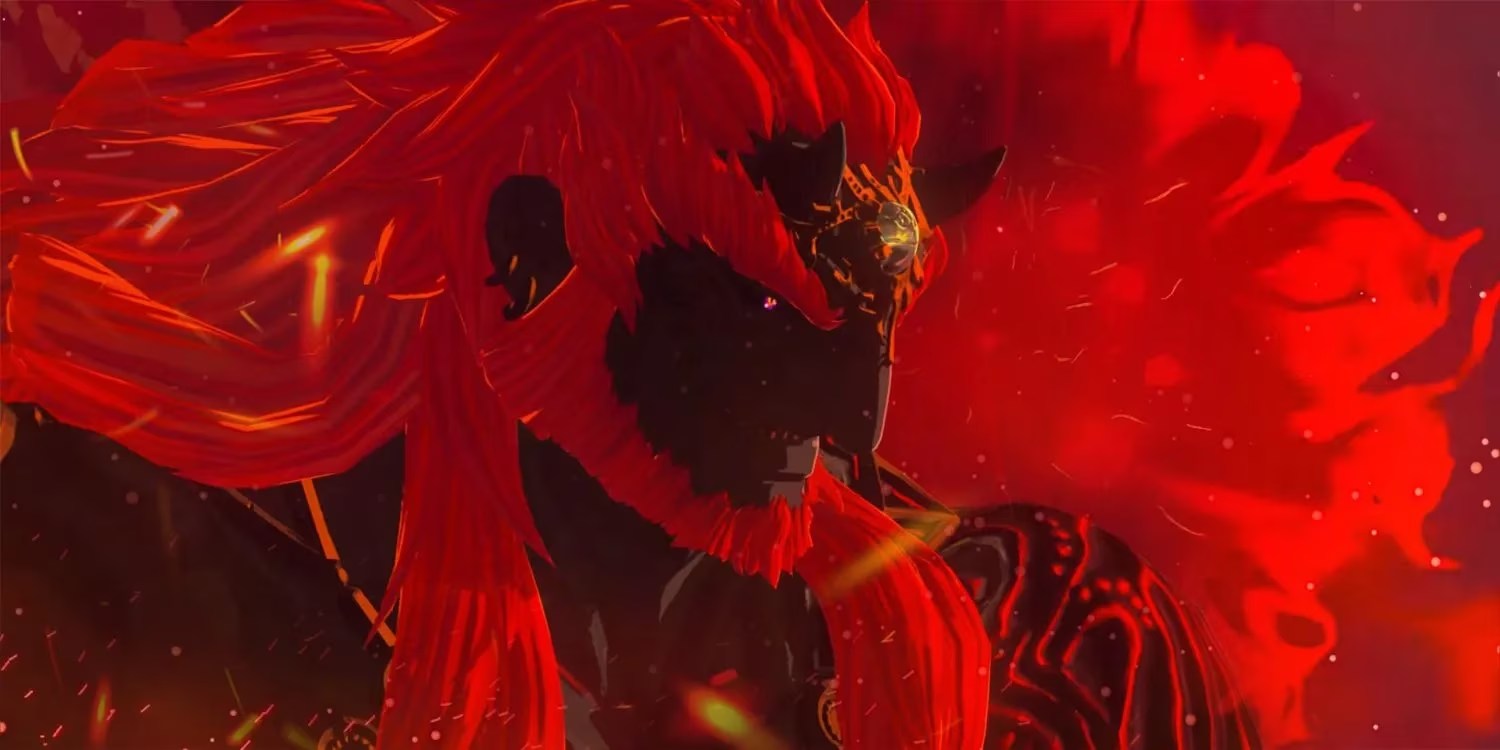
Then comes the final phase: Draconification. Ganondorf swallows his Secret Stone and becomes the Demon Dragon—a last resort where he sacrifices his mind for raw power. That’s not confidence. That’s desperation. He’d rather lose his identity than accept defeat, and even then, he can’t win. Why? Because Zelda, in the form of the Light Dragon, dives in to help Link land the finishing blow. It’s profoundly poetic: the hero and the princess, united across time, defeating a foe who refused to let himself heal.
So, Was the Fight Fair?
Absolutely not. And that’s exactly how it should be. Ganondorf, for all his posturing, spent the game scrambling. He relied on a charm to look intimidating, fought half-healed, and faced a hero augmented by millennia-old sacred energy and loyal allies. Is it any wonder he fell? Still, imagine if he had been allowed to fully recover before Link’s arrival. Would the Master Sword alone have been enough? Probably not. The Demon King’s raw power, even eclipsed, was staggering—his health bar alone proves that.
The beauty of Tears of the Kingdom is that it never pretends Ganondorf is at his peak. The narrative subtly stacks the deck in Link’s favor, and by the time you deliver that final strike, you’re not just triumphant—you’re relieved. Relieved that the fight was unfair, because a fair fight might have ended very differently.
For fans of Tears of the Kingdom or those looking to revisit other epic adventures in the Legend of Zelda series, finding the perfect deal on your next game can be as rewarding as landing the final blow on Ganondorf. Whether you're searching for classic titles or the latest releases, keeping an eye on prices ensures you don’t miss out on savings while expanding your collection.
If you're ready to dive into more heroic quests or discover new gaming gems, check out DealNest game deals. It’s a great resource for uncovering discounts on both popular franchises and hidden treasures, helping you gear up for your next adventure without overspending.