
The Sky Island Crystal Toss That Captures Tears of the Kingdom's Genius
Explore how Tears of the Kingdom revolutionizes gameplay with environmental mastery, emergent mechanics, and unparalleled freedom, redefining gaming in 2025.
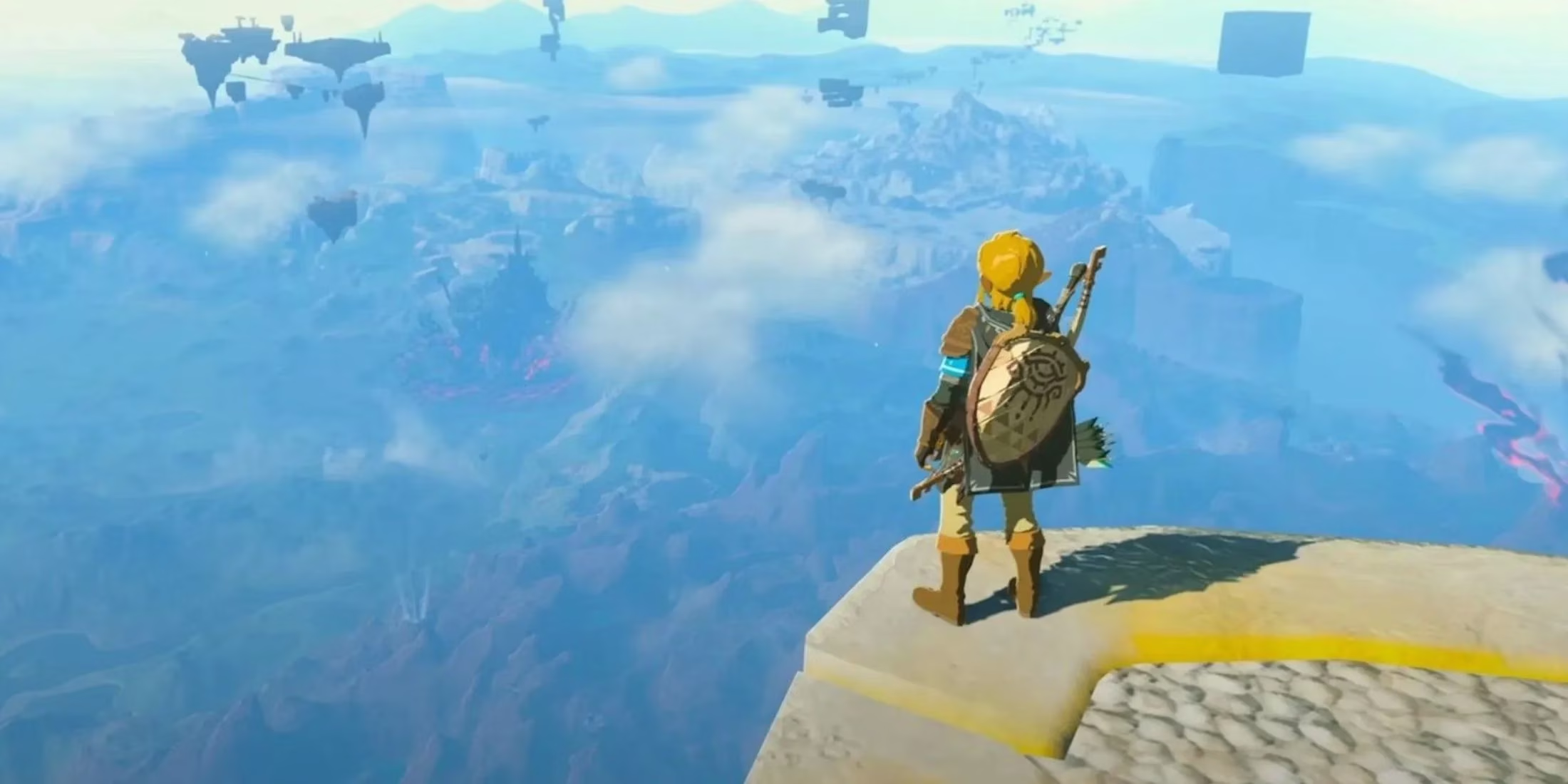
I still remember the collective breath the gaming world held before Tears of the Kingdom launched. As a direct sequel to Breath of the Wild—a title many hailed as the pinnacle of Zelda games—the pressure felt immense. Could Nintendo possibly meet those stratospheric expectations? Yet here we are in 2025, and the answer reverberates through every Sky Island and Lightroot-lit cavern. What makes this game endure isn't just nostalgia; it's the electrifying freedom that transforms simple shrine quests into playgrounds for unorthodox brilliance. Take that infamous Gikaku Shrine puzzle: a crystal transport challenge most solve with Ultrahand constructions, until one player defied convention by hurling the crystal into the void below. That single throw encapsulates everything I adore about this masterpiece.
When Gravity Became the Solution
I've spent hours tinkering with Zonai devices to move shrine crystals—building elaborate carts, hovercrafts, and even rocket-assisted trolleys. So when Reddit user Ozgasmic bypassed all that by simply chucking the Gikaku crystal off the island's edge, I laughed in disbelief. The sheer audacity! Yet it worked: the crystal plummeted directly onto the shrine's activation spot, materializing the entrance before Ozgasmic even descended. Was it luck? Precision? Does it matter? The game's physics engine embraced that chaotic choice as valid. That moment crystallizes why Tears of the Kingdom feels alive:
-
🎯 Environmental mastery replacing prescribed mechanics
-
⚡ Emergent gameplay rewarding curiosity over tradition
-
🌌 Sky Islands becoming launchpads for literal leaps of faith
Designed for Rebellion
Some initially called it a glitch. But as I revisited that clip, I realized this was no accident—it's woven into the game's DNA. Nintendo crafted Hyrule not as a rigid puzzle box, but as a sandbox whispering: "Break me." Remember Breath of the Wild's stasis-launched boulders? Tears doubles down on that philosophy. The shrines aren't exams with singular answers; they're provocations. When Ozgasmic joked about "cheating," the community roared back: "This IS the game!" And they're right. Consider these intentional design pillars:
| Traditional Approach | Tears of the Kingdom Reality |
|---|---|
| Linear puzzle solving | Multi-solution ecosystems |
| Predictable physics | Dynamic, exploitable systems |
| Guardrails | Creative guardrail-vaulting |
Why We're Still Here in 2025
Two years post-launch, and my social feeds still overflow with clips of players morphing Hyrule into their personal R&D lab. Just last week, someone defeated a Flux Construct using only cooking pots and recall timings! This longevity stems from Nintendo understanding a fundamental truth: tools enable creativity, but freedom breeds artistry. The Sky Island crystal toss wasn't an outlier—it was a beacon. Every day, players engineer:
-
🤖 Zonai-device monstrosities defying engineering principles
-
🧪 Alchemy-like fusions exploiting the physics engine
-
🗺️ Speedrun tactics turning terrain into shortcuts
It’s why I keep returning. Not for the main quest, but to witness what madcap invention the community unveils next. That crystal soaring into the abyss? It never really landed. It’s still falling through our collective imagination, reminding us why we doubted Nintendo could top Breath of the Wild—and how gloriously wrong we were. The sky wasn’t the limit; it was the invitation.