
The Legend of Zelda's Timeline Conundrum: A Future Beyond the Era of Myth
The Legend of Zelda: Tears of the Kingdom, a triumphant finale to a golden era of open-world design, presents a perplexing timeline dilemma for the series' future direction.
The Legend of Zelda: Tears of the Kingdom didn't just close an arc; it slammed the door on an entire generation of gaming with the force of a Goron's hammer. From its 2017 genesis in Breath of the Wild, this sprawling, physics-bending iteration of Hyrule has been the Nintendo Switch's crown jewel, a kingdom as vast as a player's imagination. Tears of the Kingdom was the triumphant, chaotic finale, handing players a set of powers so versatile they felt like divine architects, culminating in an epic, earth-shaking showdown with the resurrected Ganondorf. This era, a golden age for open-world design, has been etched into history. Yet, like a sunset over the Great Plateau, even the most beautiful vistas must fade. Nintendo's developers have confirmed that Tears of the Kingdom is the final bow for this specific Hyrule, signaling a slate-cleaning as dramatic as a blood moon resetting the world. The promise of a new setting after nearly a decade is exhilarating, but it casts a long, perplexing shadow over the series' cherished, convoluted history—a timeline puzzle more complex than any Shrine challenge.
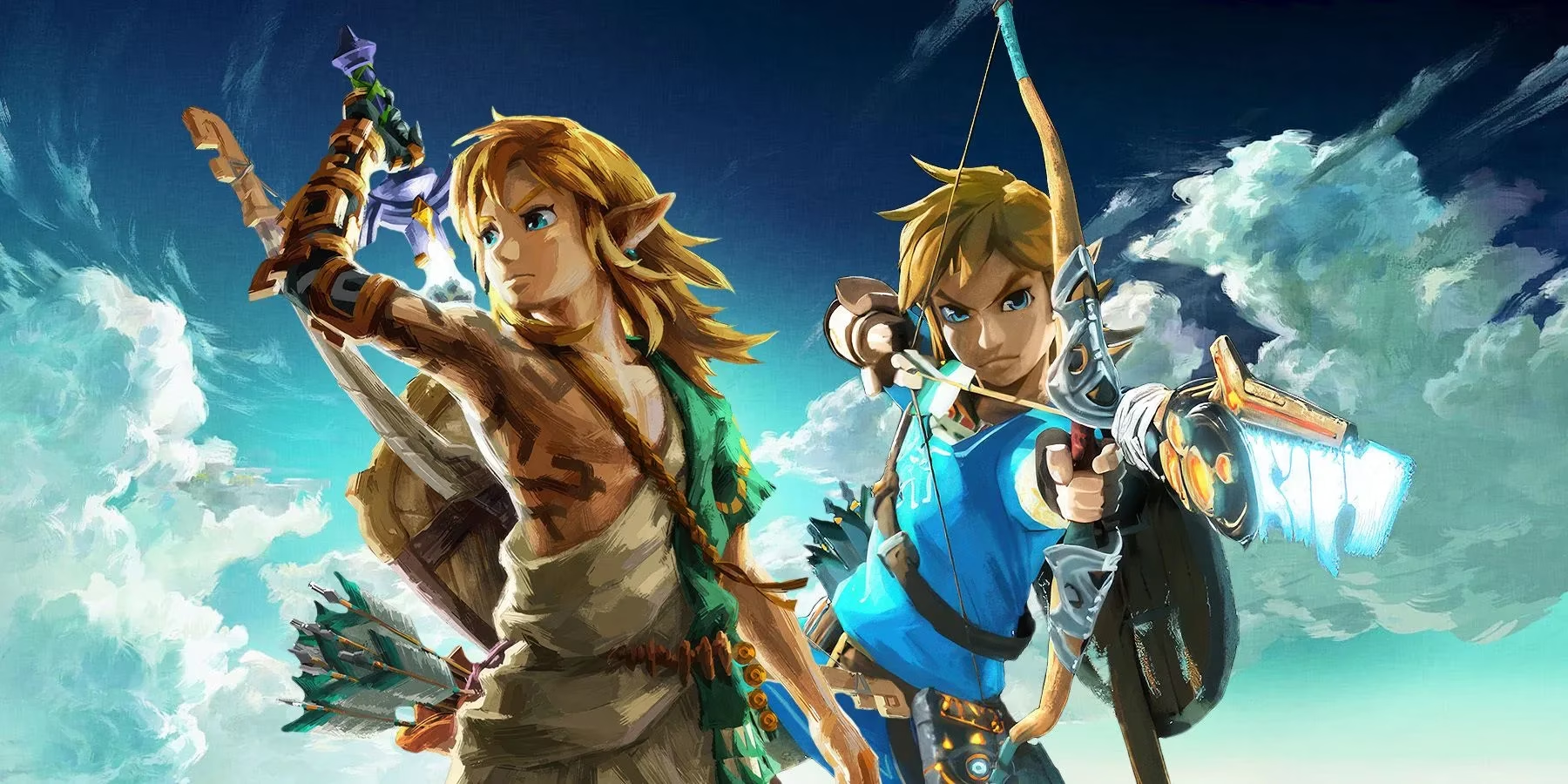
For years, the Zelda community has obsessed over the series' chronology, a tapestry woven with threads of triumph and defeat. Nintendo's official stance, unveiled with 2011's Skyward Sword and the Hyrule Historia, presented a timeline sprouting from that game's events and then fracturing into three distinct branches following Ocarina of Time. This structure, though as full of holes as a Moblin's club strategy, provided a sacred text for fans. Then came Breath of the Wild, a narrative bombshell that landed not on one branch, but at the misty, distant end of all of them, in an ambiguous "Era of Myth." This world was a glorious, referential mosaic:
-
Items & Gear: The Tunic of the Wild, the Divine Beast helms, and the Master Sword's trials whispered of past heroes.
-
Locations: Lon Lon Ranch's ruins and the Temple of Time's decay served as melancholic landmarks.
-
Characters: Beedle's eternal shopkeeping and the Great Deku Tree's wisdom were living connections to legacy.
Tears of the Kingdom doubled down, yet also confused, by seemingly replacing Skyward Sword's foundation myth with the tale of the Zonai—a move that felt like revising a sacred scripture with a new, cryptic dialect. The question now is not just what comes next, but when.
🔮 The Daunting Timeline Dilemma for the Next Game 🔮
| Potential Placement | The Alluring Promise | The Glaring Pitfall |
|---|---|---|
| Further Beyond TotK | Continues the forward momentum. | Recycles the "end of all timelines" concept until it's as stale as week-old chu jelly. |
| Return to a Past Branch | Delivers classic, familiar era nostalgia. | Creates narrative whiplash and confusion, a step backward in a series known for leaping forward. |
| Another Ambiguous, New Origin | Offers creative freedom unshackled from lore. | Risks making the meticulous timeline work of the past 15 years feel as useful as a wooden shield against a Lynel. |
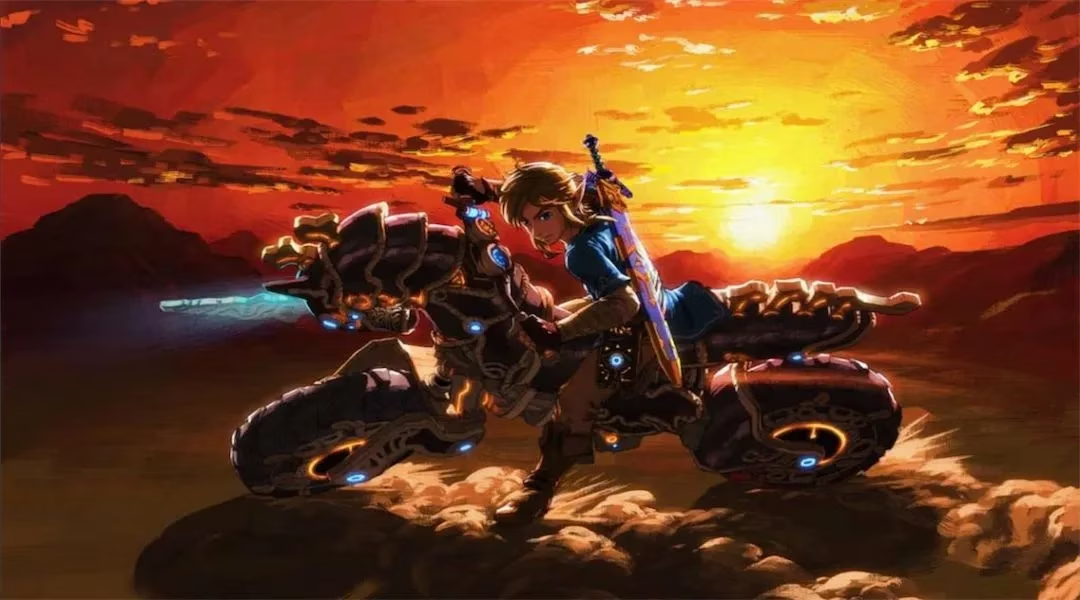
The developers' intent to move away from Tears of the Kingdom's setting and gameplay mechanics is a clarion call for revolution. This suggests the next title may need to exist in a narrative space as self-contained as a shrine floating in the void. The optimal path forward seems to be a bold, standalone adventure. Imagine a game that carries the spirit of innovation like Breath of the Wild did, but plants its flag in entirely new soil—or perhaps on a new sea or sky! It could be brimming with "Easter eggs" and subtle homages to past games (a familiar melody in a new town, a legendary weapon's design echoed in a dungeon), without being chained to the existing chronology. This approach would be like a master composer writing a new symphony that uses motifs from past works to create something wholly original and breathtaking.
While this might mean the once-paramount official timeline becomes a relic, a beautiful but closed history book, the Breath of the Wild era has proven an undeniable truth: the greatest treasures are found not by retreading old paths, but by launching oneself from a new peak with a fresh paraglider. The future of The Legend of Zelda lies not in untangling the knots of its past, but in weaving a brand new tapestry, one where the only limit is the courage to try something brand-new. The next hero's journey may be a leap of faith into a chronology as uncharted and vast as the Depths themselves.