
The Future of Zelda: A Return to Classic Dungeon Items?
The Legend of Zelda: Tears of the Kingdom and classic dungeon items like the Hookshot spark excitement for a nostalgic yet innovative franchise revival.
As a dedicated player who has journeyed through Hyrule for years, I find myself at a crossroads in 2026, reflecting on the monumental legacy of The Legend of Zelda: Tears of the Kingdom. Despite its unparalleled success, the confirmation that a direct sequel is highly improbable signals a pivotal shift for the franchise. Since the groundbreaking release of Breath of the Wild in 2017, we've grown accustomed to a world of boundless creativity and emergent gameplay. Yet, the winds of change suggest the series might be steering back towards its classic roots, potentially reviving beloved dungeon items like the iconic Hookshot. This potential reversion is a topic that stirs both excitement and apprehension within the community.
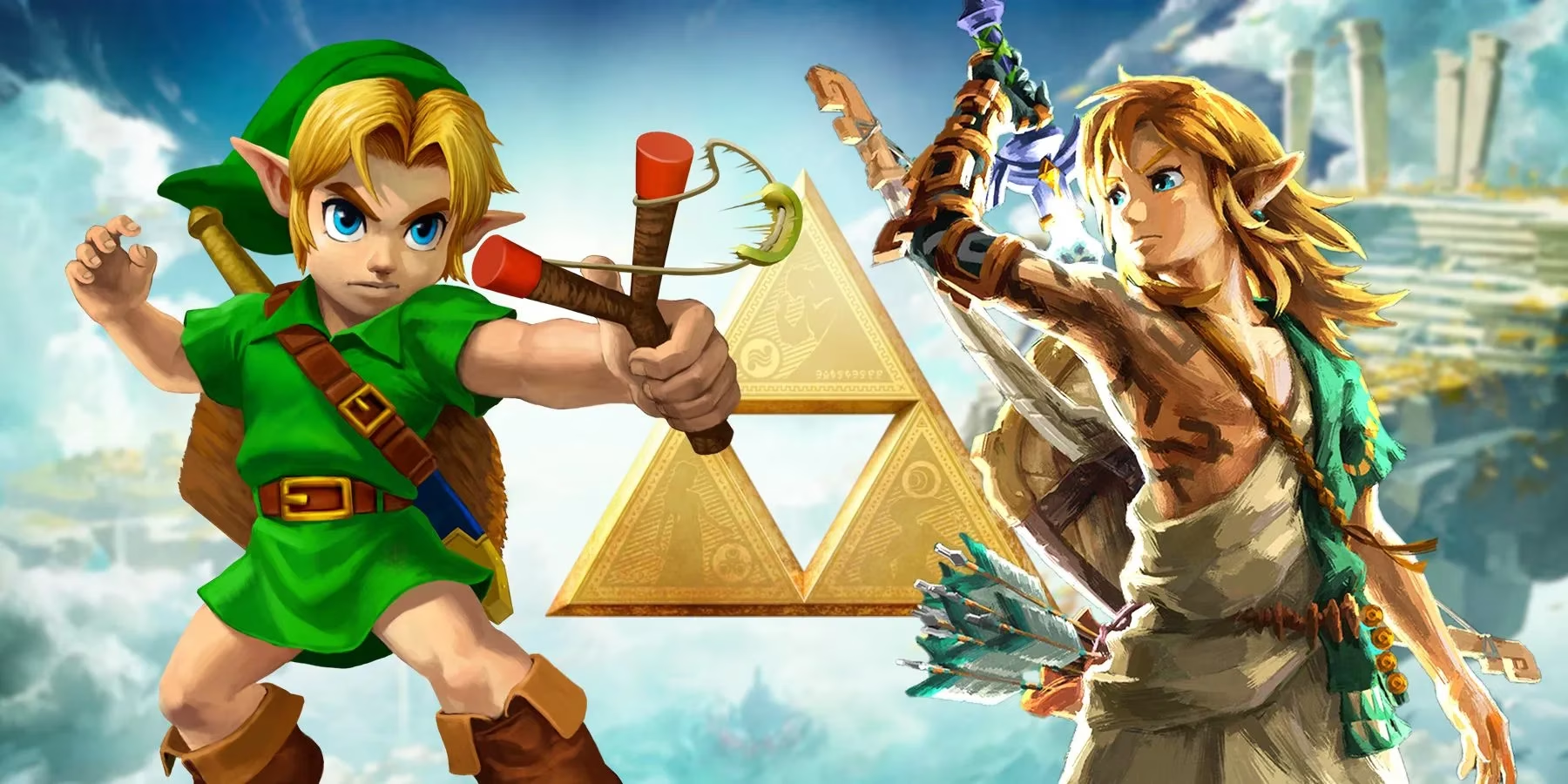
🔄 The Allure of Nostalgia and Reclaiming the Faithful
The prospect of classic dungeon items making a triumphant return is, at its heart, a powerful nod to nostalgia. For veterans like myself who cut our teeth on the linear adventures of old, there's a unique charm in the traditional dungeon crawl. Acquiring a specific tool—be it the Bow, the Boomerang, or the Hookshot—wasn't just about gaining a new ability; it was a rite of passage, a key that unlocked the next segment of a meticulously designed labyrinth. The seismic shift to the open-air philosophy of the Breath of the Wild era, while revolutionary, inadvertently created a schism. It captivated a new generation but left some longtime devotees feeling adrift in a world that prioritized systemic freedom over structured progression. A revival of these classic mechanics could be Nintendo's olive branch, a deliberate effort to reunite the fanbase by blending the old with the new.
⚙️ Evolving Beyond Stagnation: A Chance for Reinvention
Let's be honest: in their original form, some classic items risked becoming predictable. The gameplay loop could sometimes feel formulaic, with less emphasis on player ingenuity outside the puzzles themselves. However, the last decade has shown us Nintendo's mastery of innovation. The success of Breath of the Wild and Tears of the Kingdom wasn't an accident; it was a masterclass in reimagining conventions. If classic items do return, they won't be mere replicas. Imagine a Hookshot that doesn't just pull Link to a point, but can be fused with Zonai devices to create intricate traversal machines. Or a Lens of Truth that interacts with new environmental physics in unexpected ways. Nintendo now has the experience and technology to approach these venerable tools with fresh eyes, transforming them from simple keys into catalysts for creative problem-solving within more defined spaces.
👑 The Sage Paradigm: A Blueprint for the Future?
Tears of the Kingdom introduced one of the series' most celebrated innovations: the Sages. These characters did more than aid in combat; they provided unique, character-driven abilities essential for dungeon progression. This was a brilliant, narrative-rich twist on the classic "dungeon item" concept. Instead of finding a tool in a chest, you forged a bond with a champion. The Sages proved that the core function of traditional items—granting specific abilities to overcome obstacles—remains deeply appealing. Their positive reception is a clear signal: players value progression-gated abilities, especially when they are woven into the world's lore and character arcs. This success story provides a compelling blueprint. Future titles could seamlessly integrate classic items by giving them a similar narrative weight or by having them bestowed by characters, thus preserving the emotional connection that made the Sages so special.
⚖️ The Creative Trade-Off: Freedom vs. Focus
However, a full return to tradition is not without its perils. Tears of the Kingdom gifted us an almost overwhelming degree of creative liberty. Tools like Ultrahand and Fuse turned every player into an engineer, allowing for a multitude of solutions to any given challenge. This philosophy of "here are the rules, now break them" defined the game's identity and cemented its place as a generation-defining title. Reintroducing static, single-purpose dungeon items could feel like a constraint, a step back from this sandbox of possibilities. The magic of building a bizarre vehicle to scale a cliff is fundamentally different from using a Hookshot to reach the same ledge. One celebrates player expression; the other celebrates the designer's intended path. Striking a balance will be Nintendo's greatest challenge—perhaps by creating items with modular, physics-based applications that encourage creativity within a more guided framework.
🔮 What Lies Ahead for Hyrule?
The path forward for The Legend of Zelda is shrouded in mystery, but the clues are there. Nintendo is acutely aware of its diverse audience. The next installment could very well be a hybrid, marrying the structured, item-based progression of classic Zelda with the vast, interactive worlds of the new era. We might explore themed dungeons that require a specific, upgradable tool to conquer, while the overworld retains the open-ended, systemic gameplay we've come to love. The Sages have shown that abilities and storytelling can be intertwined, suggesting that even classic items could be reintroduced through rich character arcs or faction quests.
Ultimately, the legacy of Tears of the Kingdom is not a chain that binds the series but a springboard for its future. Whether we see the glint of a classic Hookshot or the glow of a new Sage's power, one thing is certain: Nintendo's next move will be calculated to honor the past while fearlessly innovating for the future. As a fan, my hope is for a Hyrule that feels both comfortingly familiar and thrillingly unknown—a world where every chest holds not just a tool, but a new possibility.