
The Finley & Sasan Subplot Still Feels Off in 2026
Tears of the Kingdom side quests, like Finley and Sasan’s storyline, spark debate over localization choices and uncomfortable subtext.
I've spent more hours than I'd like to admit wandering around Hyrule, doing every side quest I can find. Most of them are sweet, quirky, or at least harmless. But every single time I get to the Finley and Sasan storyline in Tears of the Kingdom, I stop, squint at the screen, and think, Wait, are we really doing this again? It is 2026 now, and somehow this little subplot still feels like a mosquito that will not leave the room.
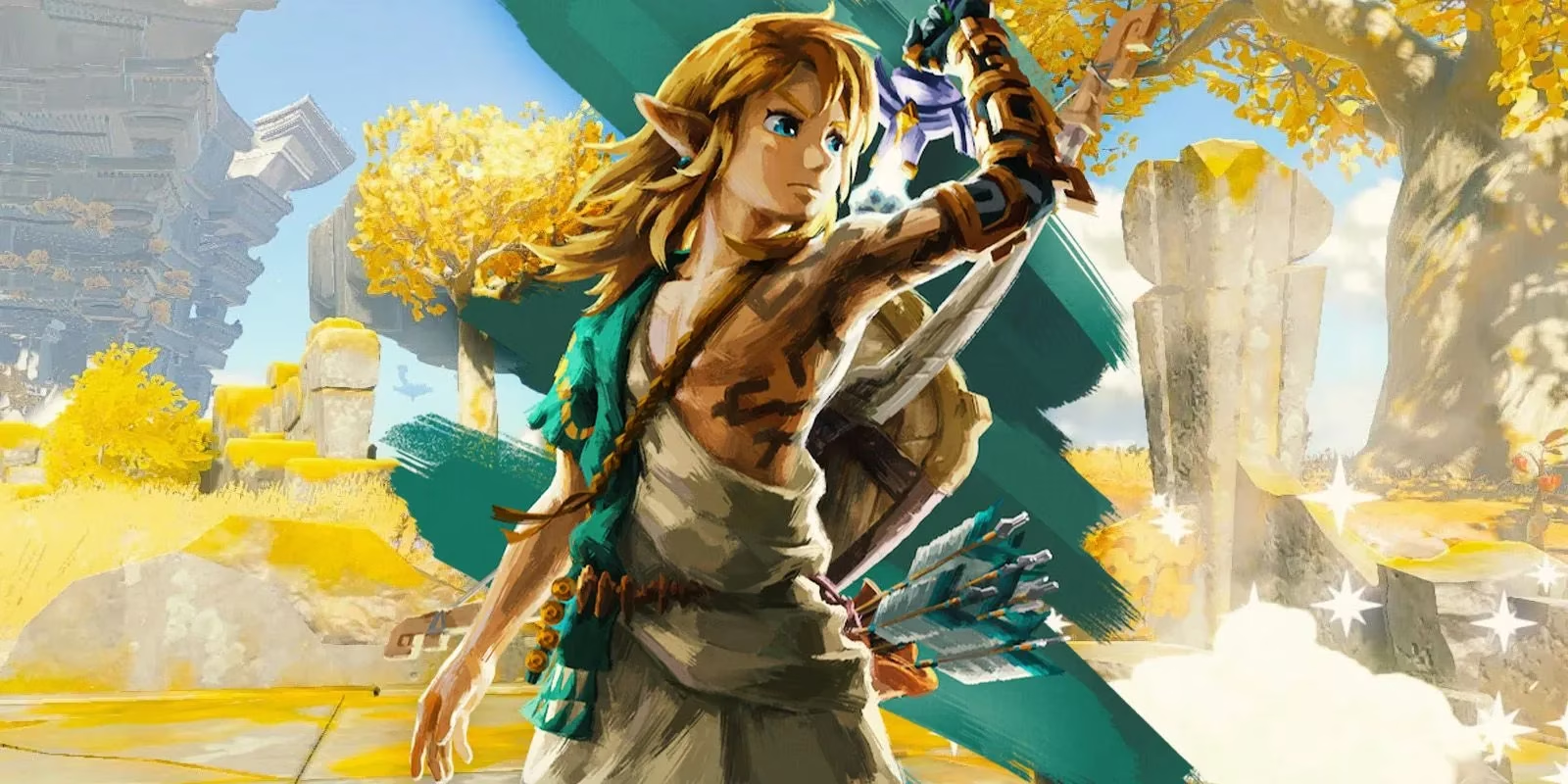
This is not about dunking on a game I love. It is about how one small localization choice turned a perfectly innocent pen-pal story into something that makes me and plenty of other ordinary players genuinely uncomfortable.
Let me set the scene. In Breath of the Wild, Link can help Finley, a Zora who looks like a child, send a message in a bottle to Sasan, a Hylian adult. The English version calls it a love letter, and by the time you finish 'Special Delivery,' the two are... together. In Tears of the Kingdom, the duo returns for the 'True Treasure' side quest, where Link ferries Sasan across a cave on a raft to meet Finley. Finley has not aged a day, despite the timeskip between games.
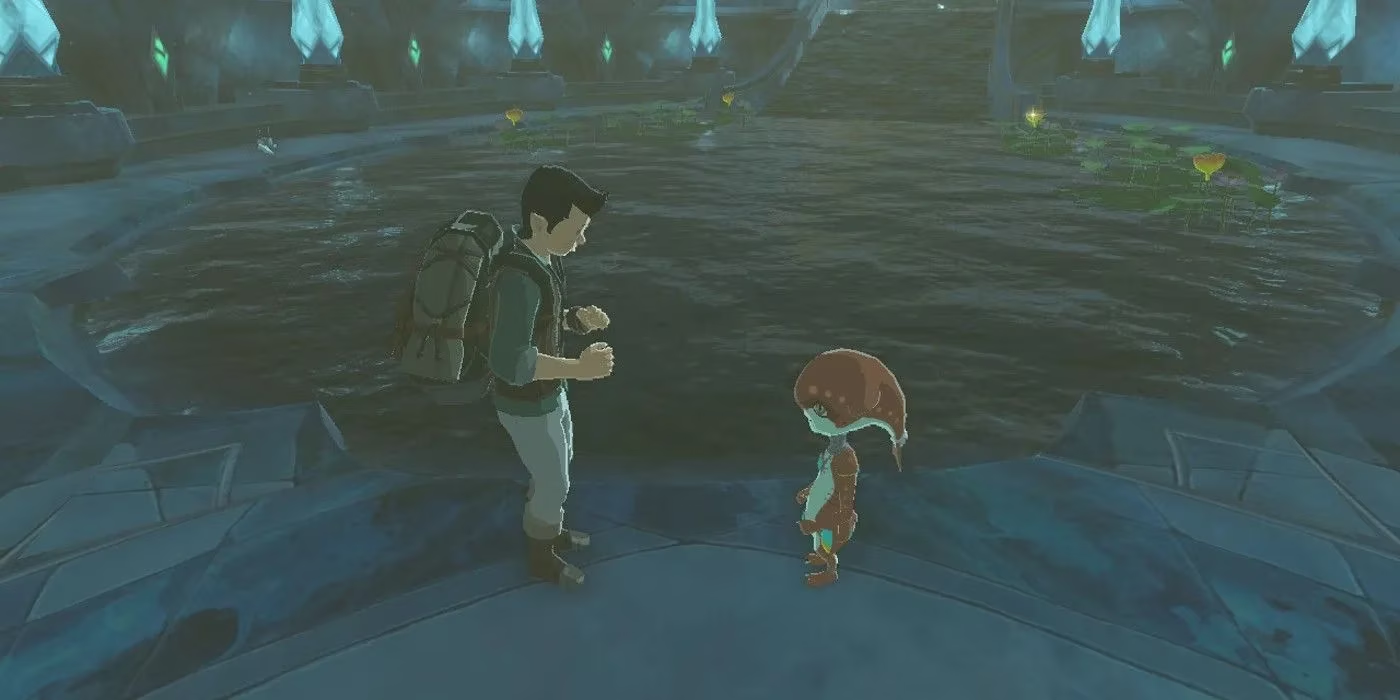
That is the heart of the problem. I am not gonna lie, the age optics are rough 😬. Zora do age differently, sure. Finley claims she is older than Sasan and that a growth spurt is coming. But she still looks and often acts like a child, and Sasan does not seem bothered by that at all. It makes the whole thing feel off, no matter how many in-game explanations the game offers.
Here is a quick comparison of how the two games handle the pair:
| Game | Side Quest | Vibe I Got |
|---|---|---|
| Breath of the Wild | Special Delivery | Romantic, and honestly pretty weird |
| Tears of the Kingdom | True Treasure | Ambiguous, but the subtext still lingers |
In Tears of the Kingdom, the dialogue is less overtly romantic. They do not call each other boyfriend and girlfriend. Finley says the adventure will be a precious memory and asks Sasan to hold hands on the way back. Sasan mentions an old promise to build up muscles for her. On paper, you could read this as platonic. But because of the Breath of the Wild framing, it is hard not to read some of those moments and cringe a little.
That is the weird part. Nintendo seems to have quietly walked back the romance by making the Tears of the Kingdom interactions softer, but nobody in-game ever acknowledges the elephant in the room. The game just kind of glosses over it. So instead of feeling resolved, the relationship becomes ambiguous in the worst possible way. It leaves players like me trying to decide whether I am imagining things or whether the subtext really is still there.
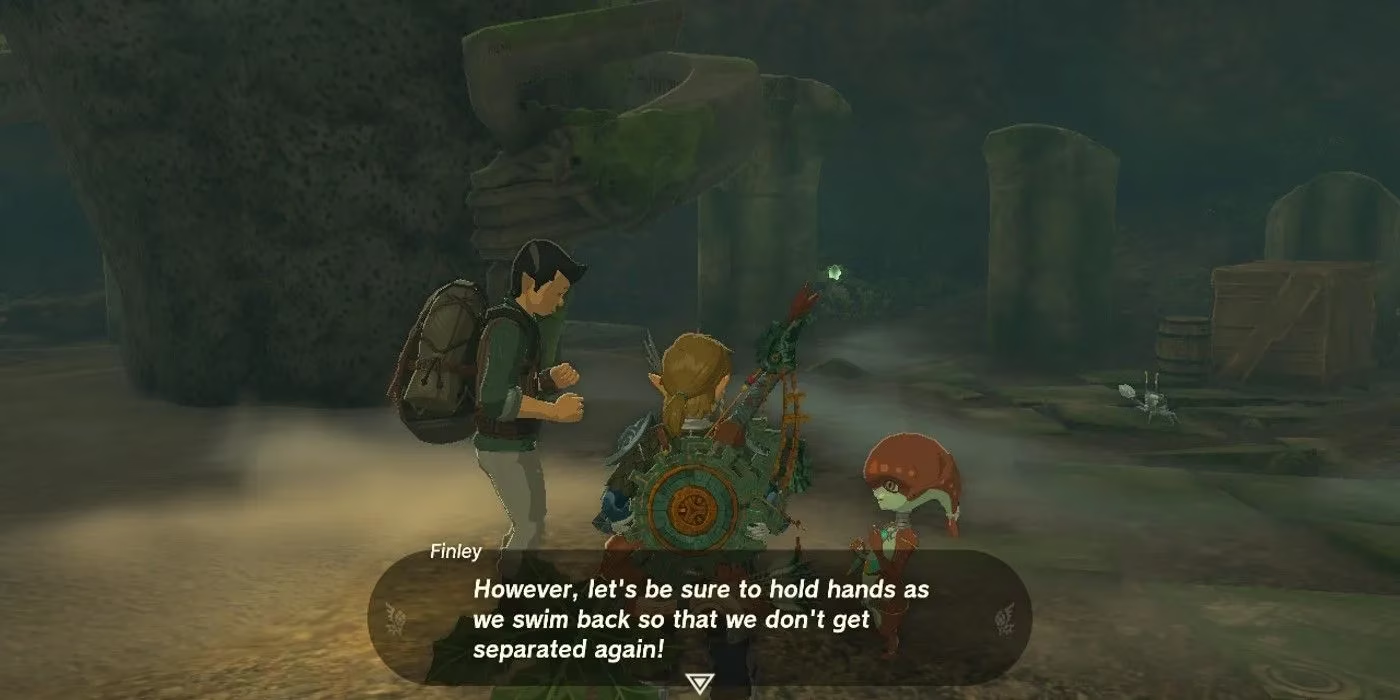
Then there is the translation angle, which honestly changed how I see the whole mess. In the original Japanese version of Breath of the Wild, Finley's message is just a message in a bottle, not a love letter. Other romantic lines in the English version are apparently English-only additions. So the intended version of Finley and Sasan was probably always just a friendship between unlikely pen pals. The English localization added the romance, maybe as a joke about misleading dating profiles. Sasan lies about being a muscular traveler, Finley's 'lovely Zora' description does not match her appearance, and the whole thing becomes a bad sitcom misunderstanding.
But here is the thing: once you put that romantic coding into the English version, it stuck. Players who only played the English release carried that understanding into Tears of the Kingdom. Even if the sequel tried to correct course, the shadow was already there. Let us be real, you cannot just un-ring that bell 😅.
This is why fans are still talking about it in 2026. The Finley and Sasan situation is a perfect example of how a small localization choice can snowball into one of the most notorious uncomfortable storylines in modern Zelda. It is not a huge part of the game, but it leaves a lasting impression.
I do not think Nintendo intended to make players feel gross. I think they wanted a quirky side story about friends with mismatched appearances. But the English localization made a decision that, combined with Finley's childlike design, created something that many players cannot unsee.
In Tears of the Kingdom, the developers had a chance to directly address it, maybe have Finley look older or have Link overhear a conversation clarifying the friendship. Instead, they kept the pair together, kept Finley physically unchanged, and kept the dialogue just ambiguous enough to avoid taking a clear stance. The result is that the most charitable reading still requires effort, and the least charitable reading is still right there, hovering over every hand-hold and 'precious memory' comment.
For me, the whole thing is a reminder that translation and presentation matter. A small word choice can change a story's meaning across cultures, and even in a series as polished as Zelda, those choices can leave weird stains on an otherwise magical world.
So yeah, next time I replay Tears of the Kingdom, I will still complete True Treasure, because I am a completionist at heart. But I will probably also sit there after the quest, staring at the screen, and whisper, 'This did not need to be this complicated.'