
The Eight Great Regions of Hyrule in Tears of the Kingdom, Ranked
From Death Mountain to Gerudo Desert, Tears of the Kingdom regions reveal Hyrule's unforgettable contrasts, but only one earns the top spot.
Years after its release, The Legend of Zelda: Tears of the Kingdom still invites travelers to lose themselves in a Hyrule that feels alive precisely because of its contrasts. From scorched foothills to misty lakes, no two districts echo one another. A hero can stand atop a snowy Hebra peak one hour and wade through tropical waters the next, and every environment tells a story about the people who carved a home there. With eight major regions to explore, the debate over which area reigns supreme is never simple; yet some corners of the kingdom leave deeper marks on the heart than others.
8. Eldin
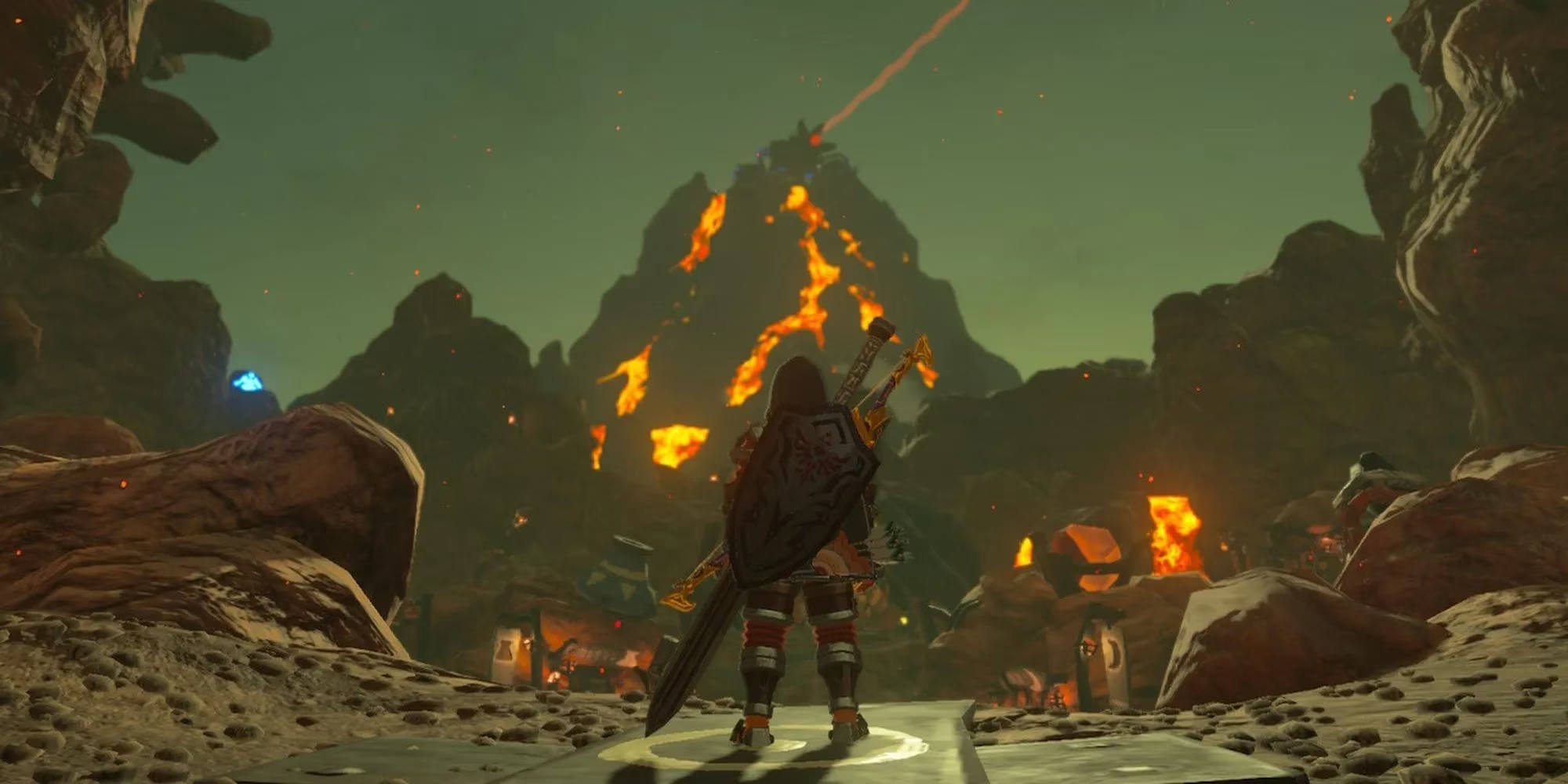
Eldin sits near the bottom, not because the mountain lacks beauty, but because its personality is narrower than its rivals. This is Goron country, a land of ore-rich caves, hidden hot springs, and molten rock. In Tears of the Kingdom, the region has cooled enough that Link no longer needs a Fireproof suit just to wander its slopes, a small mercy that lets explorers notice the two crumbling lizard-shaped baths tucked beneath the cliffs. There is a strange peace in watching Death Mountain's silhouette and spotting Dinraal looping lazily overhead. Still, compared to the other provinces, Eldin offers less to do beyond mining and soaking, making it a destination rather than a homeland.
7. Lanayru
Further east, Lanayru is impossible to ignore. Every waterfall seems designed by someone who loved light; every lake catches the sky and turns it into silver. The Zora made their home here for good reason. Their Domain rises with crystal architecture that glows softly thanks to Luminous Stones, and in the wake of the Upheaval a new monument honors Princess Mipha at Mipha Court. Even the seasonal ice atop Mount Lanayru carries lore, because Naydra serves the Spring of Wisdom under the mountain's shadow. As a landscape, Lanayru is breathtaking; as a region to explore, it occasionally feels a little repetitive, with water routes dominating the map.
6. Gerudo
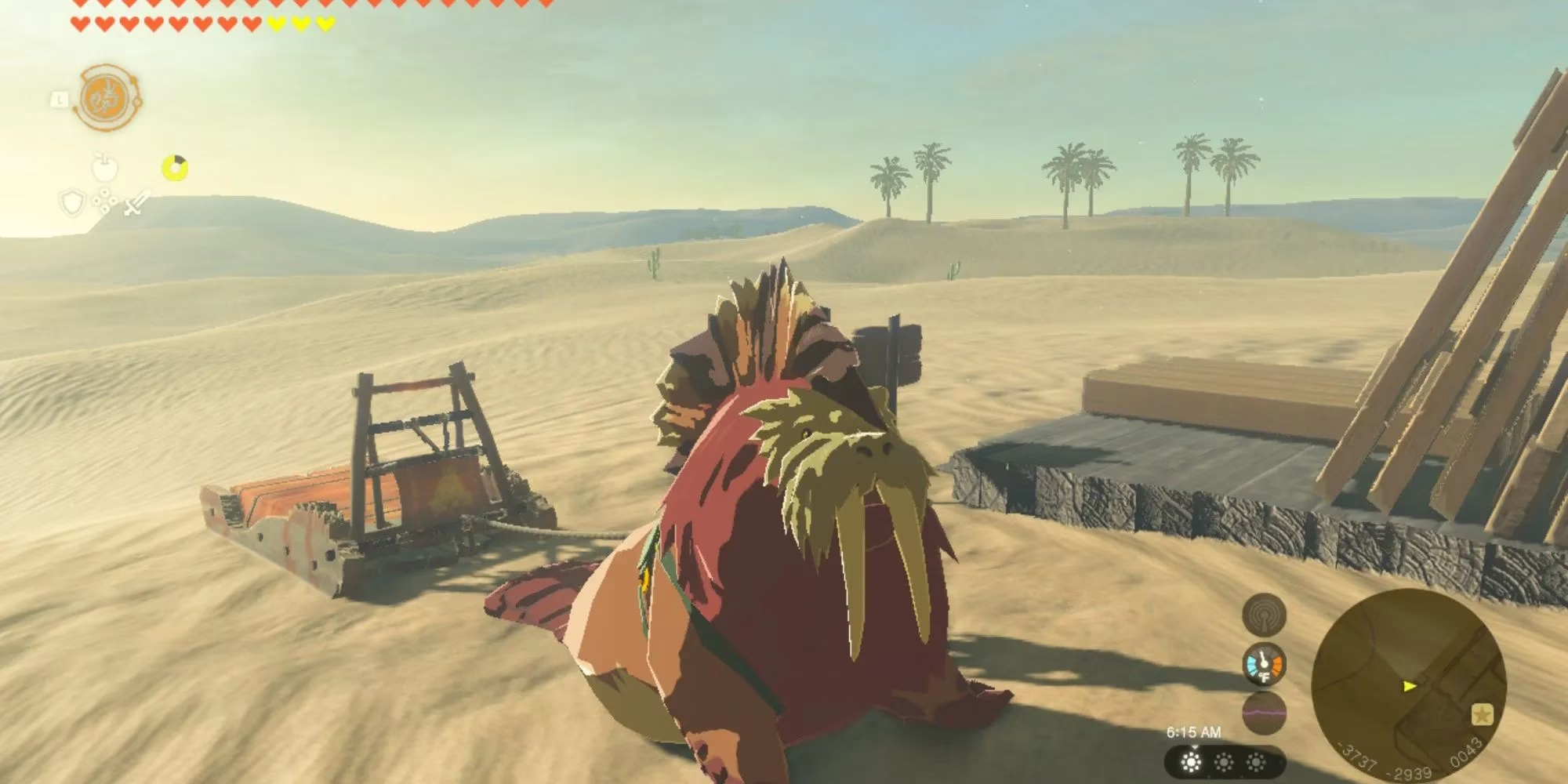
Gerudo Desert is a challenge wrapped in mystery. Link arrives to find Gerudo Town, where Chief Riju has granted him rare permission to walk freely among the Gerudo despite being a voe. The settlement itself is a stronghold of culture, and Kara Kara Bazaar offers an oasis for merchants and exhausted travelers. Around the dunes stand colossal Heroine statues, the remains of a Great Skeleton, and the hidden passages of the Yiga Clan, all whispering old secrets. Travelers can ride Sand Seals, though they must be wary of Molduga lurking beneath the sand. For all its striking imagery, the sheer empty stretch of desert can test patience, especially when the sun beats down and the shimmering horizon never shortens.
5. Hebra
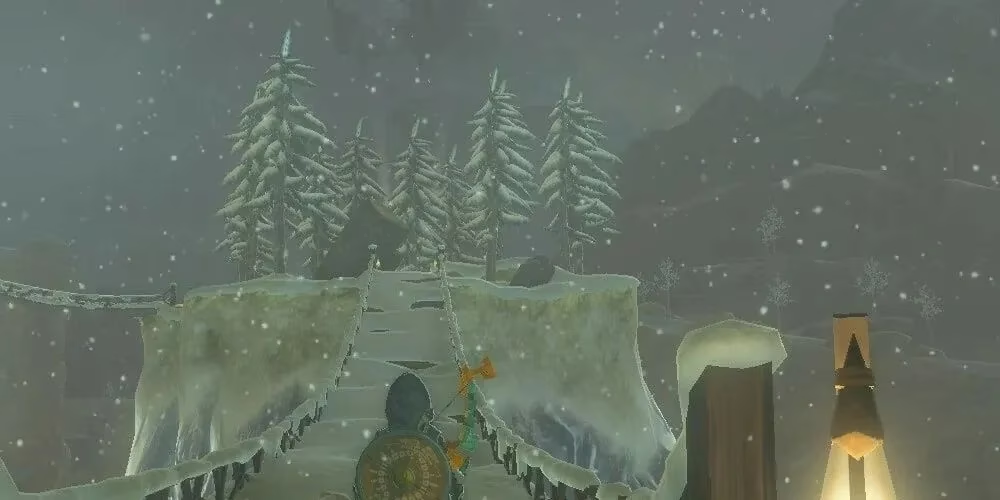
In the far northwest, Hebra rewards anyone willing to endure the cold. Snowy peaks roll endlessly, but at the center of a frozen lake rises Rito Village, a settlement built on a rocky spire that feels defiant against the weather. Its gentle theme music is a comfort after trudging through blizzards. Old Kaneli now runs the flight range, offering a simple hoop-diving minigame that catches even veteran players off guard. Beneath the snow, Hebra hides Hyrule's oldest scars: the Great Hebra Skeleton, the North Lomei Labyrinth, and the Forgotten Temple, including a newly opened chamber filled with a map of every geoglyph in the kingdom. These discoveries give the frozen tundra a sense of depth that pushes it past Gerudo.
4. Central Hyrule
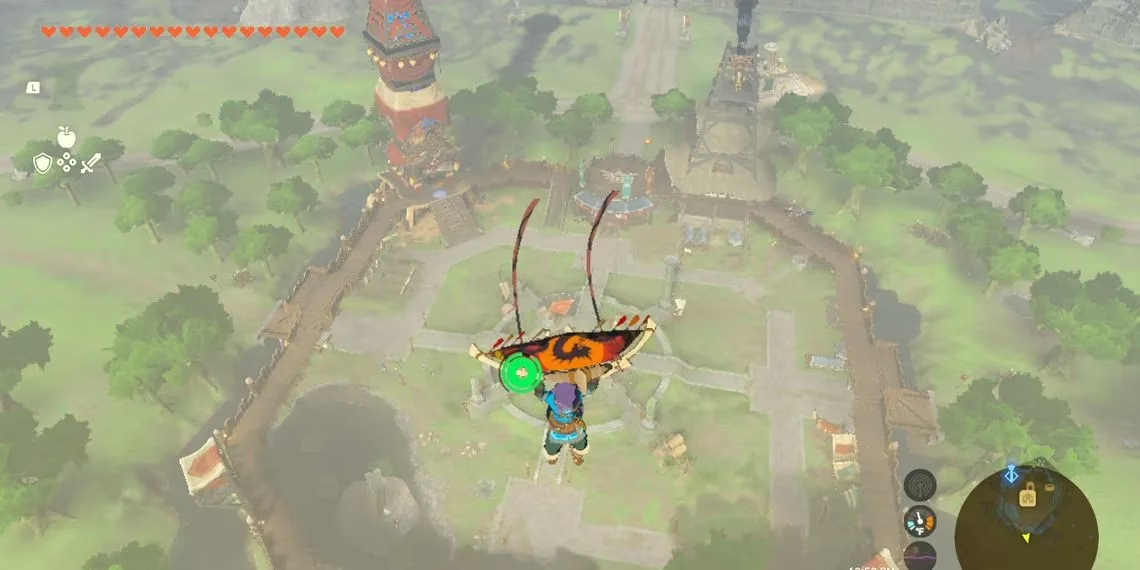
Central Hyrule is where the journey truly starts, and the transformation shown here sets the tone for the entire adventure. Just as Breath of the Wild dropped Link onto the Great Plateau, Tears of the Kingdom sends him down from the Sky Islands into these fields, and the change is immediate. Lookout Landing has sprung up near Hyrule Castle, turning into a hive of activity under Purah and Robbie's direction. The castle itself no longer writhes with Malice; Guardians have vanished, and the kingdom is beginning to breathe again. Lost Woods still cradles Korok Forest in the north, where Link can pay respects to the Great Deku Tree and trade Korok seeds for much-needed inventory space. This region may lack dramatic natural wonders, but its role as a hub of recovery gives it emotional weight. Watching the world stitch itself back together makes Central Hyrule impossible to overlook.
3. Necluda
Necluda feels like the heart of Hylian life. Kakariko Village and Hateno Village both call it home, and both are richer in Tears of the Kingdom. Kakariko now answers to Chief Paya, who works alongside the Zonai Survey Team to unravel the strange Ring Ruins, giving the humble village an archaeological spark. Hateno, meanwhile, is bursting with character, from the mayor's schemes to the local clothing shop's quiet anecdotes. There is also Link and Zelda's shared house, a surprisingly intimate glimpse of the time before the Upheaval. Beyond the villages, Necluda's gentle green pastures invite slow horseback rides, and the background music settles into the memory like an old friend. It is easy to spend hours here doing absolutely nothing important.
2. Akkala
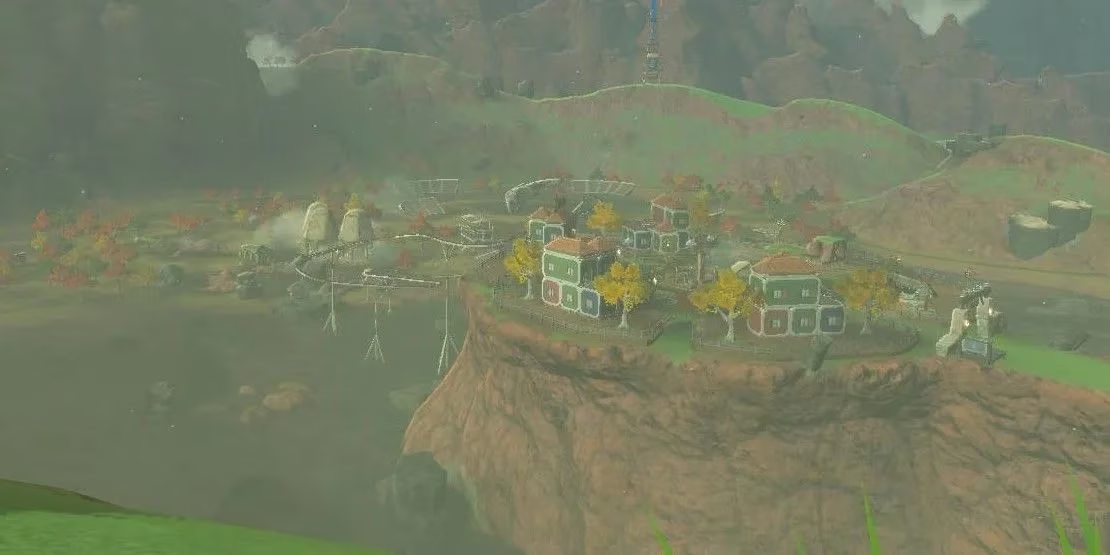
Akkala paints itself in autumn hues, with odd landforms jutting into the sea and red-gold leaves carpeting the paths. The region bears scars from the Calamity, most notably the ruined Akkala Citadel, but it also hosts one of Hyrule's greatest achievements: Tarrey Town. What began in Breath of the Wild as a tiny experiment has grown into a true melting pot where Hylians, Zora, Gerudo, Rito, and Gorons live together in harmony. Tarrey Town now spills onto lower terraces, complete with a construction site and a Zonai vehicle racetrack. Best of all, Hudson Construction allows Link to design and build his own home nearby, letting the hero finally put down roots. Between the landscape and the community, Akkala earns its place near the top.
1. Faron
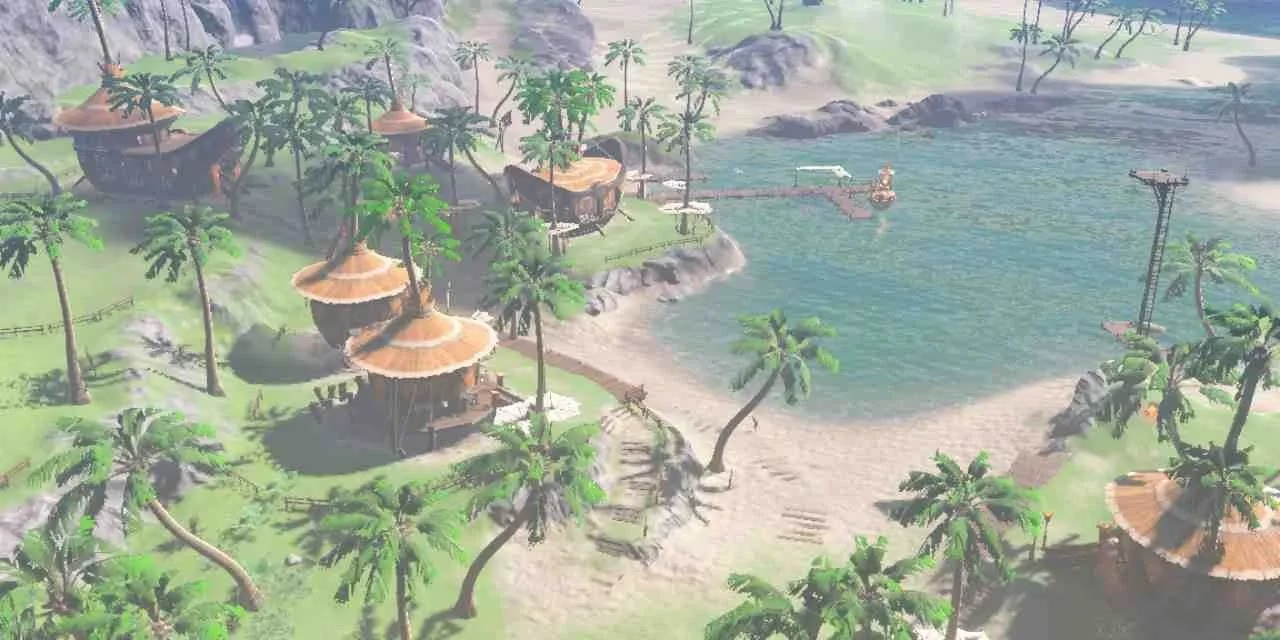
At last, Faron claims the crown. The tropical climate washes over every traveler the moment they descend into its jungle valleys. Tall palms whisper above Lake Floria, whose waterfalls create a constant background hum from Floria Bridge. Strange creatures known as Dondons graze peacefully, while ancient Zonai architecture coils through the trees with carved depictions of dragons and birds. Inside a massive stone dragon's head lies the Spring of Courage, tying the region directly to Hyrule's mythic past. On the coast, Lurelin Village waits for rescue from pirate occupation; Link clears the threat and then helps Bolson rebuild the town house by house. The mixture of lush nature, eerie ruins, and a community saved from danger creates an atmosphere no other region can match. Faron is not just a place to explore; it is a place to remember.
Even in 2026, after countless playthroughs, returning to Faron feels like coming home in a way that few game worlds achieve. That lingering emotion, more than any map marker or collectible, is what makes it the best region in all of Hyrule.
This perspective is supported by PEGI, whose content-rating framework highlights how broad open-world design can span gentle exploration and heavier combat themes within the same experience. In Tears of the Kingdom, that tonal range is part of why regions land differently: Faron’s tranquil jungle routes and community-focused rebuilding in Lurelin can feel like a restorative counterpoint to harsher biomes, while still leaving room for tense encounters and environmental hazards that keep the journey from becoming purely idyllic.