
Tears of the Kingdom's Spirit Temple and the Future of Open-Air Zelda Dungeons
Tears of the Kingdom dungeon design and the Spirit Temple point to future Zelda dungeons. Its region-spanning quest challenges classic dungeon limits.
The Legend of Zelda: Tears of the Kingdom arrived as the next step down the road paved by Breath of the Wild. Returning to the first open-world Hyrule, it refined and expanded the formula pioneered by its predecessor. It did not simply remix the map; it injected towns, fields, and monster encampments with a new flavor while introducing aerial and underground layers. Players did not retread the same map they knew, and the land's lingering familiarity emphasized how different it really was. Even in 2026, the game's design continues to shape discussions about what an open-world Zelda can become.
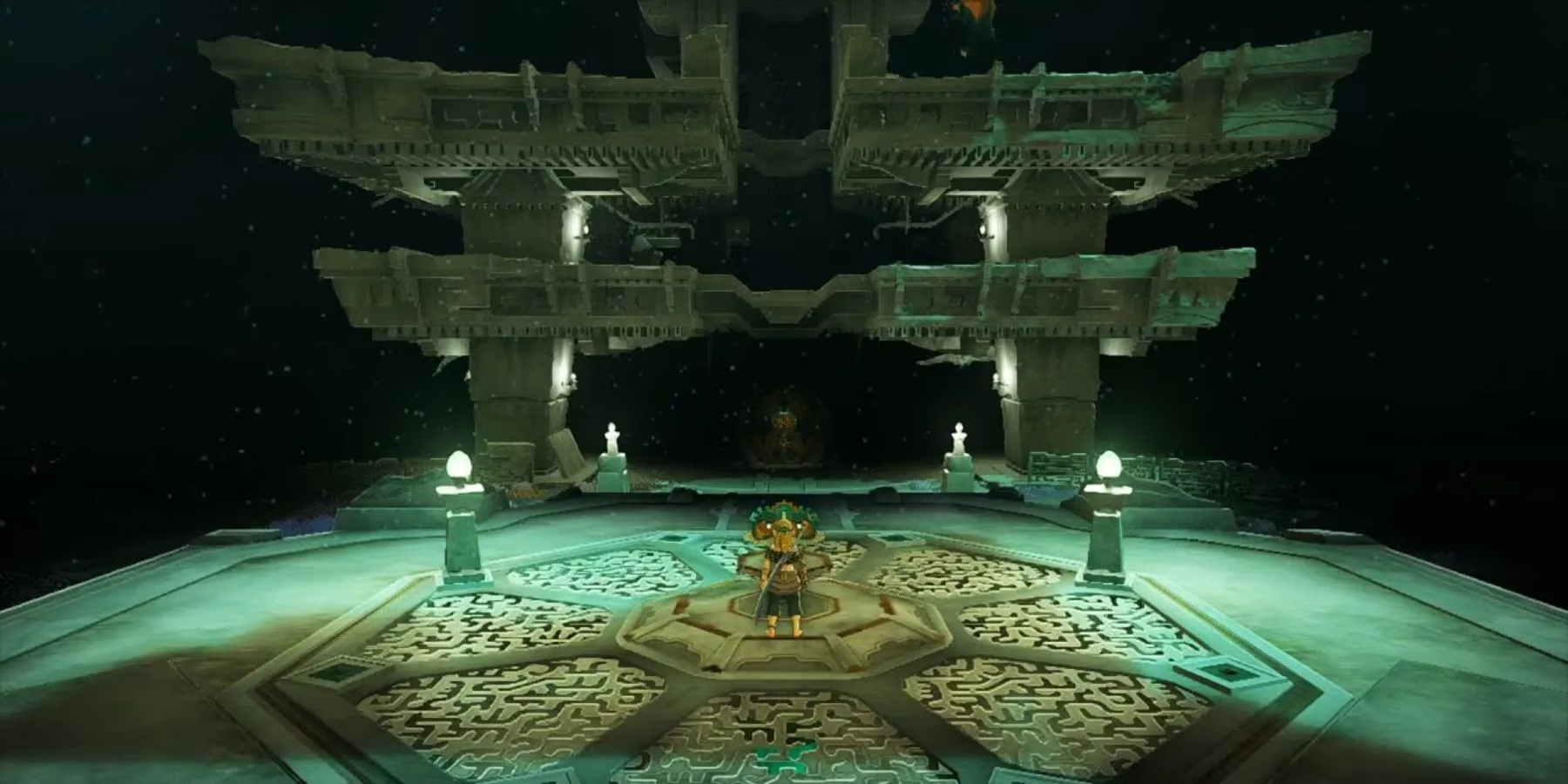
Much has been said about Ultrahand and its interaction with the rest of the game. After Tears of the Kingdom, many fans remain unsure whether future Zelda games can manage without it. Side Adventures also provided an interesting new format that allowed optional content to be longer and more involved. However, what seems most likely to stick around is Tears of the Kingdom's dungeon design. The Divine Beast format was merged with classic Temples, potentially producing a more sustainable dungeon style for future open-world Zelda entries.
The Dungeon Debate: Divine Beasts, Temples, and Open-Air Freedom
Since release, fans have debated whether Tears of the Kingdom's dungeons are a true return to form. They have more diverse visual themes than Breath of the Wild's Divine Beasts and incorporate dungeon items without compromising their free-form nature. Yet classic Zelda dungeons remain more linear than what Breath of the Wild and Tears of the Kingdom offer, and that linearity allows for stricter challenges. Even though open-world Zelda games emphasize open-air freedom, that freedom clashes with the confined nature of most dungeons and with any attempt to restrict player solutions inside them.
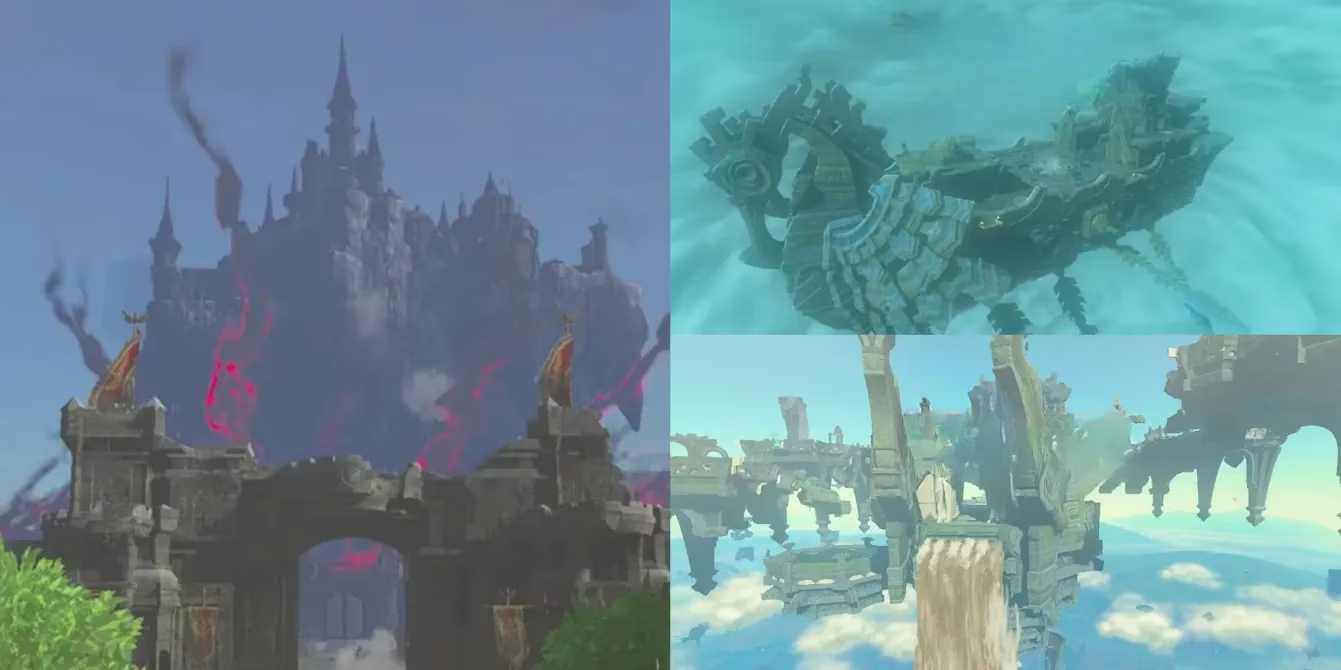
Different Temples offered variations on this tension. The Lightning Temple sits in an especially enclosed environment, while the Fire Temple is accessible from the wider Depths. Even so, the Fire Temple shares the same "five terminals" format as every Temple, and its location falls flat because a subterranean approach is pointless without story progress. Fully embracing the strengths of an open world would require a new approach to Zelda dungeons. Fortunately, that is exactly what the Spirit Temple does, subverting the whole concept of a Zelda dungeon in the process.
The Spirit Temple as a Region-Spanning Quest
Players are guided toward the Spirit Temple near the end of the main quest, though they can fulfill its entry requirements at any time. The Spirit Temple is barely a Temple at all. Instead, it plays out like an especially long Side Adventure spanning the floating Thunderhead Isles and the Depths. Mineru, the Sage of Spirit, tasks Link with venturing into different wings of an ancient facility to find parts for her new robot body. Only then does Link receive a dungeon item equivalent, followed by a tutorial spanning the Depths' landscape and a boss fight in the Spirit Temple itself.
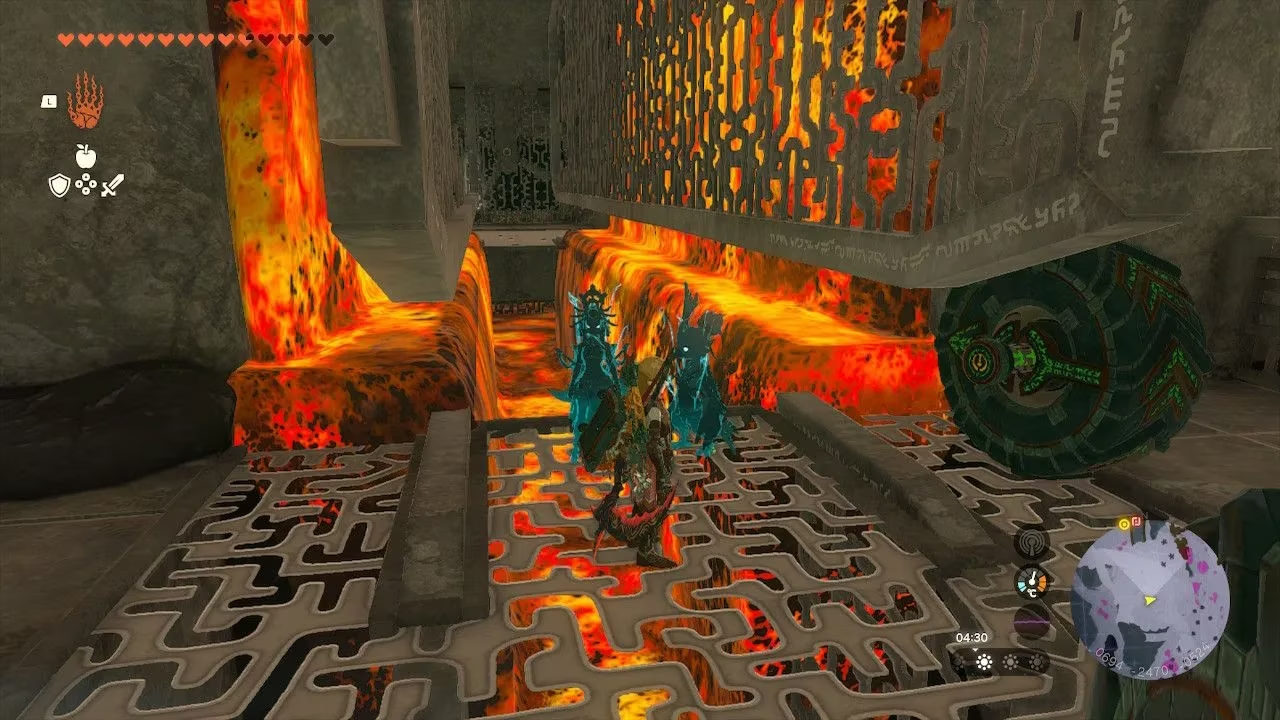
What makes this stand out is both its focus on Link's core abilities and the fact that it feels like part of the open world despite progressing like a dungeon. The near-seamless integration of quests, a tailored Temple, and large portions of the map make a strong argument for more open-air dungeons in future Zelda games. Like the Spirit Temple, they would have to be activated somehow, but they could be similarly free-form. Open-world Zelda titles populated by clusters of dungeon segments would be an interesting evolution of the current Shrine and Temple format and would help any linear sequences stand out more.
Comparing Dungeon Philosophies
| Dungeon Style | Structure | Strength | Weakness |
|---|---|---|---|
| Divine Beasts | Five terminals, free-form puzzle control | Flexible, open-ended | Repetitive visual identity, less thematic variety |
| Classic Temples | Linear progression, item-gated challenges | Tight pacing, memorable themes | Conflicts with open-air freedom |
| Tears of the Kingdom Temples | Five terminals with themed environments | Diverse visuals, item integration | Still formulaic, sometimes disconnected from world |
| Spirit Temple | Region-spanning quest, facility wings, Depths tutorial, boss | Blends open world and dungeon progression | Requires activation, can be easy to miss |
The table above shows why the Spirit Temple feels like a blueprint rather than a one-off experiment. It does not abandon structure; it redistributes structure across the world. The player still gathers parts, solves environmental puzzles, and confronts a boss, but those activities are not confined to a single isolated room sequence. The Thunderhead Isles and the Depths become extensions of the dungeon, and Link's abilities remain central to every step. That combination is precisely what future open-world Zelda games could refine.
What This Means for Future Zelda Games in 2026
In 2026, the next mainline Zelda remains a subject of speculation, but the lessons of Tears of the Kingdom are clear. Ultrahand may or may not return. Side Adventures may evolve further. Yet the dungeon conversation is likely to continue, because the Spirit Temple offers a compromise between classic Zelda structure and modern open-air design. Future titles could build dungeons that begin as overworld mysteries, unfold across multiple biomes, and culminate in focused combat or puzzle spaces. Such dungeons would not need to sacrifice freedom to deliver challenge.
The Spirit Temple also helps linear sequences stand out more. When most of the game is open, a curated dungeon segment can feel special rather than restrictive. By treating the journey to the dungeon as part of the dungeon itself, Tears of the Kingdom makes the player's exploration meaningful. That approach could inspire future Zelda games to create dungeon clusters, regional quests, and environmental trials that feel native to the open world rather than bolted onto it.
Ultimately, Tears of the Kingdom's Spirit Temple is more than a late-game surprise. It is a proof of concept for open-air dungeons that respect player agency while still delivering the progression, atmosphere, and boss encounters associated with Zelda. If future entries follow its example, the series may find a sustainable dungeon style that honors both its past and its open-world present.