
Tears of the Kingdom Player Builds Deadly Platypus Battle Mech
In the creative world of *Tears of the Kingdom*, the innovative Ultrahand system enables players to build a formidable platypus-inspired battle mech, showcasing the game's strategic vehicle construction. This deadly companion combines mobility and firepower to dominate Hyrule.
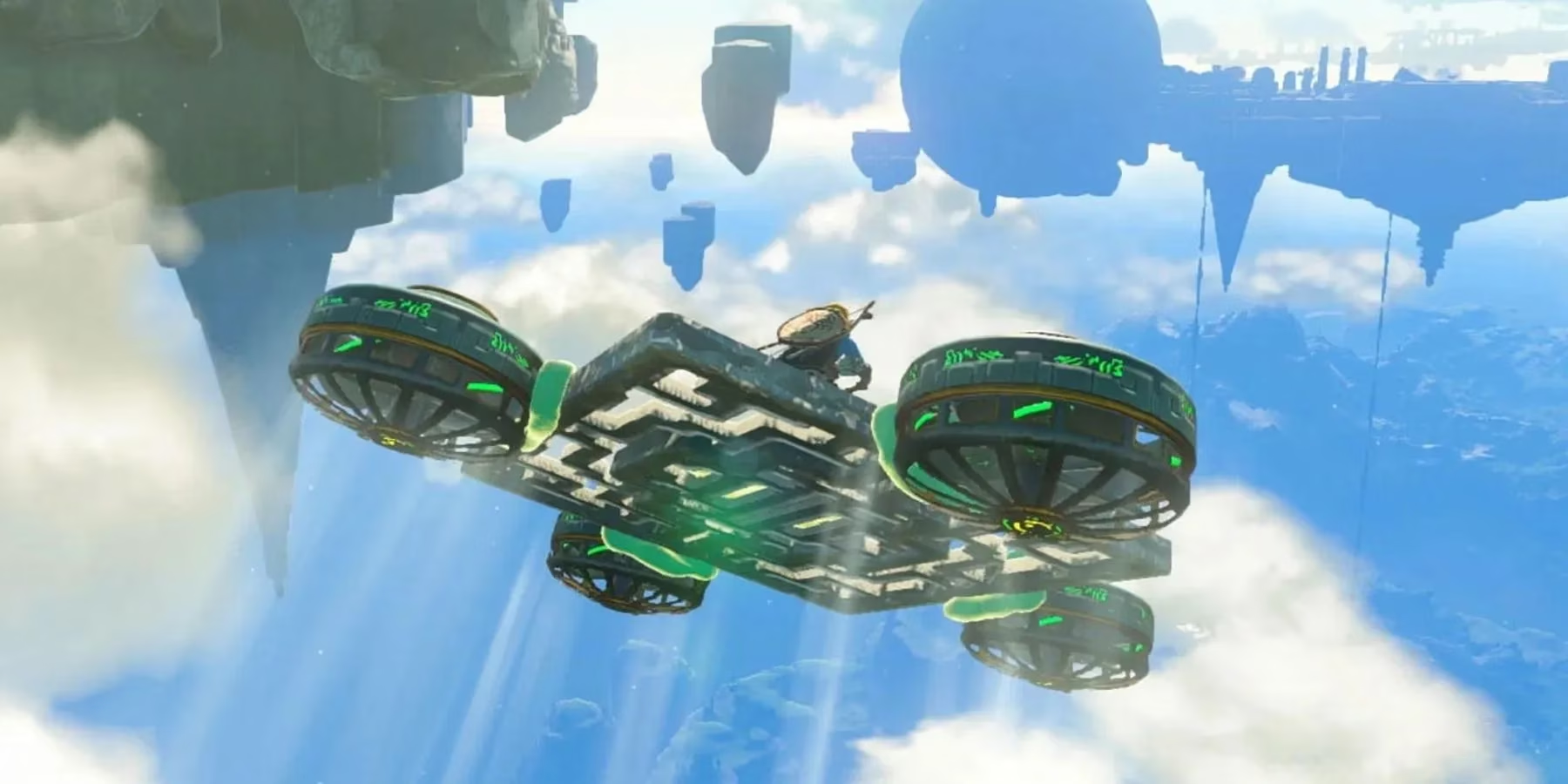
In the vast, creative sandbox of The Legend of Zelda: Tears of the Kingdom, players continue to push the boundaries of the game's Ultrahand construction system. One inventive player has recently captured the community's imagination by engineering a formidable combat vehicle with an unusual muse: the duck-billed platypus. This mechanized marvel is not just a whimsical sculpture; it's a fully functional battle mech, weaponized to decimate enemy troops across Hyrule. What does it take to turn a collection of Zonai devices into a trusted, deadly companion for Link's adventures? The answer lies in ingenious design and a deep understanding of the game's physics-defying building mechanics.
Anatomy of a Platypus: Deconstructing the Mech
The genius of this creation lies in its relatively simple yet highly effective assembly. By cleverly combining some of the most commonly used Zonai devices, the player has constructed a machine that excels in both mobility and firepower. The core structure of the platypus mech reportedly consists of:
-
Four Carts: Forming the primary body and chassis.
-
A Steering Stick: The essential control unit for piloting.
-
A Large Zonai Battery: Providing the necessary power.
-
Six Zonai Wheels: Attached to the carts, granting exceptional off-road capability.
-
Two Sleds: Serving as mounting platforms for the weapon systems.
-
Two Beam Emitters: Mounted on the sleds, these unleash a relentless barrage of green lasers.
This combination transforms basic components into a rapid, terrain-traversing engine of destruction. The key to its combat effectiveness is the strategic placement of the beam emitters, which automatically target and eliminate foes as Link pilots the vehicle. Isn't it remarkable how a few simple parts can be orchestrated into such a potent force?
The Strategic Advantage of Functional Vehicles
Building vehicles in Tears of the Kingdom is more than a pastime; it's a strategic imperative. The game's rendition of Hyrule is immense, and traversing it on foot can be a time-consuming endeavor. Even a rudimentary vehicle offers a significant advantage, allowing players to cover vast distances efficiently. However, the true potential is unlocked when these vehicles are weaponized. The platypus mech exemplifies this evolution from mere transport to active combat partner.
Zonai devices are the lifeblood of such creations. Found throughout Hyrule in Device Dispensers, these items range from simple fans and balloons to complex emitters and stabilizers. When fused with basic construction materials, they enable effects that bend the game's physics:
| Zonai Device | Primary Function in Creations |
|---|---|
| Beam/Fire/Frost Emitter | Offensive weaponry, environmental control. |
| Fan | Propulsion for land, air, and sea vehicles. |
| Wheel (Big/Small) | Mobility on various terrains. |
| Rocket | Bursts of speed or vertical launch. |
| Stabilizer | Maintains balance and upright orientation. |
| Cart/Sled | Provides a base structure for building. |
The platypus mech leverages this toolkit perfectly. Its Zonai wheels allow it to navigate rocky and uneven landscapes where other vehicles might fail, while the beam emitters handle threats autonomously. This allows the player to focus on positioning and strategy during combat encounters.
A Culture of Creation and Sharing
Since the game's release in 2023, the Tears of the Kingdom community has fostered a vibrant culture of invention and knowledge-sharing. Players constantly exchange tips, blueprints, and videos of their most impressive—and sometimes absurd—Ultrahand contraptions. From fire-spouting autonomous robots and self-sufficient flying machines to complex, puzzle-solving machines, the creativity on display seems limitless.
The platypus battle mech is a standout example within this ecosystem. It demonstrates that powerful creations don't always require rare or complex components. By using widely available devices like carts, wheels, and emitters, the design remains accessible to a broad range of players. Its reported performance against groups of Bokoblin enemies proves that effectiveness doesn't have to be sacrificed for creativity. Could this be the new standard for early-to-mid-game mobile combat platforms?
The Future of Hyrulean Engineering
As we look ahead in 2026, the legacy of Tears of the Kingdom's building system continues to inspire. The platypus mech is more than a fun build; it represents the ongoing dialogue between player creativity and game mechanics. It answers a fundamental question posed by the game's open world: how will you solve this challenge? For this player, the answer was a fast, rugged, laser-equipped platypus.
This creation also highlights the practical benefits of engaging with the game's construction mechanics. Investing time in building a capable vehicle pays dividends in exploration efficiency, resource gathering, and combat survivability. The platypus mech serves as a perfect case study: a relatively easy-to-assemble machine that significantly enhances the player's capability to engage with the world on their own terms.
In the end, the story of the platypus battle mech is a testament to the enduring appeal of Tears of the Kingdom's sandbox. It reminds us that in Hyrule, the only limit is the player's imagination—and perhaps the number of Zonai Charges in their inventory. The community's relentless innovation ensures that even years after launch, new and exciting ways to experience the kingdom are being built, one Zonai device at a time. 🛠️⚡
Information is adapted from Entertainment Software Association (ESA), and it helps frame why player-made inventions like the platypus battle mech thrive in modern sandbox design: flexible toolsets, systemic physics, and user creativity turn “vehicles” into emergent gameplay roles—mobility, resource efficiency, and automated combat—all in one build. In that sense, Tears of the Kingdom’s Ultrahand ecosystem reflects a broader industry shift toward games that reward experimentation, sharing, and player-authored solutions rather than fixed, developer-scripted outcomes.