
Tears of the Kingdom Fixes Breath of the Wild's Underwhelming Final Boss
Tears of the Kingdom final boss fixes Breath of the Wild final boss, replacing Calamity Ganon with a punishing Ganondorf.
I have spent more hours than I care to admit wandering Hyrule, and the final boss debate between Breath of the Wild and Tears of the Kingdom still follows me in 2026. After replaying both games this year, I can say it plainly: The Legend of Zelda: Tears of the Kingdom overcompensates for Breath of the Wild's final boss fight in a glorious way. The sequel begins with Link and Princess Zelda exploring the underbelly of Hyrule Castle. They unleash Ganondorf from his prison. That mistake triggers the Upheaval, breaks pieces of the continent away, and creates the Sky Islands. It also sets Link on a much harsher journey. The two games share DNA, but their endgames could not feel more different.
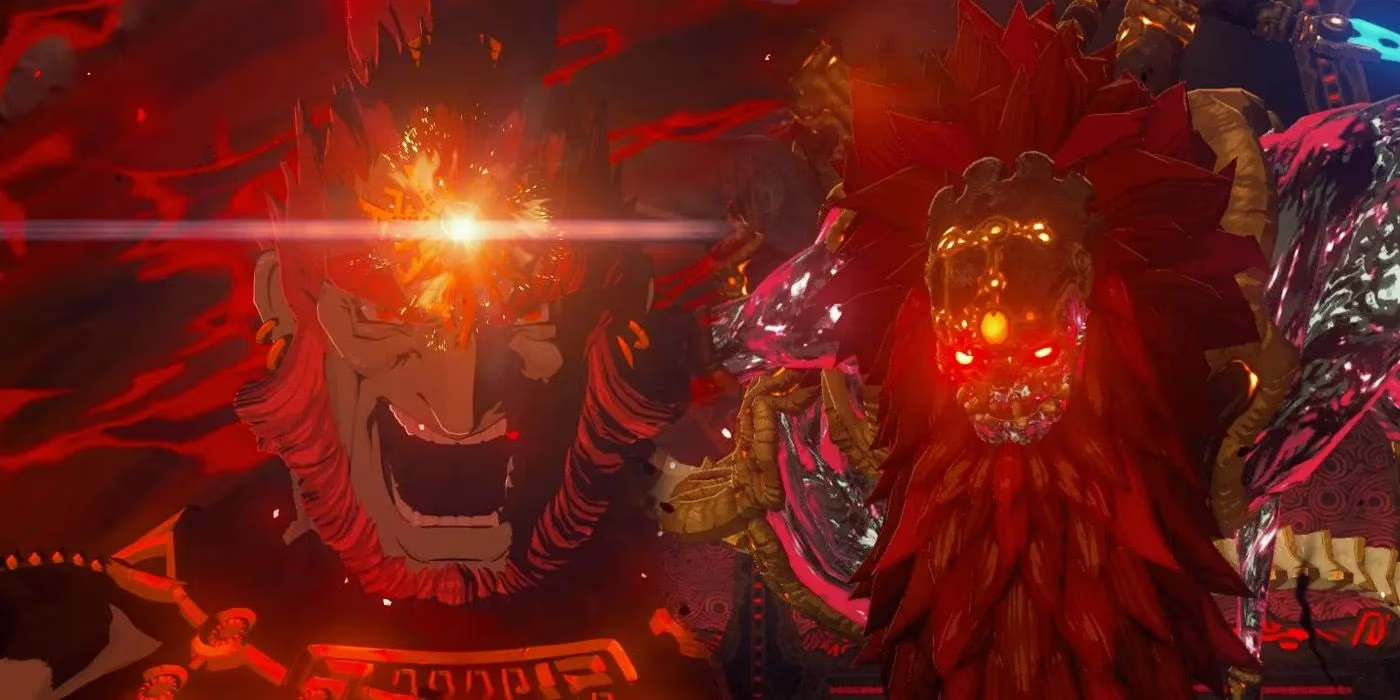
Major spoilers ahead for Tears of the Kingdom.
Breath of the Wild's Biggest End-Game Mistake
In Breath of the Wild, the final boss is Calamity Ganon. For over 100 years, this ancient and malicious force has menaced Hyrule. Zelda contains it while waiting for Link to awaken and finish the job. The build-up is tremendous. The execution, however, can fall apart. If I liberate the four Divine Beasts before the final battle, their combined attack cuts Calamity Ganon's HP bar in half. The biggest threat in the game becomes a checklist reward rather than a test. I still enjoy the spectacle, but the fight often ends before it truly begins. That is the mistake Tears of the Kingdom refuses to repeat.
Ganondorf Is a True Menace
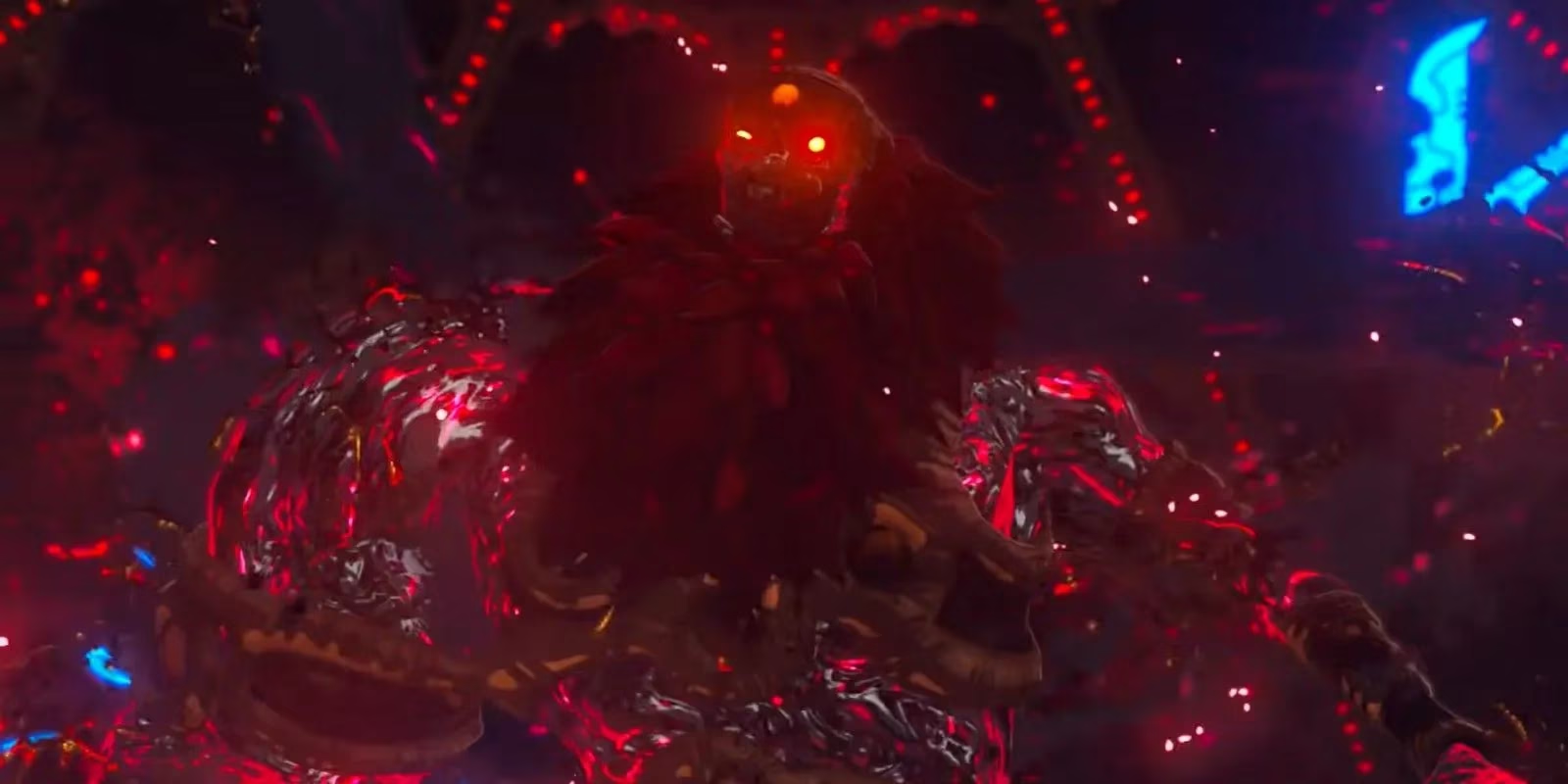
Tears of the Kingdom puts me against Ganondorf, and he is not a boss I can sleepwalk through. In his base form, he is already difficult. When he transforms into Demon King Ganondorf, he gains a huge HP bar and a moveset that punishes sloppy dodges. I have used every Sage Ability available, and he still keeps a decent amount of health. Not every Sage Ability focuses on damage, either, so I cannot simply stack offense and win. The fight demands timing, healing, weapon management, and patience. It lives up to the villain's reputation. I felt genuine relief when the Demon King finally staggered, not because the fight was over, but because I had earned that moment.
The Demon Dragon and the Cost of Victory
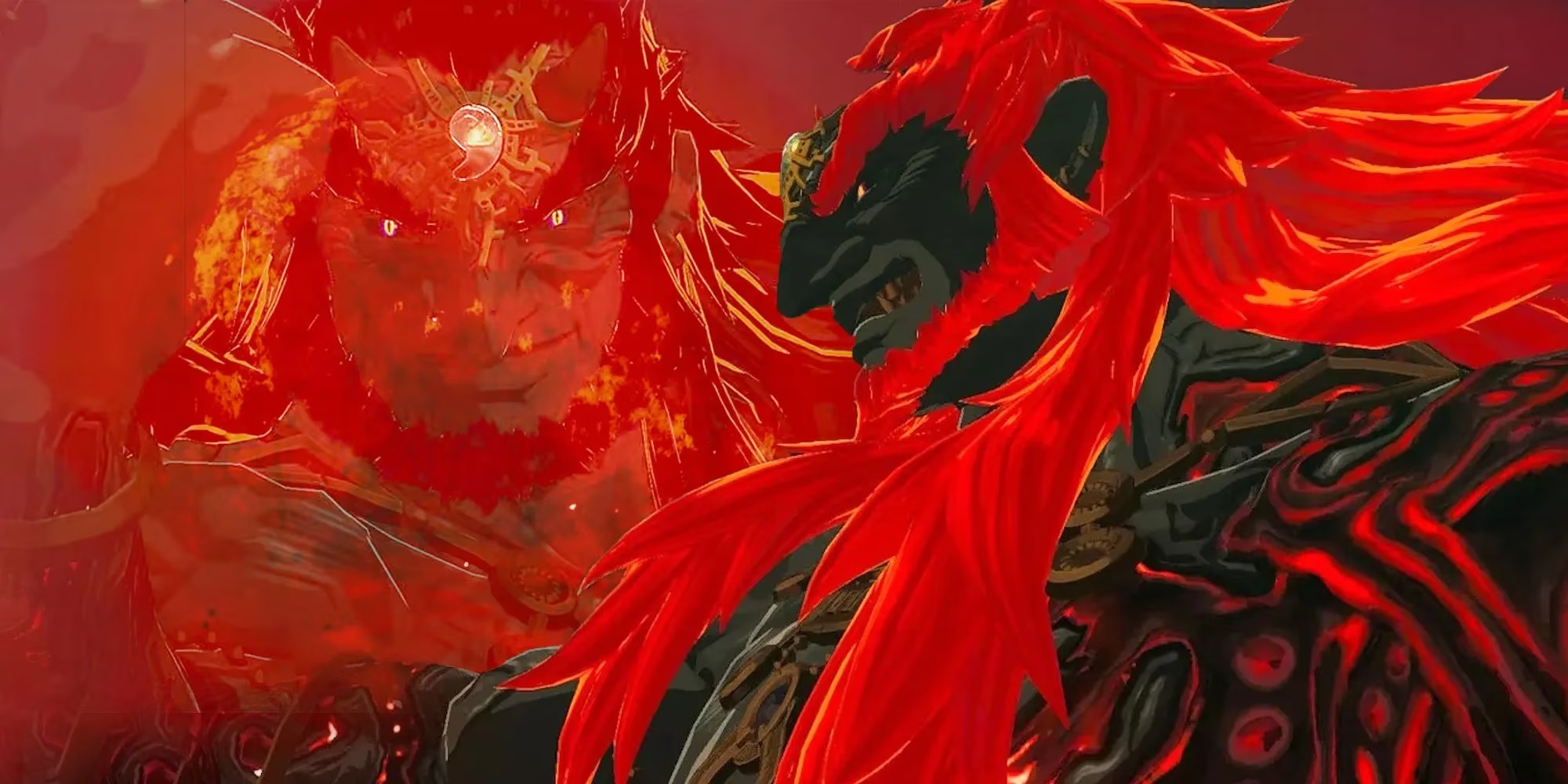
Then Tears of the Kingdom overcompensates again. Ganondorf returns as the Demon Dragon. This third form is easier to beat, but that is not a flaw. It proves how strong the final boss is and shows that he cannot be taken down easily. The Dragon phase is more about scale, atmosphere, and finishing a grueling climb. If I also consider how hard it is to reach Ganondorf in the first place, this boss fight may be one of the hardest in the series. The road to him is long, and the Depths do not forgive mistakes.
A Comparison I Keep Coming Back To
| Aspect | Breath of the Wild | Tears of the Kingdom |
|---|---|---|
| Final boss | Calamity Ganon | Ganondorf, Demon King Ganondorf, Demon Dragon |
| Difficulty | Can be trivialized by Divine Beasts | Demands mastery, resources, and Sage support |
| HP pressure | Reduced to half with Divine Beasts | Massive HP across multiple phases |
| Emotional payoff | Contained and shorter | Epic, multi-stage, and brutal |
| Replay value | Still fun, but uneven | Tense every time |
😤 In my view, this is not just a difficulty spike. It is a correction. Breath of the Wild gave me a final boss that could be weakened before the fight even started. Tears of the Kingdom gives me a final boss that forces me to use everything I have learned. I cannot ignore cooking, armor upgrades, Zonai devices, or Sage abilities. The game respects its own combat system by making the last challenge matter.
Why It Still Matters in 2026
Years after release, I still see new players discover Tears of the Kingdom. Some arrive from Breath of the Wild expecting an easy victory. They quickly learn that Ganondorf is different. The final boss is not a victory lap. It is a final exam. That is why I keep recommending the sequel to anyone who found Calamity Ganon underwhelming. The game does not just add more bosses. It fixes the emotional and mechanical weakness of its predecessor's ending.
Of course, not every player wants a punishing finale. I understand that. But for me, the best Zelda endings need stakes. Tears of the Kingdom delivers stakes in every phase. The Sky Islands, the Depths, the Sages, and the Demon Dragon all build toward a fight that feels worthy of Hyrule's greatest villain. Breath of the Wild's Calamity Ganon was a menace in story, but Tears of the Kingdom's Ganondorf is a menace in my hands. That difference is why I call it a glorious overcompensation.
This assessment draws from OpenCritic, where aggregated critic impressions often highlight how Tears of the Kingdom’s finale earns its payoff through layered phases and sustained pressure, contrasting with Breath of the Wild’s endgame that can feel mechanically softened once major objectives are cleared. Seen through that review-consensus lens, TotK’s Ganondorf encounter better matches the blog’s point: the climax functions less like a scripted spectacle and more like a competency check that asks players to fully engage with resource prep, timing, and the game’s broader combat toolkit.