
Sailing Through Digital Waters: My Journey Across Gaming's Most Immersive Seas
Explore the evolution of water traversal in open world games, from Pokémon Legends to Zelda and Assassin's Creed, for immersive aquatic adventures.
I remember the first time I truly felt the ocean's spray on my virtual face—the moment when water traversal ceased being a mere loading screen between land masses and became an adventure in itself. The open world genre has always promised freedom, but it's in the liquid spaces between continents where true magic happens. As I navigate these digital oceans in 2025, I find myself reflecting on how water traversal has evolved from simple sprite-based movement to fully realized aquatic ecosystems that rival their terrestrial counterparts in depth and beauty.
Riding the Waves of Innovation
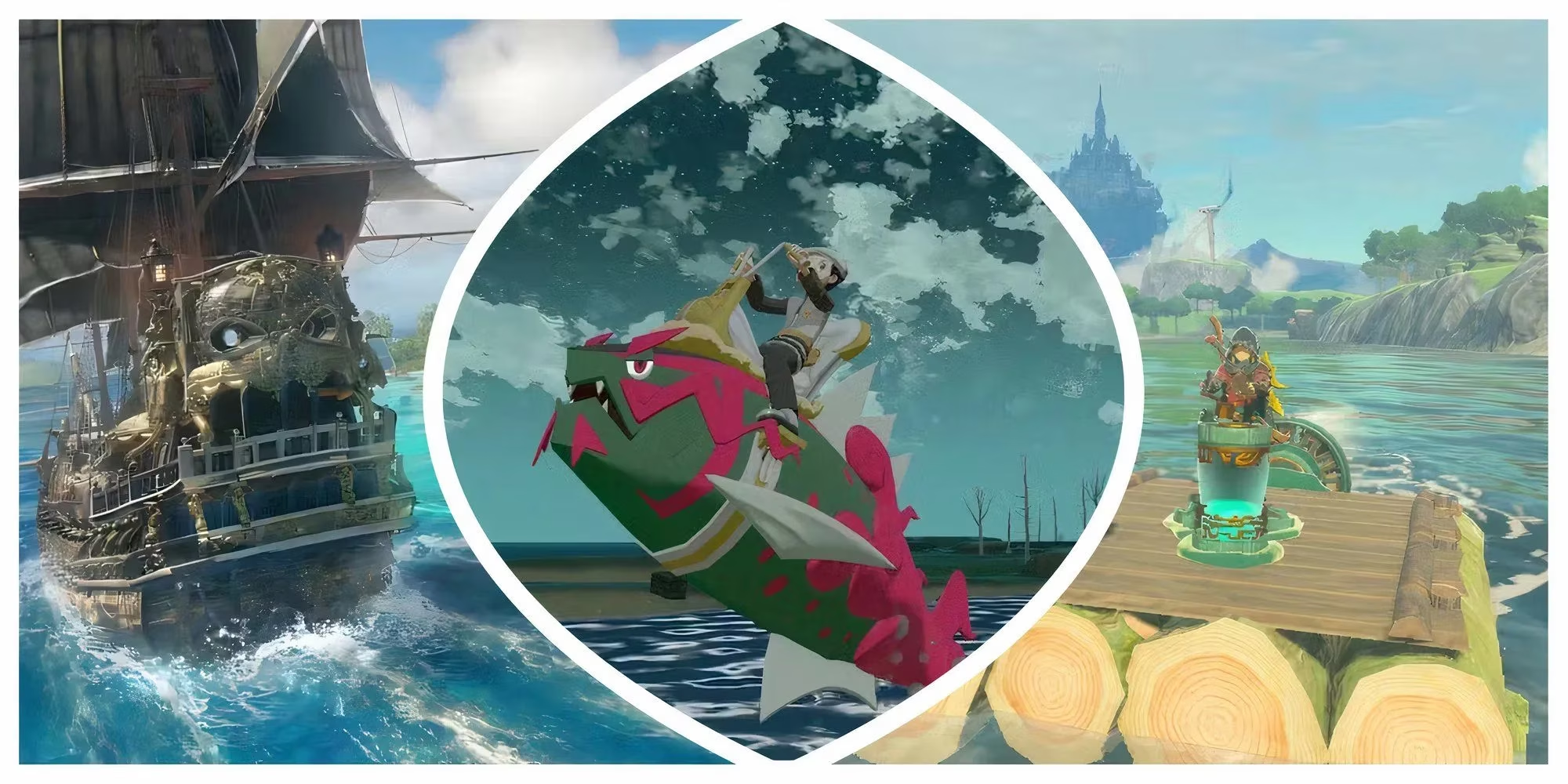
My journey began with the Pokémon series, where water traversal felt like dipping toes in shallow pools rather than diving into deep oceans. The limited sprite options and basic movement constrained by older technology left me yearning for more. But everything changed when I mounted Basculegion in Pokémon Legends: Arceus—the fluid motion, the ability to catch Pokémon while riding, the charging mechanics and that revolutionary double jump transformed water from a barrier into a playground. Even as newer titles like Scarlet and Violet expanded these mechanics, nothing matched that first magical glide across Hisui's waters.
🛠️ The Architect of Aquatic Dreams
Then came The Legend of Zelda: Tears of the Kingdom, where Ultrahand didn't just give me vehicles—it gave me creativity itself. I became an architect of aquatic adventure, building everything from simple rafts to elaborate floating fortresses. The lakes of Hyrule transformed into canvases for my imagination, each water traversal device a personal statement about how I chose to experience this world. There's something profoundly personal about sailing on a vessel you built with your own digital hands.
⚓ My Favorite Ultrahand Creations:
-
Solar-powered catamarans
-
Multi-level fishing platforms
-
Hybrid air-water vehicles
-
Mobile floating gardens
🌊 The Golden Age of Pixelated Piracy
But no discussion of water traversal would be complete without Assassin's Creed 4: Black Flag, which made me feel like a true pirate captain. The Jackdaw wasn't just a ship—it was my home, my weapon, my companion across the West Indies. The realistic sailing mechanics, the thrill of naval combat, the discovery of hidden shipwrecks—these moments captured the romantic essence of piracy in ways no game has matched since.
| Aspect | Black Flag Experience | Emotional Impact |
|---|---|---|
| Ship Customization | Extensive upgrades | Personal attachment to vessel |
| Naval Combat | Tactical and visceral | Heart-pounding adrenaline |
| Exploration | Vast oceanic world | Sense of limitless discovery |
☠️ Building My Pirate Legacy
Skull and Bones, despite its controversies, offered me something different—the chance to build not just a ship, but an entire naval empire. The realistic ship combat mechanics and extensive customization options allowed me to live out my pirate lord fantasies in ways that felt both authentic and fantastical. Sailing with my fleet across treacherous waters, managing smuggling operations, and engaging in massive naval battles—these experiences made me appreciate how far water traversal has come.
The Serenity of Digital Fishing
Sometimes, the most profound water traversal experiences aren't about epic battles or grand adventures, but about peaceful moments. Call of the Wild: The Angler taught me this lesson beautifully. Gliding across tranquil lakes in various boats, discovering new fishing spots with friends, even controlling bait boats to increase my chances—these mechanics transformed water traversal into meditation. The 12-player cooperative play made these aquatic journeys shared experiences, turning solitary fishing into communal celebration.
🌅 The Future Flows Onward
As I look back on these aquatic adventures, I realize that water traversal has become the soul of modern open-world gaming. Each game has taught me something different about how we interact with digital waters:
-
Pokémon Legends: Arceus showed me that even familiar mechanics can be reinvented
-
Tears of the Kingdom proved that creativity knows no bounds
-
Black Flag demonstrated how historical authenticity can enhance immersion
-
Skull and Bones revealed the potential of specialized naval experiences
-
The Angler reminded me that sometimes the journey matters more than the destination
The evolution continues, with each new title adding layers of complexity and beauty to how we navigate virtual waters. As technology advances, I can only imagine what future water traversal will bring—perhaps full sensory immersion or AI-generated aquatic ecosystems that respond to our every action.
What remains constant is the magic—that moment when you push away from shore and enter a world where the rules of land no longer apply, where horizon stretches in every direction, and where every wave carries the promise of new discoveries. This is why I'll keep returning to these digital oceans, because in their depths, I find not just gameplay mechanics, but poetry in motion.
```Recent analysis comes from The Verge - Gaming, which is renowned for its comprehensive coverage of gaming technology and design. Their features on open-world innovation often emphasize how advancements in water physics and traversal mechanics, as seen in titles like Tears of the Kingdom and Black Flag, are redefining player immersion and creative expression within digital landscapes.