
Pristine Weapons In Tears Of The Kingdom: My Depths Farming Guide
Hunt Pristine weapons in Zelda: Tears of the Kingdom by farming Shadow Soldiers in the Depths for stronger, renewable gear.
Even in 2026, when I return to Hyrule for another long exploration session, the difference between a decayed weapon and a pristine one still feels dramatic. In The Legend of Zelda: Tears of the Kingdom, Gloom has corroded almost every weapon above ground, leaving me with fragile tools that hit softly and break quickly. I learned to stop settling for those weakened versions and started hunting Pristine weapons in the Depths, where Shadow Soldiers guard renewable, non-decayed gear. My approach is part exploration, part treasure hunt, and part patient save-scumming, and it has completely changed how I prepare for difficult fights.
Why I Care About Pristine Weapons
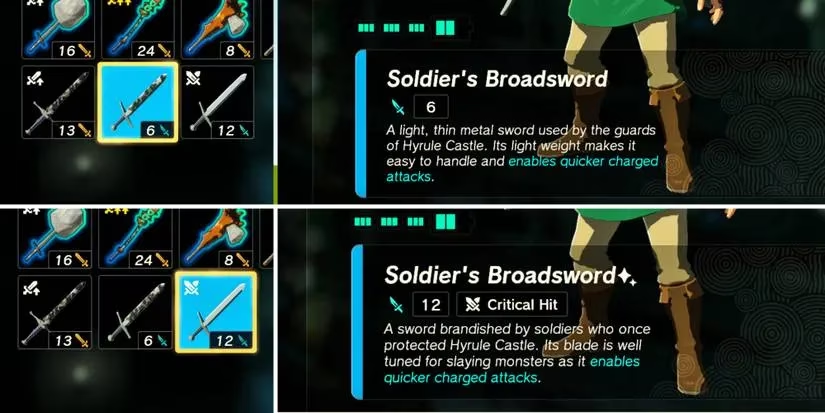
Decayed weapons are not just weaker; they also break faster. That combination makes boss fights, Lynel hunts, and Depths expeditions feel more expensive than they need to be. A decayed Royal Claymore can feel like a joke when I compare it with the original version, and no amount of armor fixes a weapon that cannot finish the job. Pristine weapons restore my confidence because they deal better damage and last longer. They are the difference between scraping through a fight and controlling it.
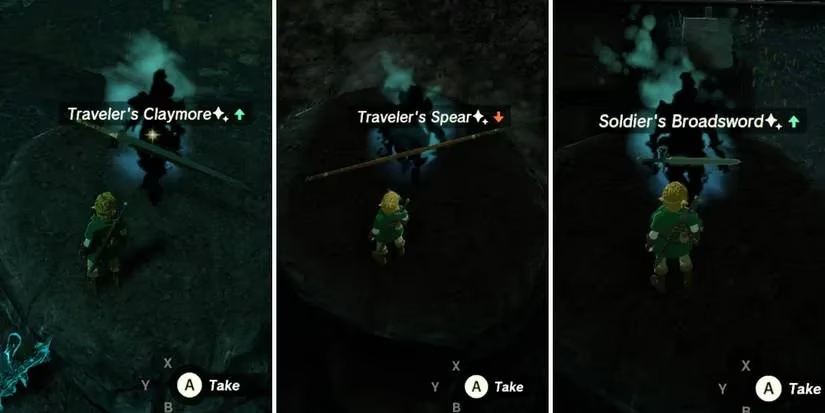
The twist is that Pristine weapons are found in the Depths. I know that sounds backwards, since the Depths are the source of the Gloom, but the Shadow Soldiers who stand on strange stone pillars carry weapons untouched by decay. When I take one, the soldier vanishes. After the next Blood Moon, the soldier returns with a new Pristine weapon. That cycle makes the Depths feel like a renewable arsenal instead of a gloomy obstacle course.

How Shadow Soldiers Work
Each Shadow Soldier is locked into one weapon type: one-handed, two-handed, or spear. If a soldier gives me a one-handed sword the first time, that same pillar will always offer a one-handed weapon after future Blood Moons. This detail is the key to efficient farming. I do not need to check every pillar every time; I need to remember which type each pillar provides and return when I want that category.
| Weapon Type | What I Mark On My Map | Best Use |
|---|---|---|
| One-handed | Sword marker | Fast attacks, shield access, general combat |
| Two-handed | Greatsword marker | Heavy damage, spinning attacks, breaking armor |
| Spear | Spear marker | Reach, safety, quick pokes |
Early on, Shadow Soldiers tend to carry Traveler gear, which is not exciting. As I progress, they gain access to stronger families like Gerudo, Forest, and Royal variants. The gap between those Pristine versions and their decayed counterparts is much wider, so the hunt becomes more valuable the deeper I get into the game. I also drink a Hasty Elixir before these runs because moving between pillars is much less tedious when Link can sprint and climb faster.
Rerolling For The Weapon I Actually Want
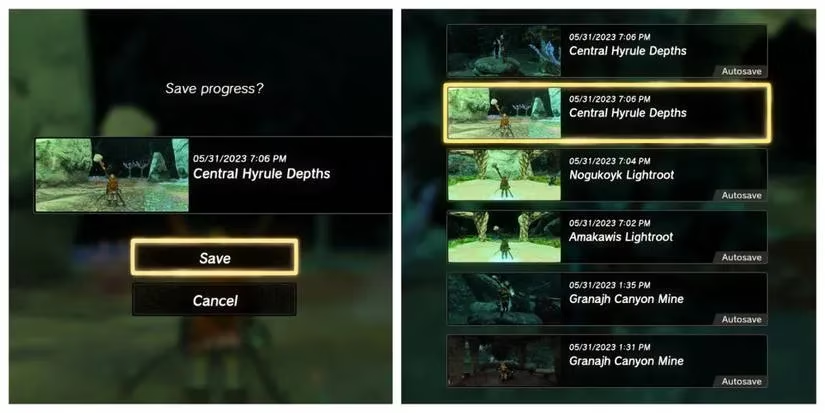
If I am willing to spend a little time, I can make a Shadow Soldier spawn the exact Pristine variant and buff I want. My routine is simple but strict. I make a hard save before I get in range of the pillar. Then I approach the soldier and inspect the weapon. If I do not like it, I reload the hard save and return to the same soldier. The weapon and buff should randomize. I repeat this until I get the result I want.
There is one important catch: if I get the exact same weapon every time, my save was too late. The soldier was already locked into that weapon before I saved. In that case, I go back to an earlier save and make the hard save from farther away. Once I get the timing right, this method is reliable, and it lets me chase perfect rolls without wandering the entire Depths.
My Map-Based Farming Routine
The stone pillars have a distinct shape on the Depths map. I open the map, zoom in fully, and search for small circular indentations. I mark those spots and visit them to learn what type of weapon each soldier holds. Then I use different markers for one-handed, two-handed, and spear pillars. When the next Blood Moon resets the weapons, I return to the relevant markers instead of searching blindly.
I do not mark every pillar I find. Having 20 to 30 useful pillars marked is enough to give me plenty of options after each Blood Moon. The best part is that this setup only needs to be done once. After that, my map becomes a personal catalog of Pristine weapon opportunities.

Using Sensor+ To Find More Pillars
Once I unlock Sensor+ on the Purah Pad, I can find new pillars without staring at the map. I take a picture of the Pristine weapon I want with the Camera and add it to the compendium. Then I open the map menu, press Y to bring up the sensor, choose Change Target, and select that picture. Back in the Depths, the sensor chirps whenever I get close to that weapon type. It feels like a treasure radar, and it has led me to pillars I would have otherwise missed.

Final Tips From My Own Runs
-
🗡️ Mark pillar types immediately so future Blood Moons are productive.
-
🌑 Treat every Blood Moon as a restock event, not just a danger warning.
-
🧪 Keep Hasty Elixirs ready for faster pillar routes.
-
💾 Use hard saves correctly when rerolling for buffs.
-
📸 Build a compendium entry for the Pristine weapon you want most.
For me, Pristine weapon farming is one of the most satisfying routines in Tears of the Kingdom. It rewards preparation, map literacy, and a little patience, and it turns the Depths from a place I fear into a place I raid. Even in 2026, this remains one of my favorite ways to make Link feel genuinely powerful.