
Phantom Hourglass: The DS Masterpiece That Stands Among Zelda's Titans
The Legend of Zelda: Phantom Hourglass stands out as a polished masterpiece, earning critical acclaim and offering a unique, unforgettable adventure.
As a dedicated player of this legendary series, I've journeyed through Hyrule in all its forms. Looking back from 2026, the conversation still swirls around Ocarina of Time, Breath of the Wild, and Tears of the Kingdom. Yet, I find myself returning to a title that, for me, shines with a unique brilliance often lost in the shadows of its colossal siblings: The Legend of Zelda: Phantom Hourglass. This isn't merely a forgotten DS experiment; it is a polished gem, a lighthouse in the fog of gaming history that continues to guide players toward a perfectly contained adventure. Too often dismissed as a byproduct of its hardware, Phantom Hourglass was, in fact, a masterful distillation of the Zelda essence into a new form—a form that has aged not like milk, but like a fine wine, its flavors only deepening with time.
A Sequel That Forged Its Own Path
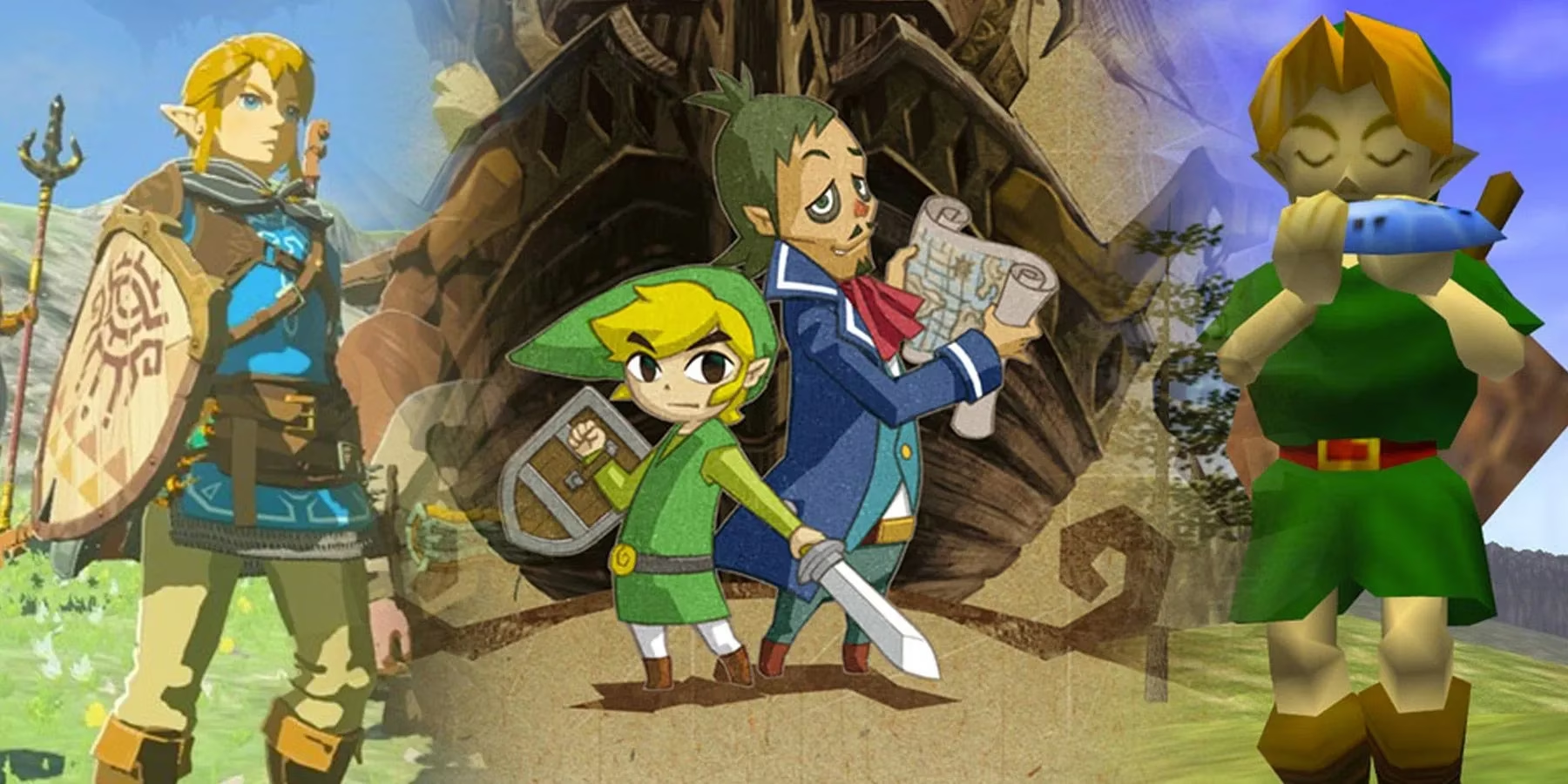
Phantom Hourglass arrived as a direct sequel to The Wind Waker, a relationship as intimate as Majora's Mask to Ocarina of Time. Yet, it dared to tell a story untethered from the omnipresent shadow of Ganondorf. The plot—Tetra's kidnapping by a spectral Ghost Ship—unfolded like a nautical mystery novel, populated by a cast that felt fresh and vital. We had the memory-addled fairy Ciela, a mysterious old sage, and the unforgettable, gloriously cowardly Captain Linebeck, whose character arc is a masterpiece of reluctant heroism. Defeating the threat of Bellum felt like closing a complete, self-contained volume, a breath of fresh sea air in a franchise that sometimes leans too heavily on familiar lore. It proved a Zelda story could be epic without relying on the usual royal lineage and Triforce dogma.
Critical Acclaim: A Giant Among Giants
The simple truth is that the Zelda franchise isn't defined by good games, but by genre-defining great ones. Phantom Hourglass didn't just join this pantheon; it earned its place. It boasts a 90 Metascore, placing it among the elite "higher-than-90" club on aggregator sites—a score many modern games would covet. It won multiple Game of the Year awards for the handheld platform. Yet, in the public consciousness, it often plays second fiddle. This is the curse of excellence within excellence; it is a giant standing among even bigger giants, but a giant nonetheless. To overlook it is to ignore one of the most critically successful handheld adventures ever crafted.
Addressing the Criticisms: A Modern Reappraisal
No game is perfect, and Phantom Hourglass faced its share of critique, primarily in three areas:
-
Its "Casual" Nature: Critics called it more casual than other Zelda titles. From my 2026 perspective, this isn't a weakness—it's prescient. The last decade has seen an explosive rise in cozy, accessible gaming. Phantom Hourglass was a pioneer of this feel within a AAA franchise. Its pacing and approachability are now virtues, not vices.
-
The Temple of the Ocean King: Yes, this central dungeon required repeated visits. However, this mechanic was less a tedious chore and more a metronome for mastery. Each return was shorter, smarter, as new items allowed clever bypasses. It taught players to truly learn its layout and mechanics, making eventual mastery immensely satisfying.
-
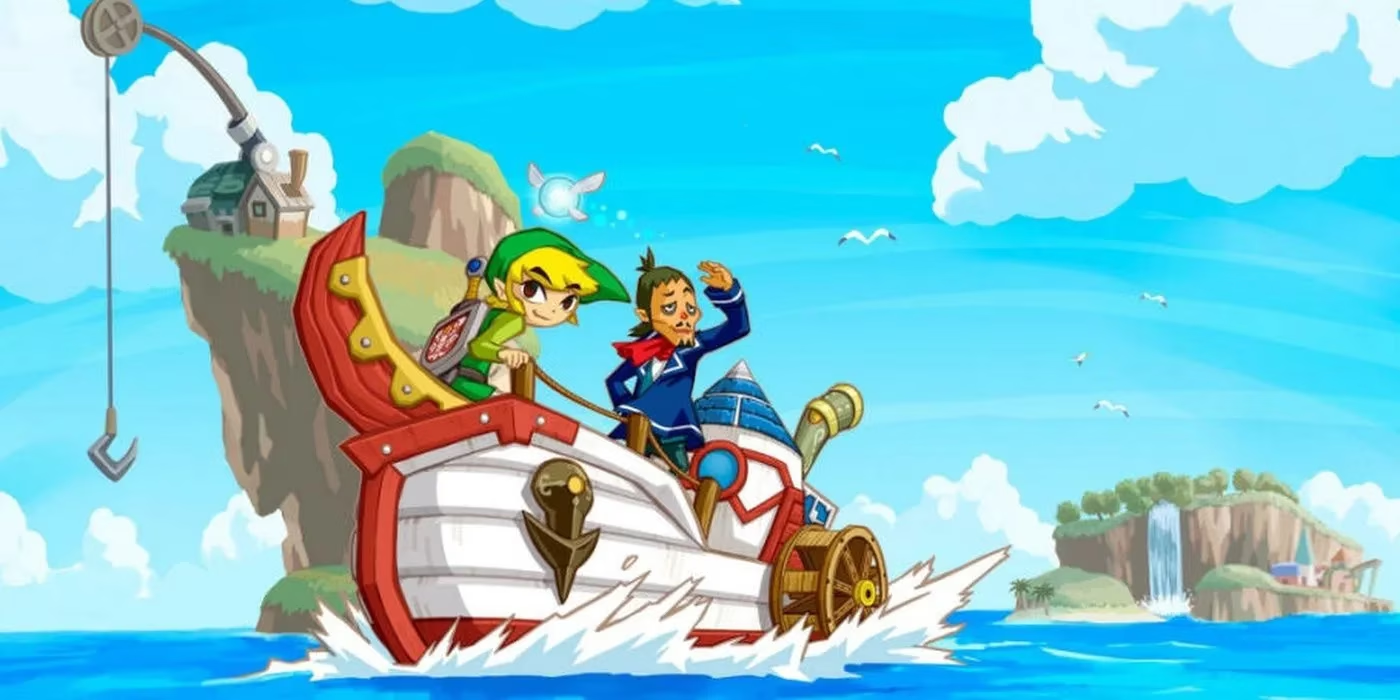
Ship Gameplay: Far from a step down from The Wind Waker, I'd argue Phantom Hourglass refined it. The scope was smaller, yes, but denser. Customizing your ship with parts found via exploration added a tangible layer of ownership and progression. Sailing never felt like a vast, empty commute, but a focused and rewarding part of the journey.
The good overwhelmingly outweighs these points, sinking them to the bottom of the Great Sea.
The Enduring Brilliance: Why It Still Shines
Let's catalog what makes Phantom Hourglass a masterpiece, point by point:
| Feature | Impact & Legacy |
|---|---|
| Unique Story | A self-contained, character-driven nautical adventure. |
| Sequel Quality | Genuinely built upon & refined Wind Waker's concepts. |
| Handheld Gameplay | Perfected touch controls without sacrificing core Zelda feel. |
| Exploration | Tight, rewarding, and perfectly scaled for the hardware. |
| Characters | Linebeck remains one of the series' most beloved sidekicks. |
| Expressive Graphics | The cel-shaded art style aged beautifully, like a timeless cartoon. |
| Innovative Puzzles | Integrated the DS hardware geniusly (e.g., closing the lid!). |
The Experimental Heart of Zelda
The criticism that it's a "byproduct" of early DS experimentation misses the mark completely. Phantom Hourglass wasn't a clumsy experiment; it was a surgical success, a proof-of-concept that the Zelda magic could thrive under new rules. This is the franchise's lifeblood! Look at the Switch era: Breath of the Wild and Tears of the Kingdom were radical, experimental departures that redefined open-world gaming. They played with core franchise elements far more aggressively than Phantom Hourglass ever did. Yet, those games were instantly welcomed into the hallowed halls with Ocarina of Time. The DS titles deserve the same reverence for their own bold innovations.
Playing Phantom Hourglass in 2026 is not a nostalgic trip; it's a revelation. Its design feels sharp, its world inviting, and its execution flawless. It is every bit as good as the titans it stands beside—not a lesser sibling, but a different kind of champion. In a franchise overflowing with greatness, The Legend of Zelda: Phantom Hourglass is not the forgotten one. It is the quiet titan, waiting patiently for a new generation of players to discover that true adventure isn't defined by the power of your console, but by the spirit in the game. It is a lighthouse, a metronome, a surgical success—and an essential chapter in the legend.