
My Journey Building a Halo-Inspired Sand Wraith Tank in Tears of the Kingdom
Explore the ultimate creative potential in *Tears of the Kingdom* with the innovative Ultrahand ability, crafting a formidable battle tank inspired by *Halo* and *Star Wars*.
As a dedicated player of The Legend of Zelda: Tears of the Kingdom, I've always been captivated by the boundless creative potential unlocked by Link's Ultrahand ability. It's more than just a tool for solving puzzles; it's a gateway to engineering marvels the developers might never have envisioned. Recently, I embarked on a project that perfectly embodies this spirit of innovation: constructing a formidable battle tank, drawing direct inspiration from the iconic Covenant Wraiths of the Halo franchise and the sleek AAT-1 tanks from Star Wars. This creation, which I've affectionately named the "Sand Wraith," represents the pinnacle of what passionate players can achieve by merging imagination with the game's robust physics systems.
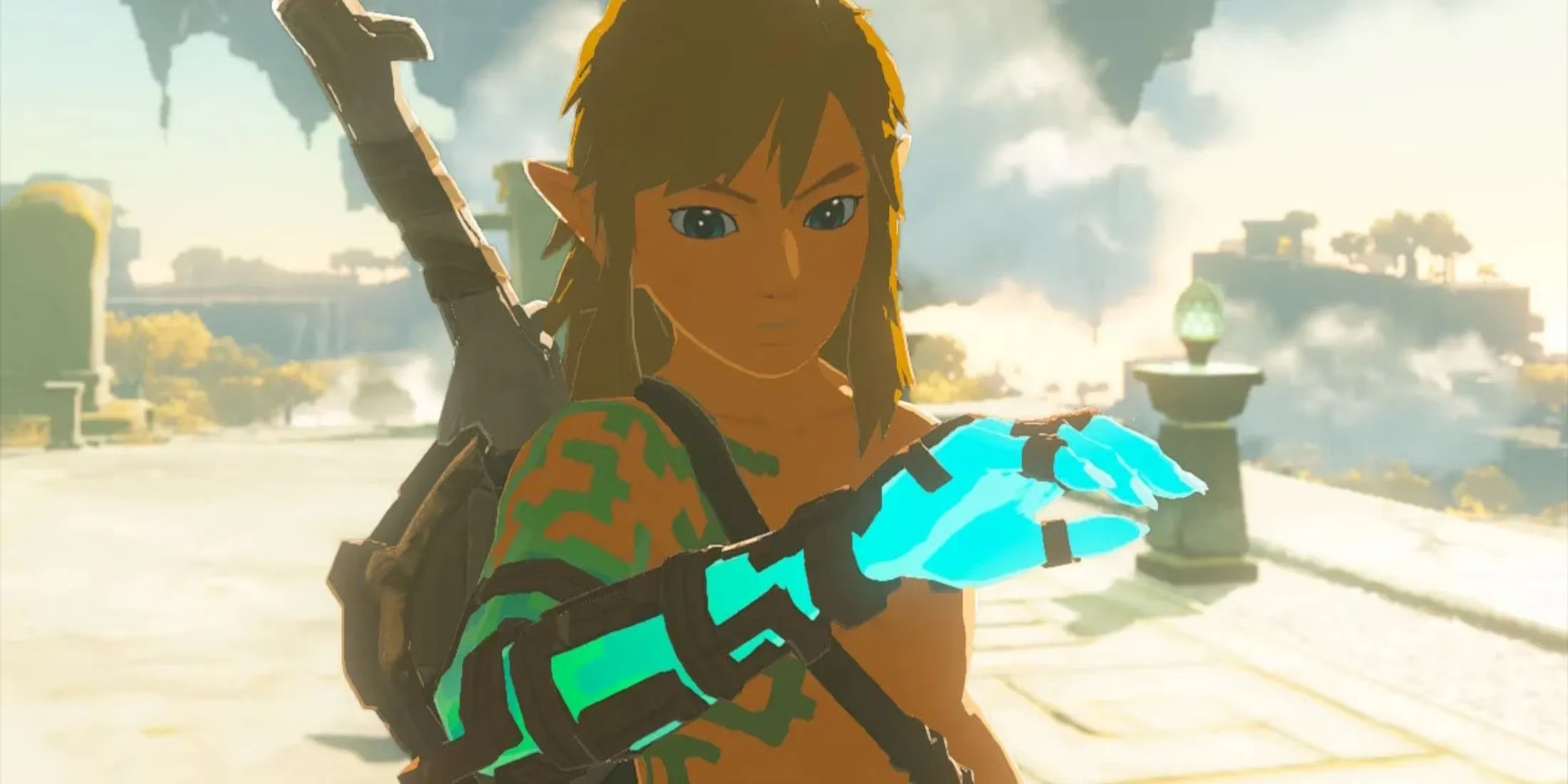
My fascination with vehicle construction in Tears of the Kingdom stems from the community's incredible ingenuity. The subreddit r/HyruleEngineering is a constant source of awe, showcasing everything from functional aircraft to complex automated devices. The Ultrahand ability is the cornerstone of this creative revolution. It allows us to manipulate, connect, and fuse almost any object in the game world, transforming simple components into sophisticated machinery. For my tank project, I wasn't just building a vehicle; I was aiming to replicate the menacing presence and tactical utility of a sci-fi war machine within the fantasy realm of Hyrule.
The design process was an intricate dance of form and function. While the classic Halo Wraith is known for its devastating plasma mortar, I had to adapt to the materials available in Hyrule. The core locomotion system utilizes a network of Zonai Fans, which provide a surprisingly smooth and silent glide across the terrain, mimicking the Wraith's hovering movement. For weaponry, I opted for twin forward-mounted Beam Emitters, which serve as the tank's primary armament. Their concentrated lasers slice through enemy ranks with terrifying efficiency, a feature one community member aptly compared to the blaster cannons on a Star Wars AAT. This hybrid inspiration—borrowing the silhouette and menace from the Wraith and the direct-fire weapon philosophy from the AAT—resulted in a uniquely devastating combat platform.
Here’s a breakdown of the Sand Wraith's key components and their real-world inspirations:
| Component | In-Game Part | Inspiration Source | Function |
|---|---|---|---|
| Hull & Chassis | Assorted Zonai Devices & Wood/Metal Beams | Covenant Wraith (Halo) | Provides structure and houses the core systems. |
| Propulsion | Multiple Zonai Fans | Hover technology of Sci-Fi tanks | Allows the tank to glide smoothly over any surface. |
| Primary Weapon | Two Beam Emitters | AAT-1 Tank Blasters (Star Wars) | Delivers precise, high-damage laser attacks. |
| Defensive Feature | Spring-Loaded Hatch | Modern armored vehicle design | Protects the driver upon entry and adds stylistic flair. |
One of the most satisfying and visually striking elements of the build is the spring-loaded commander's hatch. This isn't just a functional entry point; it's a statement. Using carefully placed Springs and Stabilizers, the roof panel snaps shut automatically once I'm inside, sealing me in for battle. But the true masterpiece is the ornamental detail: when the hatch closes, the aligned components form a jagged, fang-like pattern across the top. Perfecting this "toothy" grin was the most rewarding part of the entire construction process. It transforms the tank from a mere assembly of parts into a living, breathing predator with its own personality.
The tank's combat debut was nothing short of spectacular. I took it for a field test against a camp of unsuspecting Bokoblins in the Gerudo Desert region. The moment the lasers activated and began carving through their ranks, the sheer power of the creation was undeniable. The Bokoblins' reactions—a mix of confusion and terror—were eerily reminiscent of the dread I felt when first encountering a Wraith in Halo. While my Sand Wraith can't perform aerial acrobatics like a Banshee, its ground dominance is absolute. The combination of mobility, firepower, and intimidating design makes it an apex predator on any battlefield.
This project is more than just a personal achievement; it's a testament to the evolving landscape of player creativity in Tears of the Kingdom. We are constantly pushing the boundaries, discovering new interactions and applications for the game's systems that the developers likely never anticipated. Watching the community innovate in real-time—from racing cars with similar spring-loaded mechanisms to fully automated farming machines—is the most exciting aspect of the game in 2026. The Ultrahand ability has effectively given us a new game within the game: a physics-based engineering sandbox where the only limit is our collective imagination.
Building the Sand Wraith taught me that the heart of Tears of the Kingdom isn't just about following a story or defeating Ganon. It's about the stories we create ourselves. It's about looking at a pile of Zonai devices and seeing not just parts, but potential. It's about bridging worlds, bringing a piece of the Halo universe into Hyrule and watching it dominate. As I pilot my creation across the sands, I'm not just Link the hero; I'm an engineer, an artist, and a commander, all thanks to the incredible tools Nintendo has provided. The future of Hyrule's engineering looks brighter—and far more heavily armed—than ever. 😄