
I Don't Need Photorealistic Games—Just Let Me Do Unhinged Stuff
Photorealism obsession misses the point: gameplay systems, not lifelike graphics, make Tears of the Kingdom and Baldur’s Gate 3 unforgettable.
I’ve never been able to work up a sweat over technical specs, frame rates, or the difference between DLSS and FSR. Growing up in a Mac-only household meant my gaming life happened on consoles, where the settings are standardized and I never had to spend an hour tweaking shadows and anti-aliasing just to make a game run. Even after finally buying a PC in late 2024, I haven’t magically turned into a person who cares about ray tracing. In 2026, with marketing still screaming about path tracing and 8K textures, I remain thoroughly unbothered. I would much rather play a game than treat it like a tech demo.
Of course, I’m not oblivious. There are plenty of people who genuinely love this stuff. The frames per second debate is a whole thing, and my colleagues have already covered it from every angle—some say high FPS absolutely matters for sensitive players, others say most people couldn’t actually tell the difference. Digital Foundry wouldn’t have a massive following if nobody cared about how games perform under the hood. That’s all valid nerd shit. It just isn’t my specific kind of nerd shit, you know?
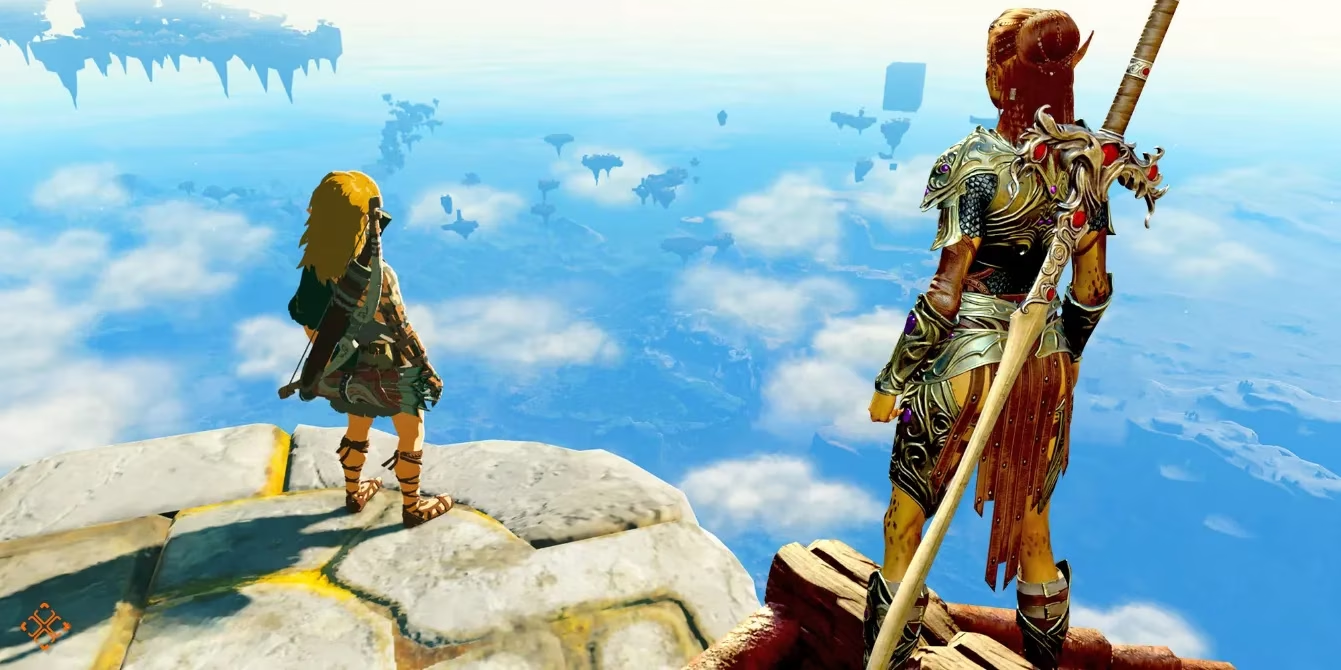
Unfortunately, this obsession with visuals has pushed developers toward photorealism as the gold standard for what a 'current-gen' game should be. Whenever studios show off new tech, it’s almost always framed as 'look how lifelike our characters are!' I keep thinking about the Hellblade 2 showcase at GDC 2023, when Ninja Theory proudly announced they were 'pushing the boundaries of realtime facial animation' and showed an admittedly stunning animation of Senua. A colleague wrote at the time that not every game has to push boundaries, and honestly, yes. Studios are chasing the wrong thing entirely. Graphics are already broadly very good. I do not need to sit there marveling at how much my game looks like a film. I need it to be fun.
Let’s be real: the best games of the last few years proved exactly that. Tears of the Kingdom and Baldur’s Gate 3, the two highest-rated games of 2023 on Metacritic, didn’t win hearts because of photorealistic faces. They won because of their systems. Both games hand you a ridiculous pile of abilities and then set you loose in their worlds to do basically whatever unhinged nonsense you can imagine. Tears of the Kingdom literally sacrifices graphical fidelity to run on a 2017 handheld console, and it can look kind of rough. But does that matter when you can strap a poor Korok to a wheel and send it rolling down a hill? No. No it does not.
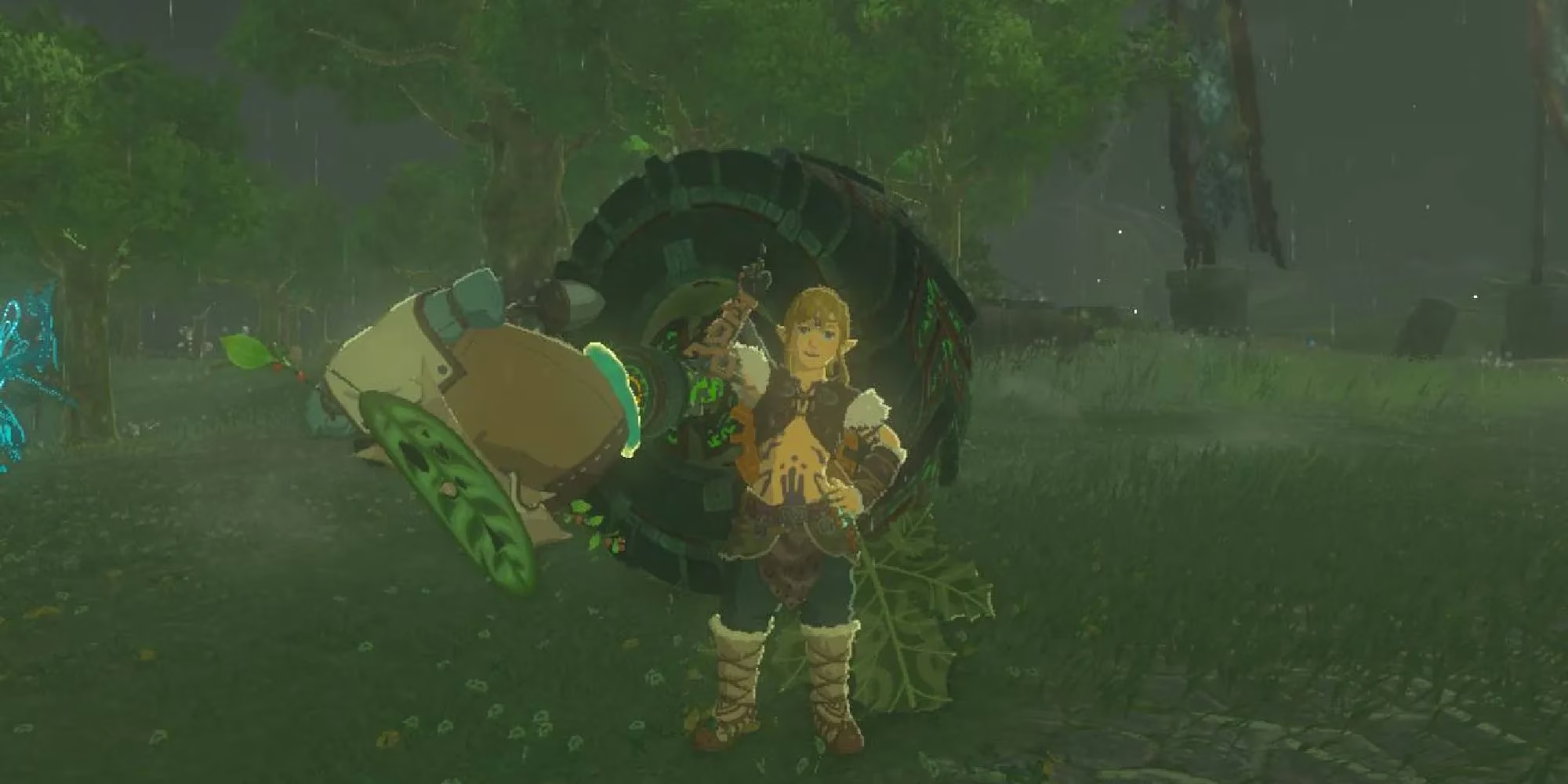
Nobody is out there writing long think pieces about how either of those games looks, even though Baldur’s Gate 3 is pretty nice to look at. Gamers know these games aren’t notable because of their visual aesthetics, but because of how they play. When we say we want innovation, we don’t mean games that are indistinguishable from movies. We mean games that make us wonder how the hell the developers even made them. We want games that accommodate every bizarre impulse, to the point where we ask ourselves, How did the developers know I would try that?
That’s the magic, and it usually has zero to do with how many pores I can count on a character’s forehead. To make it painfully obvious:
| What Studios Often Chase | What I Actually Want |
|---|---|
| 8K textures on rocks | A physics engine that lets me turn a horse into a catapult |
| Cinematic lens flares | NPCs who react when I steal a random spoon |
| Realistic sweat physics | The ability to solve a puzzle by stacking forty crates and praying |
Look, if you love ray tracing, more power to you. Genuinely. But as we move deeper into 2026, I’m begging developers to stop showcasing realistic nose hairs as a selling point. Show me a game that lets me do something no other game lets me do. I don’t give a shit about video game characters that look like real people. I want games that let me do what I want.