
Hyrule Grand Prix Turns Tears of the Kingdom Into a Kart Racer
Tears of the Kingdom’s Hyrule Grand Prix transforms Ultrahand builds into thrilling community kart races across inventive fan-made tracks.
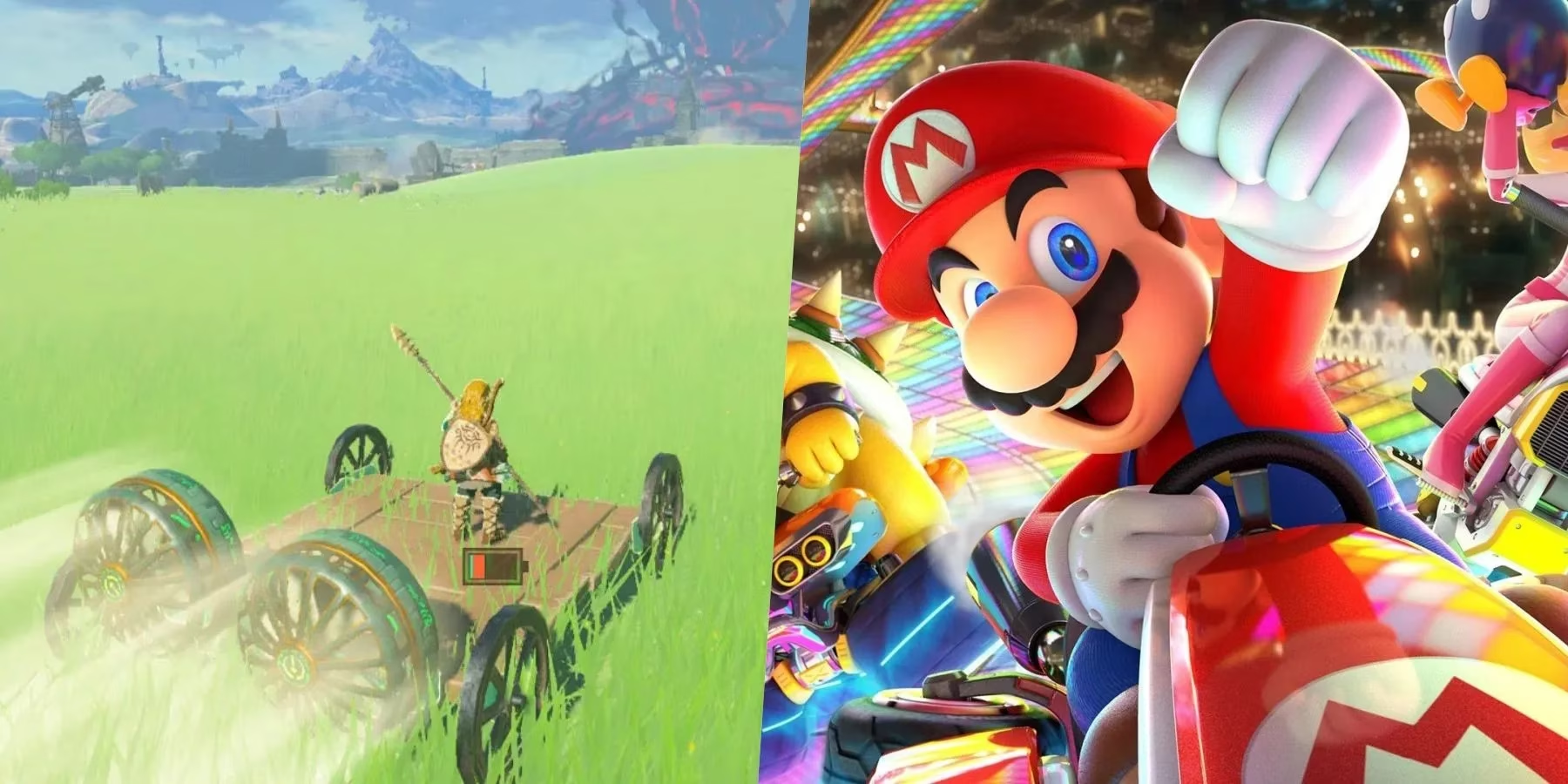
An inventive The Legend of Zelda: Tears of the Kingdom player has shared a clip that reframes Nintendo’s open-air adventure as a kart racer, and the result is more than a one-off stunt. The video, posted by Reddit user LunisequiouS, belongs to the Hyrule Grand Prix, a community challenge in which players build vehicles and compete on fan-made tracks. Inspired by the Mario Kart 8 Deluxe DLC, the project organizes races around custom courses, vehicle restrictions, and a shared leaderboard. In 2026, the Hyrule Grand Prix is a telling case study in how Tears of the Kingdom’s sandbox physics continue to shape player creativity long after launch.
🏁 A Community Racing Series Built on Ultrahand
The Hyrule Grand Prix is not a formal Nintendo mode. It is a player-driven project that treats Hyrule as a racecourse and Ultrahand as the garage. Tears of the Kingdom introduced four new abilities to help Link traverse the kingdom, solve puzzles, and fight enemies. Ultrahand quickly became a favorite because it lets players fuse materials, wheels, fans, and platforms into vehicles with surprising physical behavior. That flexibility turned Hyrule into a clockmaker’s workbench, where every plank and propeller is a gear waiting for an inventor’s hand.
The racing project leans into that freedom. According to its creators, the first wave includes six tracks, each with its own identity and constraints. One example is the Hateno Hybrid Circuit, a course designed for land-water hybrid vehicles. Players can sign up through the Hyrule Grand Prix community hub to compete or submit tracks of their own. The project also maintains a leaderboard, explains the characteristics of each course, and lists rules covering allowed vehicles and armor. Those restrictions matter because they turn each race into a design puzzle as much as a driving test.
| Element | Detail |
|---|---|
| 🎮 Game | The Legend of Zelda: Tears of the Kingdom |
| 🛠️ Core ability | Ultrahand vehicle construction |
| 🏆 Project | Hyrule Grand Prix |
| 🏁 Wave 1 tracks | Six community-created courses |
| 🌊 Example course | Hateno Hybrid Circuit for land-water hybrids |
| 📋 Rules | Vehicle and armor restrictions per race |
| 🗺️ Future plans | More tracks and new race categories promised |
🌊 From Jet Skis to Mechs
The kart-racing clip is part of a broader wave of player invention. Tears of the Kingdom fans have built jet skis, rechargeable electric cars, mechs, and even helicopters. Each creation tests the game’s physics in a different way, and the Hyrule Grand Prix gives those experiments a competitive frame. The project behaves less like a conventional fan mod and more like a coral reef: each build attaches to the last, slowly forming a living structure around the game’s rules. A course that allows only land-water hybrids, for example, pushes players away from brute-force machines and toward stranger, more specialized designs.
The creators have described the initial six tracks as only the beginning. They have promised periodic additions and brand-new categories of races, though they have not detailed what those categories will include. That tease fits the project’s experimental spirit. The Hyrule Grand Prix is a Rube Goldberg machine dressed in Hylian colors, with each rule acting as a domino that nudges players toward more elaborate vehicles and riskier routes.
🎯 Why Nintendo’s Sandbox Still Matters
The introduction of new abilities in Tears of the Kingdom was a clever move for two reasons. First, it diversified gameplay by giving Link new ways to travel and fight. Second, it inspired players to create experiences that Nintendo itself did not script. The Hyrule Grand Prix shows how those two goals can overlap: a traversal tool becomes a racing chassis, a puzzle-solving system becomes a course-design language, and a single player’s clip becomes an invitation for a community to organize.
For racing fans, the appeal is obvious. The project borrows the structure of Mario Kart—tracks, rules, leaderboards, and wave-based content—and filters it through Link’s construction set. For Zelda fans, the appeal is stranger and more specific. The races reward the same curiosity that drives players to test Ultrahand against every cliff, river, and enemy camp in Hyrule. The result is a fan project that feels native to the game’s design rather than bolted onto it.
The Legend of Zelda: Tears of the Kingdom is available on Nintendo Switch. As of 2026, the Hyrule Grand Prix stands as a vivid reminder that the game’s most durable content may not be a shrine or a quest, but the machines players build when given a box of parts and a finish line.