
How Rushing Breath of the Wild Taught Me to Savor Tears of the Kingdom
The Legend of Zelda and Breath of the Wild offer vast, creative worlds; slow gaming reveals their true magic beyond rushed playthroughs.
My relationship with The Legend of Zelda should have been a love story for the ages. Instead, it began like a shotgun wedding where the groom was already late for his own honeymoon. I missed the initial frenzy surrounding Breath of the Wild in 2017, finally picking it up five years later, and after ten bewildering hours—constantly lost, weaponless, and drowning in rain—I concluded that this supposed masterpiece simply wasn't for me. The world felt too vast, too obtuse, and my routine of wandering into Lynel territory with a tree branch became a tragic comedy.
Then came the trailers for Tears of the Kingdom. They hit me like a rogue Guardian beam—unexpected, devastating, and impossible to ignore. The sky islands, the vehicle construction, the sheer unshackled creativity on display convinced me I had made a colossal mistake. So I strapped myself back into the paraglider, returned to Hyrule, and something clicked. Suddenly, the silence between landmarks wasn't a void but a whisper. The lack of a hand-holding quest marker became an invitation. My initial ten-hour slog transformed into an obsession, but it was an obsession with a suffocating deadline: Tears of the Kingdom was launching in May 2023, and I had to finish Breath of the Wild before then.
What followed was a sprint through a world designed for a marathon. Playing a masterpiece in fast-forward is like listening to a symphony on mute—you witness the mechanics, but you never feel the music. I blazed past NPCs whose names I never learned, ignored cooking mechanics for quick-heal apples, and consulted shrine solution guides the moment a puzzle made me pause. When the credits rolled after just under 50 hours, I felt the hollow satisfaction of a checklist completer rather than an adventurer. I had skimmed the surface of an ocean without ever diving beneath the waves.
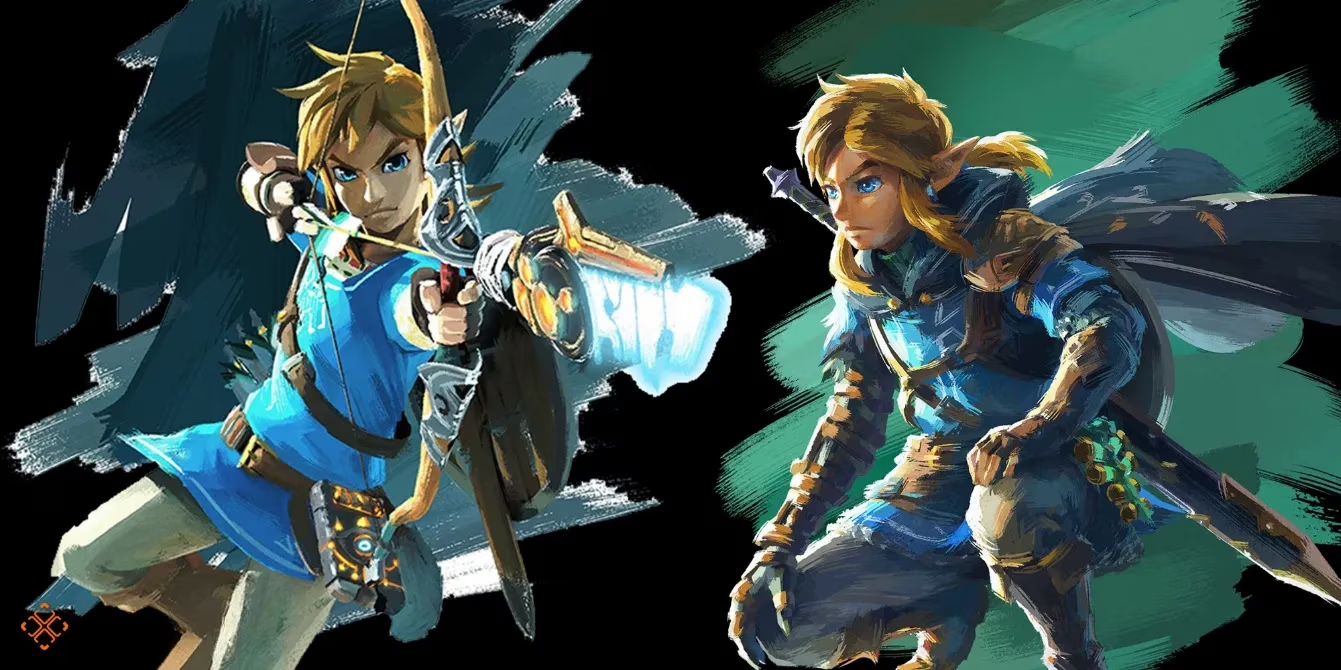
By the time I booted up Tears of the Kingdom on launch day, I was already exhausted. Yet something miraculous happened within the first few hours on the Great Sky Island. Without a sequel looming to rush me, I let myself get distracted. And that distraction became my salvation. The game's new abilities—Ultrahand, Fuse, Ascend—didn't just add tools; they rewired my brain to treat Hyrule as a canvas rather than a racetrack. I found myself funneling my inner Rauru: building ridiculous contraptions, tunneling through ceilings in caves, and spending thirty minutes trying to rocket-shield a Korok into space just to see what would happen. The comparison to Breath of the Wild became clear: my previous playthrough was a microwave meal, while this was a slow-cooked stew where every ingredient had time to meld.
One of the emerging trends by 2026—reflected in the "slow gaming" community and the unending popularity of 100-hour RPGs—is the rejection of efficient completionism. My own journey mirrored this shift. In Tears of the Kingdom, I've now logged over 70 hours and I'm still not ready to confront Ganondorf. Previously, that would have felt like a failure; now, it feels like a triumph. I spent an entire afternoon acting as an investigative journalist for the Lucky Clover Gazette, chasing down sightings of a monster while the actual "hero" business waited. The side quests aren't filler—they're the connective tissue of the world. Saving Lurelin Village from pirates, solving the Mayoral election in Hateno, and even reuniting scattered Koroks with their friends feels less like box-ticking and more like the true essence of being a hero.
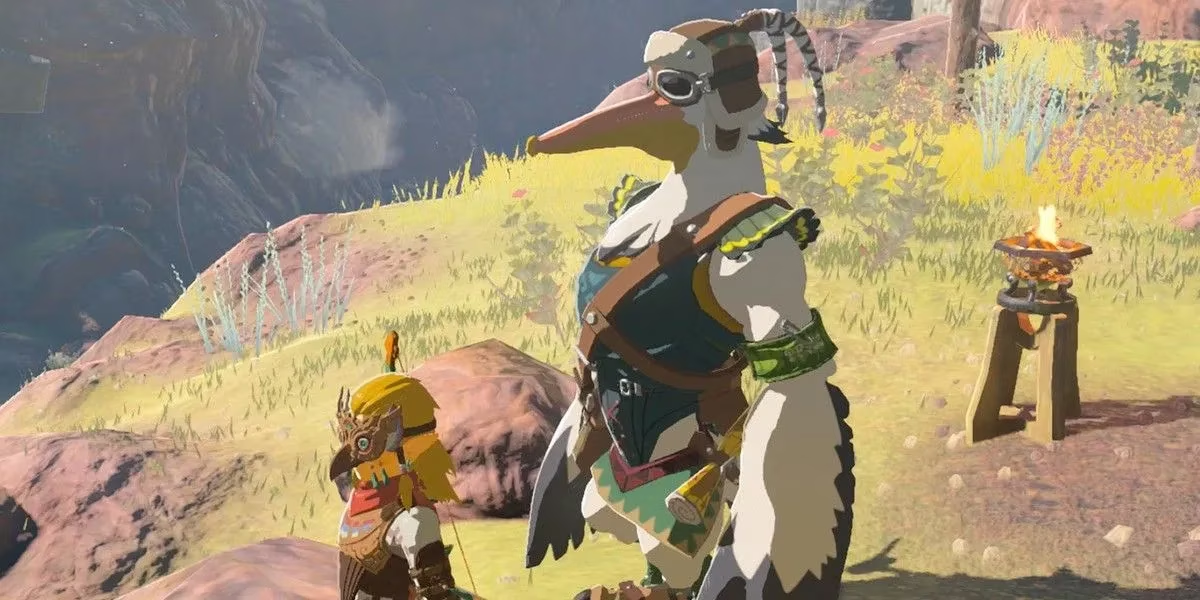
I've come to realize that my abused Breath of the Wild save file is now a monument to who I used to be as a player—a person who treated games as obligations rather than experiences. It's unlikely I'll ever return to it, because every moment would be tainted by the phantom limbs of Ultrahand and Ascend. I'd spend the whole time wanting to rewind objects or leap through ceilings, only to be met with the cold reality of a physics engine I once considered revolutionary. That game, for all its brilliance, has become a bittersweet artifact for me: a shrine to the idea that you can only see the stars if you stop running long enough to look up.
In 2026, as we dissect the legacy of the Nintendo Switch generation, this lesson echoes louder than ever. Sequels like Tears of the Kingdom don't just expand on their predecessors—they teach us how to play them properly, retroactively. My new rule is never to let a release calendar dictate my joy. After all, even a decade later, Hyrule is still telling stories to those patient enough to listen.
The following analysis references Newzoo to frame why “slow gaming” has gained traction: as playtime stretches across sprawling open worlds, players increasingly optimize for long-term engagement and self-directed discovery rather than rushing credits to keep up with release calendars. That mindset neatly mirrors the shift from sprinting through Breath of the Wild for a sequel deadline to savoring Tears of the Kingdom—where experimentation with building, side quests, and emergent problem-solving becomes the core experience, not a detour from it.