
Hateno Village: The Emerging Heartbeat of Zelda's Legacy
Explore Hateno Village's vibrant, agricultural charm in The Legend of Zelda, a serene sanctuary that enriches Link's heroic journey with warmth and tradition.
In the tapestry of Hyrule's sprawling landscapes, where legends unfold like whispered secrets across time, the villages of The Legend of Zelda have always served as sanctuaries amidst chaos. Among these, Hateno Village emerges not merely as a backdrop but as a living, breathing entity that cradles the soul of Link's journey. Its rolling green hills, kissed by coastal breezes, evoke a timeless serenity, a stark contrast to the encroaching shadows of calamity. Here, the rhythm of daily life—farmers tending to golden wheat fields under the watchful gaze of the sun—creates a mosaic of comfort that resonates deeply with adventurers. 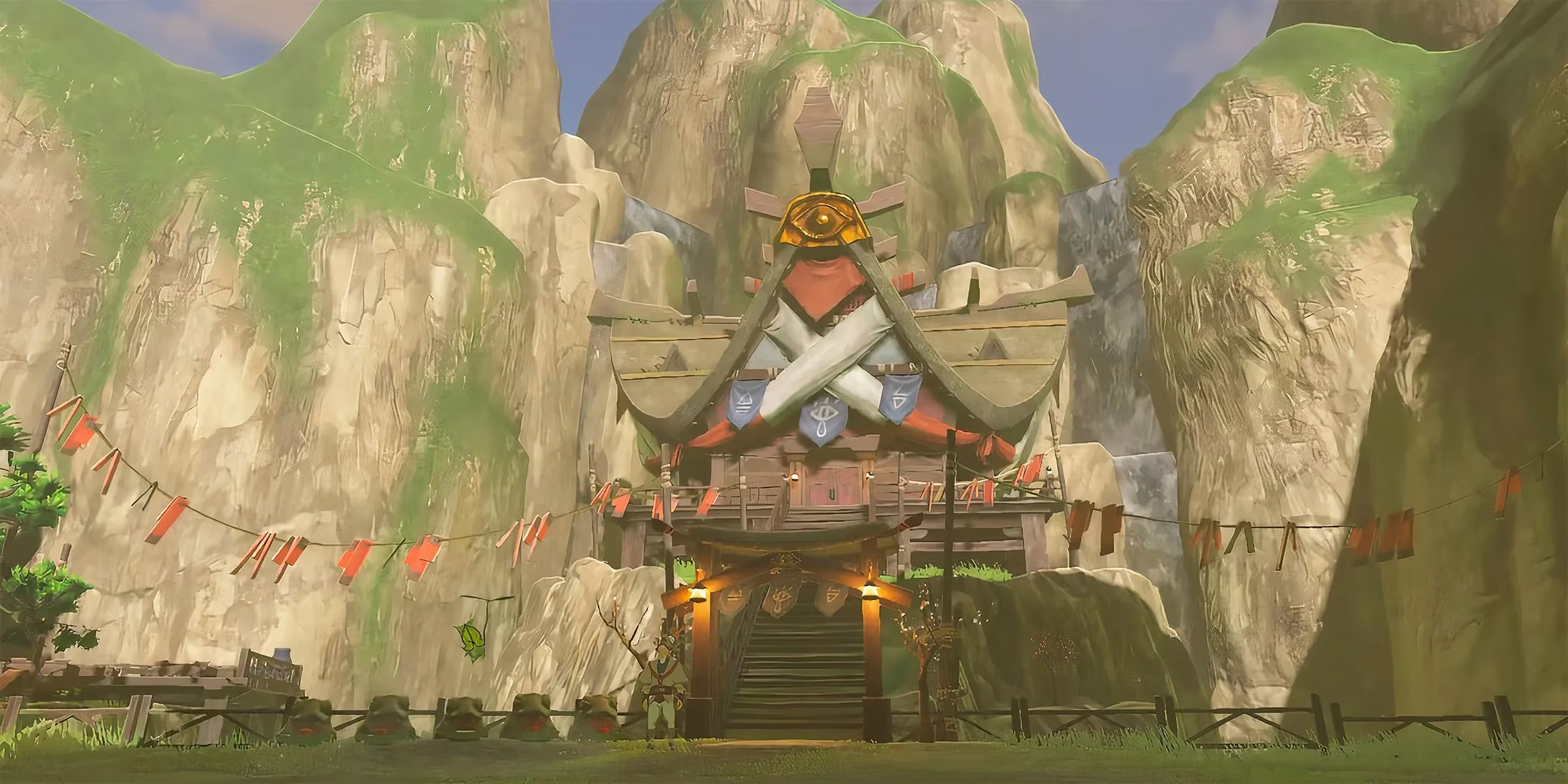 This humble settlement, introduced in Breath of the Wild and revitalized in Tears of the Kingdom, has swiftly woven itself into the fabric of the series, echoing the enduring legacy of its predecessor, Kakariko Village. Yet, Hateno's charm lies not in replication but in its unique heartbeat, inviting players to pause and breathe in its warmth amid the relentless quest for heroism.
Kakariko Village, with its recurring presence over decades, has long been a cornerstone—a peaceful refuge that anchors the narrative. In titles like Ocarina of Time or A Link to the Past, it stood as a beacon of stability, its stone pathways and guardian spirits whispering tales of resilience. But as the series evolved, so too did the need for fresh sanctuaries. Hateno Village, with its farm-like architecture and vibrant community, fills this void with an authenticity that feels almost tangible. Why does it captivate so? Perhaps it's the way villagers engage in age-old traditions, their routines unfolding like a dance: children chasing fireflies at dusk, elders sharing stories over crackling hearths. This sense of inhabitation transforms it from a mere location into a home, a place where every cobblestone seems to hum with history.
What truly sets Hateno apart is its unwavering dedication to agriculture—a theme rarely emphasized to this degree elsewhere in Hyrule. 🌾 Fields of wheat sway in harmonious unison, while vegetable patches burst with life, reflecting a pride that pulses through the village's veins. The Kochi Dye Shop stands as a testament to this, where Sayge crafts vibrant hues from local flora, turning Hateno's bounty into art. This agricultural soul isn't just aesthetic; it fosters the cozy, intimate atmosphere that envelops visitors. Unlike other settlements where farming might be a footnote, here it is the narrative itself—a celebration of growth and sustenance that mirrors the player's own journey of renewal. Future iterations must honor this essence, lest the village lose its grounding in the earth it so cherishes.
Beyond the scenery and soil, Hateno Village shines through its characters, who breathe life into its idyllic setting. Take Purah, whose arc from the ancient tech lab overseer in Breath of the Wild to the dynamic leader of Zonai research in Tears of the Kingdom exemplifies the village's role as a crucible for growth. Her transformation—once a quirky scientist, now a poised innovator—captured hearts instantly, making her a fan favorite. If Hateno recurs, her return becomes not just plausible but essential, weaving continuity into the series' rich tapestry. Imagine her guiding new discoveries from Lookout Landing, her presence a bridge between past adventures and future horizons. Such characters anchor the village in emotional depth, turning it into more than a setting—it becomes a character in its own right.
So, why should Hateno Village join the pantheon of recurring Zelda staples like Kakariko? Its popularity is undeniable, with players flocking to its shores in recent titles, drawn by its:
-
🌿 Lived-in authenticity: Residents' daily rituals create a world that feels alive and evolving.
-
🏠 Agricultural focus: A unique emphasis that enriches the series' themes of harmony with nature.
-
😊 Memorable characters: Figures like Purah add layers of personal connection and growth.
Comparatively, while Kakariko offers historical weight, Hateno injects freshness—a blend of tradition and innovation. As the series strides into 2025 and beyond, Hateno's potential to evolve while retaining its core could redefine what a village means in Zelda lore. Yet, amidst the certainty of its appeal, a question lingers: Will future iterations of Hateno Village maintain its intimate charm as it scales new heights, or will the demands of adventure dilute the very essence that makes it a sanctuary?
Details are provided by Eurogamer, a leading source for European gaming news and reviews. Eurogamer's coverage of The Legend of Zelda: Tears of the Kingdom has emphasized how Hateno Village's evolving role and agricultural focus contribute to the game's immersive world-building, setting a new benchmark for village design in open-world adventures.