
Echoes Across Eternity: Why Tears of the Kingdom Silences the Timeline
The Zelda timeline, shattered by *Tears of the Kingdom*'s Zonai origins and conflicting Imprisoning War, will never be officially updated again.
Time in the land of Hyrule is not a river but a prism, a radiant shard that splits a single light into three diverging colours. For years, the faithful have traced these beams—Child, Adult, Fallen Hero—through a sacred geometry laid down by Nintendo itself. Yet, when the dust settled over The Legend of Zelda: Tears of the Kingdom, a new, wild light poured through, so brilliant that it washed the old patterns into shadow. By 2026, it has become a quiet sorrow among scholars: the official chronology, that delicate map of myth, will likely never receive a true and proper update again.
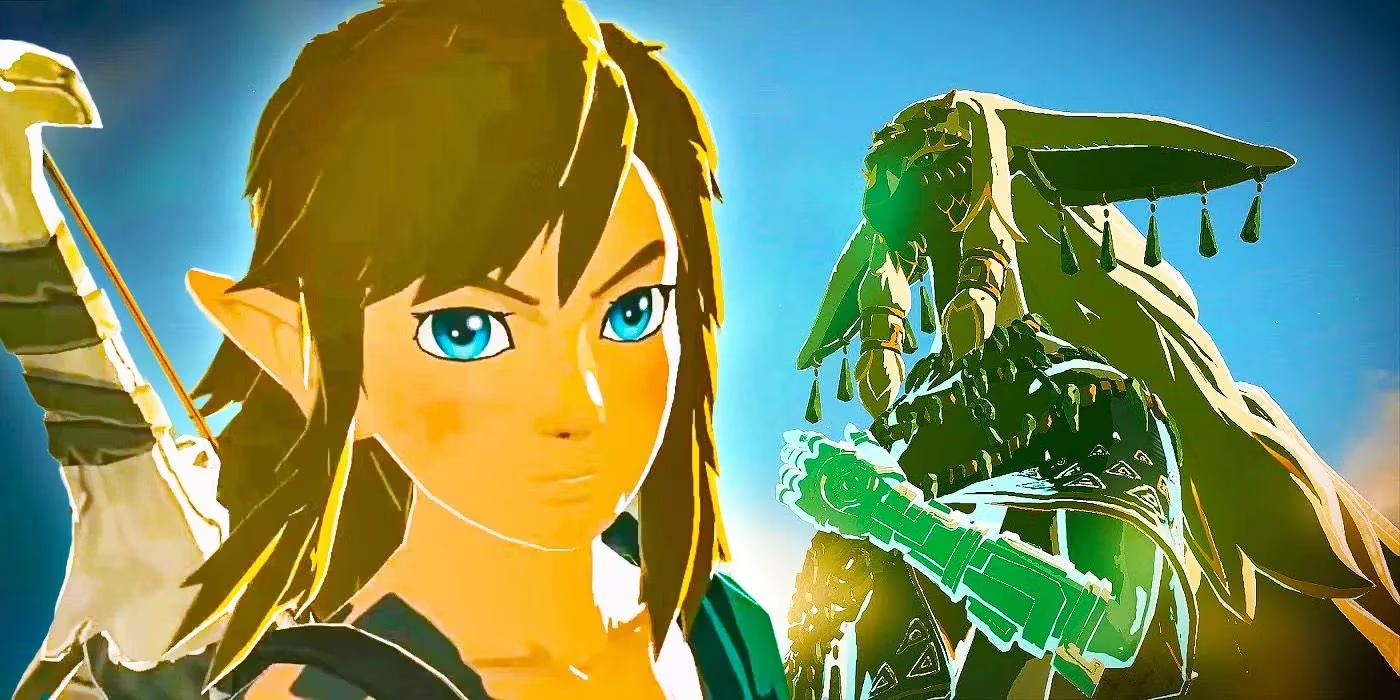
The problem was born from a sublime contradiction. Tears of the Kingdom stands as the sequel to Breath of the Wild, a game already perched like a hermit at the farthest end of all timelines, a place where memories of Ocarina of Time had faded into a gentle, universal nostalgia. To follow it should have been simple—a further step into that distant future. But the sequel did not simply walk forward; it dug a chasm into the deep past and unearthed an origin story that shattered the bedrock of what came before.
From the clouds descended the Zonai, a tribe of celestial beasts and architects, and with them came King Rauru and Queen Sonia, the proclaimed founders of Hyrule. In a breath, the ancient story told in Skyward Sword—where a Hylian goddess and her chosen hero stitched the first threads of the kingdom—became a haunted tapestry with two beginnings. Were the Hylians the first to plant the flag, or was there an older, more mystical Hyrule cradled in the arms of the Zonai? The games offer no gentle answer, only a silence that echoes. Some whisper that the Zonai kingdom might predate even the war with Demise, a realm existing before Skyloft was ever lifted into the sky. Others dream that Sonia’s bloodline connects directly to the Skyward Sword Zelda, making the Zonai a delayed revelation. Either path leads to a thicket of thorns, as the absence of the Zonai from the heavens of Hylia’s era remains a ghostly question mark.
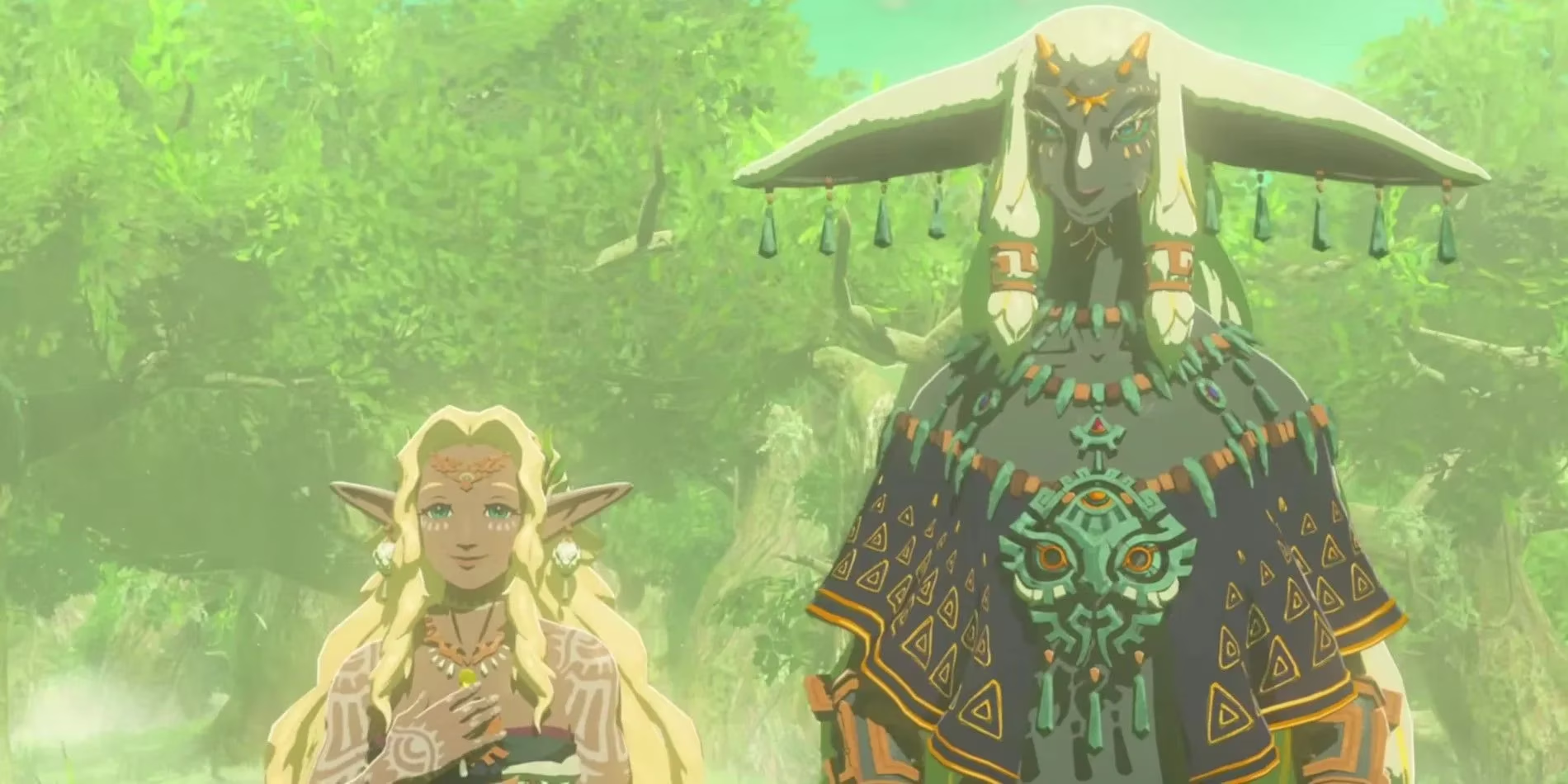
Deeper still lies the wound of forgotten names. The story of Tears of the Kingdom pivots on an Imprisoning War, a conflict where a mighty Demon King is sealed by a coalition of Sages after seizing a potent magical artifact. Yet, that very phrase, “Imprisoning War,” already belonged to another age—the conflict preceding A Link to the Past, where Ganon clawed into the Sacred Realm and grasped the Triforce. To use the same sacred title for two entirely distinct events is not an act of continuity but a poetic reimagining. It whispers that the Hyrule of the Zonai is a soft reboot, a dream that borrows the language of old myths while spinning an entirely new yarn.
It is not the ruins alone that baffle the chronologist; it is the artifacts Link unearths from across the ages. In his travels, he can don the garb of heroes from Twilight Princess, uncover Majora’s Mask still buzzing with ancient malice, and wield blades that remember the winds of the Great Sea. These treasures are undeniable proof that some version of every timeline’s saga did transpire, yet they survive only as myths stripped of their context. The world of Tears of the Kingdom treats the deeds of the Hero of Time, the Hero of Winds, and the Hero Chosen by the Gods not as history but as a collective, fading legend—a storybook where all paths are true, and none are detailed enough to draw a line upon a map.
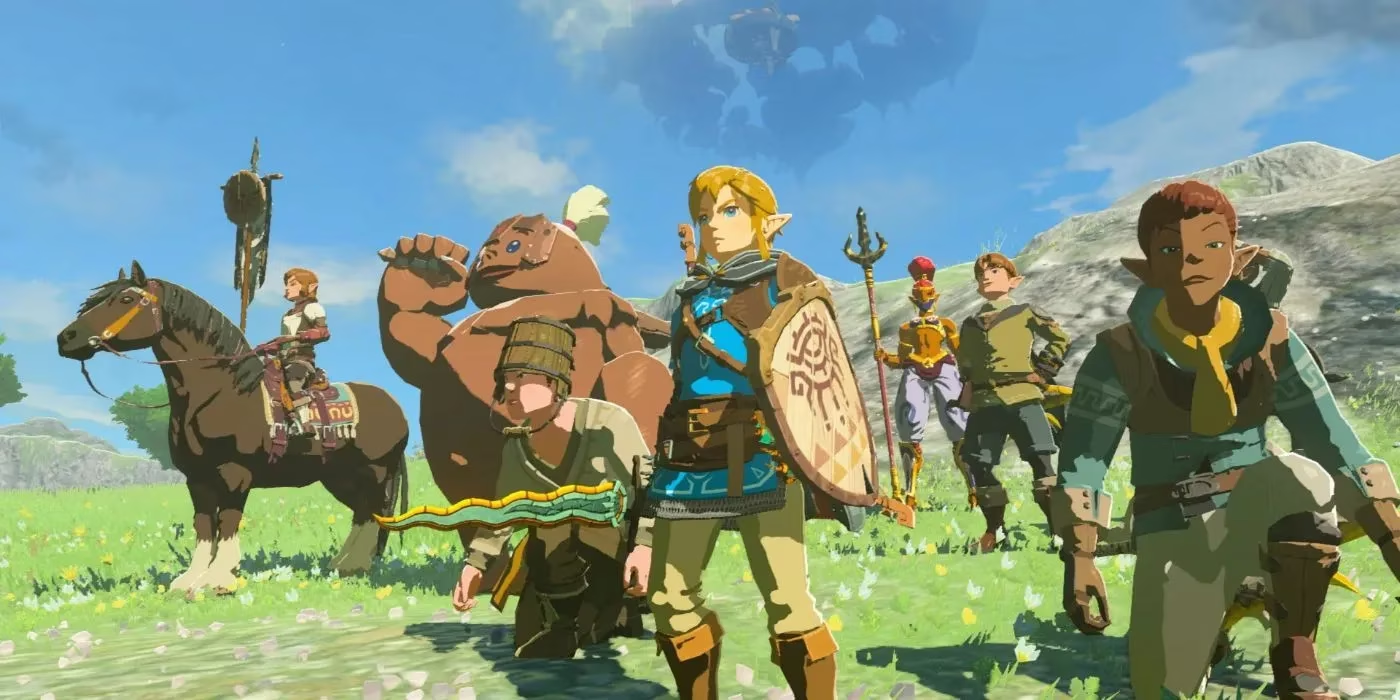
Nintendo, wise in its quietude, has already declared the timeline a living manuscript, open to interpretation and revision. Tears of the Kingdom feels like the ultimate expression of that philosophy—a sequel that embraces the full canon as a misty memory, refusing to be pinned to any single branch. It does not simply choose an ending for Ocarina of Time; it melts all three endings into a single, ambiguous past. The result is a Hyrule where the Fallen Hero, the Child Link, and the Adult Link are all equally true and equally forgotten.
Thus, by 2026, the fans who once debated with fiery passion have largely fallen into a melancholic acceptance. An official update that pins Tears of the Kingdom to the old chronology would require a divine intervention: either the Zonai must be erased from their founding role, or Skyward Sword’s sacred origin must be gently reinterpreted into a second wave of creation. The sages who sealed Ganon in two different wars with the same name must be reconciled. The very concept of a split timeline, already straining under the weight of four decades of stories, would need to fold itself into a circle where all things are true—a cosmological model more akin to myth than to history.
And perhaps that is the haunting beauty of it. The Zelda timeline was never meant to be a perfect clockwork. It was a song sung by different voices over generations, each adding a verse. Tears of the Kingdom sings its verse so powerfully, so exquisitely, that it overflows the margins of the page. The light of the Zonai does not fit into the old spectrum; it demands a new colour, one that makes the previous rainbow look like a mere fragment of a grander, invisible spectrum. So the timeline remains, not updated, but transfigured—a broken mirror whose shards reflect an infinite, unreachable legend. No official pen will ever draw a straight line through these waters, because the beauty lies now in the reflection, not the riverbed.