
Controversial Mechanics in The Legend of Zelda Series: A Personal Reflection on Divisions and Innovations
The Legend of Zelda mechanics and fan debates ignite passionate discussion, revealing thrilling innovation and divisive changes in the series.
As a lifelong fan of The Legend of Zelda, I've witnessed firsthand how Nintendo's bold experiments with the series' core formula have consistently sparked passionate debates within our community. While the heart of the adventure—a hero, a princess, and a great evil—remains timeless, the journey itself has undergone radical transformations that have both thrilled and alienated players. Looking back from the vantage point of 2026, I can't help but reflect on the mechanics that became the most divisive flashpoints, shaping my own experiences and the very identity of what a Zelda game can be.
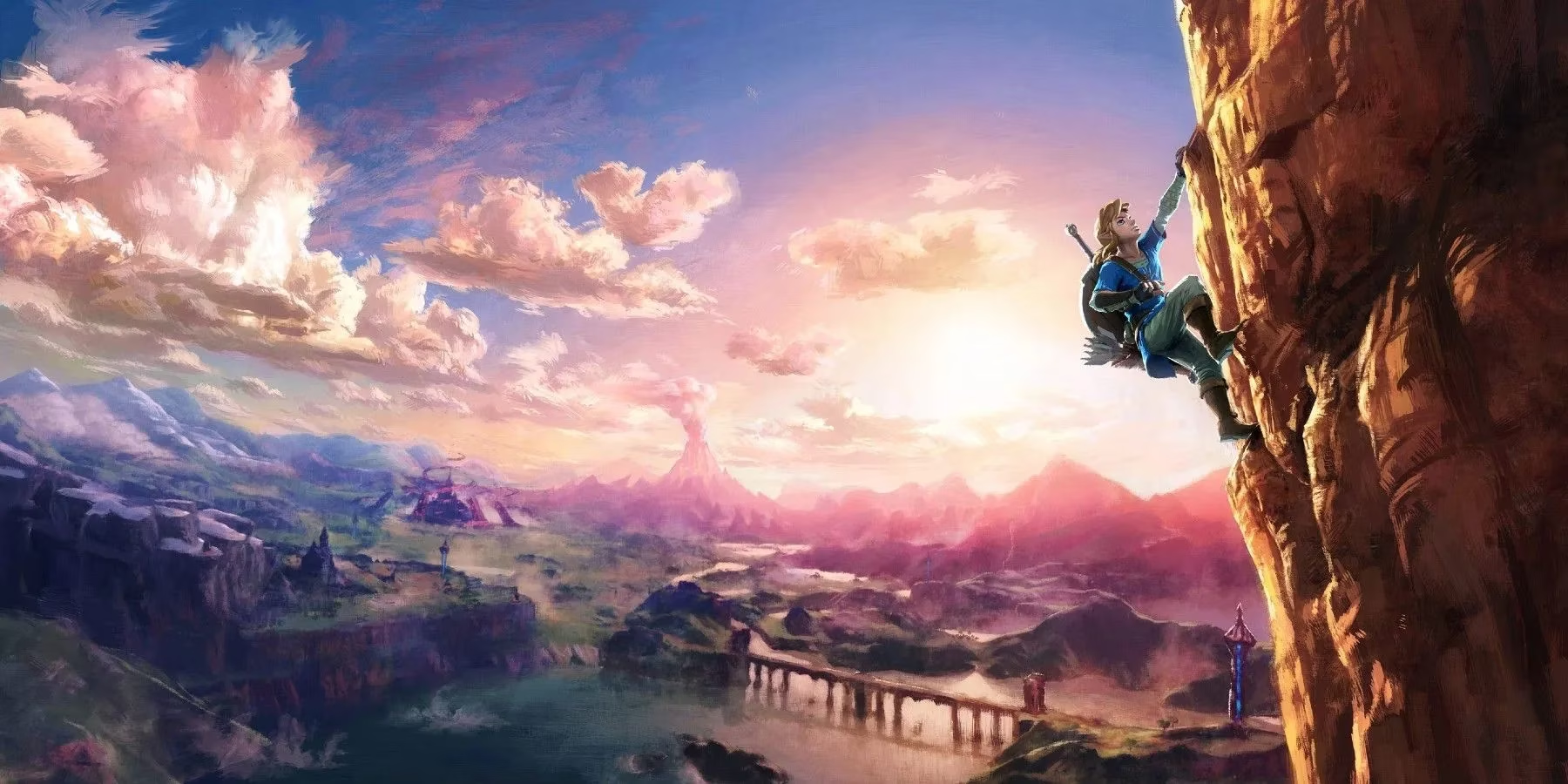
The seismic shift truly began with Breath of the Wild. For me, the ability to climb almost any surface was a revelation. It was the ultimate expression of freedom, turning the entire world into a puzzle of stamina management and vertical exploration. I remember the exhilaration of finally reaching a distant peak after judiciously upgrading my stamina wheel. Yet, I completely understand the other side of the argument. For many, this mechanic dismantled the carefully crafted, guided exploration that defined classics like Ocarina of Time. The constant stamina drain could feel punishing, and some argued it replaced thoughtful dungeon design with sheer, sometimes tedious, physical traversal. It was a clear break from tradition, and the fanbase's reaction was a perfect microcosm of the series' ongoing tension between innovation and preservation.
This tension is nothing new. Long before Hyrule went open-world, Majora's Mask presented us with its infamous three-day cycle. I have a deep, nostalgic love for the oppressive, melancholic atmosphere it created. The ticking clock made every interaction feel urgent and meaningful. However, I must admit, even for me, it could be incredibly stressful. The pressure to reset time just as you were making progress in a dungeon was a unique form of agony. It's a mechanic that demands a specific mindset—one that either draws you into its unique rhythm or pushes you away entirely. It's no wonder it remains one of the most polarizing entries.
Sometimes, the simplest changes cause the biggest stirs. The very act of jumping became a point of contention. In most Zelda games, Link's movement is grounded; jumping is contextual or automatic. But in titles like The Adventure of Link and the remake of Link's Awakening, a dedicated jump button appeared. To some, this felt like a betrayal, veering too close into Super Mario territory and disrupting the deliberate, puzzle-box exploration. For others, including myself when I revisited these games, it added a welcome layer of precise platforming that the top-down perspective could accommodate surprisingly well.
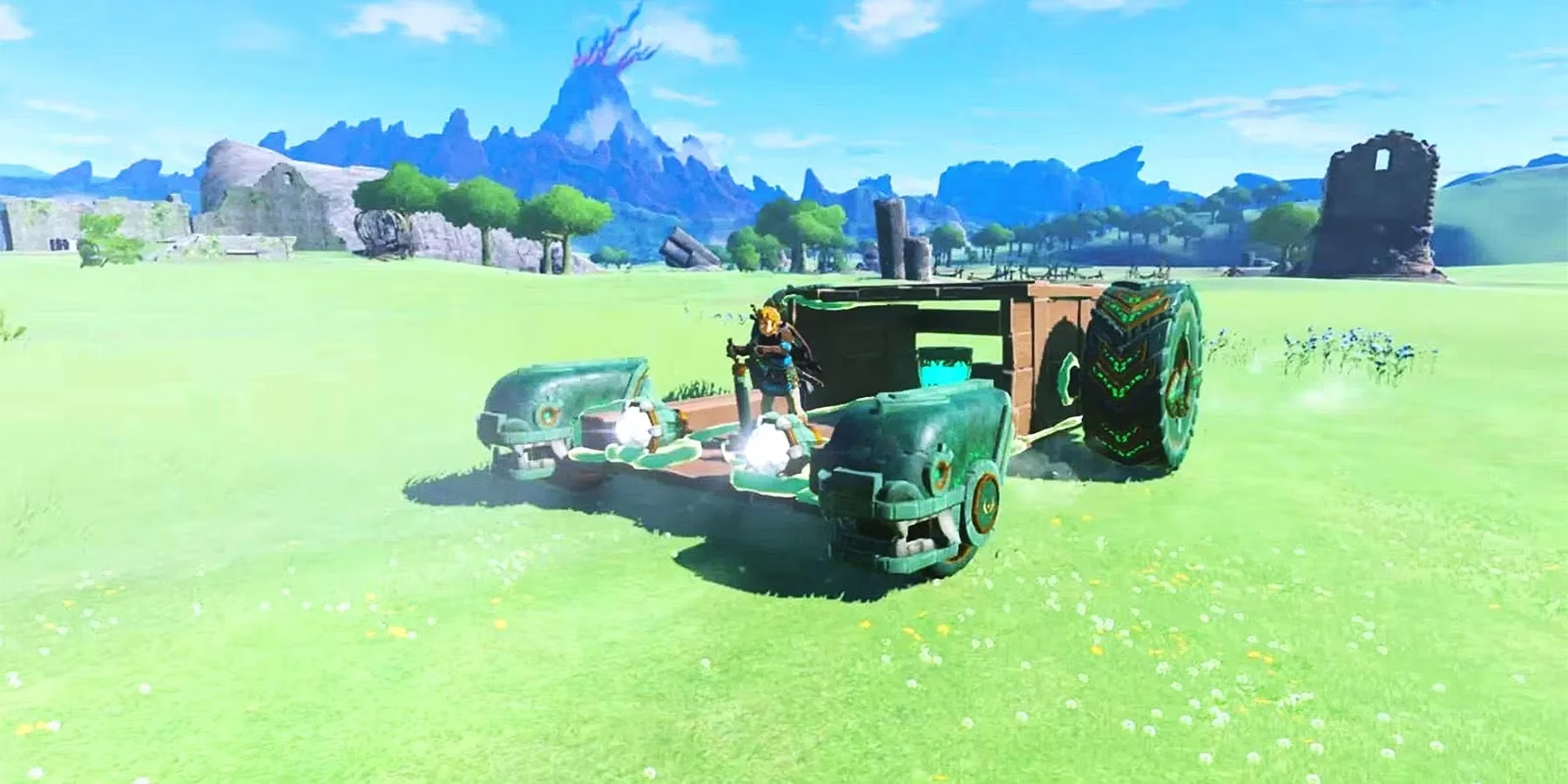
The debate around player freedom reached its zenith with Tears of the Kingdom. The Ultrahand ability was a sandbox dream. I spent countless hours in 2023 and beyond engineering absurd vehicles and contraptions, marveling at the game's robust physics. Yet, I've spoken with friends who found this very openness to be paralyzing. They missed the clearer structure and bespoke puzzle solutions of older titles, arguing that when you can build anything, the developer's crafted challenges can lose their intended impact. It highlighted a fundamental question: does ultimate creativity enhance the Zelda experience, or does it dilute it?
Perhaps no mechanic from the modern era is as universally debated as weapon durability from Breath of the Wild. Here's my conflicted take:
-
The Pro Argument: It forced me to experiment. I used weapons I would have never touched in a traditional game, learned to use the environment as a weapon, and felt a real sense of scarcity and survival.
-
The Con Argument: Nothing was more frustrating than having my favorite sword shatter against a Lynel's hide, leaving me scrambling. It could disrupt the flow of combat and make treasure feel temporary rather than rewarding.
This mechanic, alongside the introduction of deep RPG-style armor and character upgrades, marked a significant shift. While I enjoyed hunting for materials to upgrade the Champion's Tunic, I know players who felt it added unnecessary grind and menu management to a series once praised for its elegant simplicity.
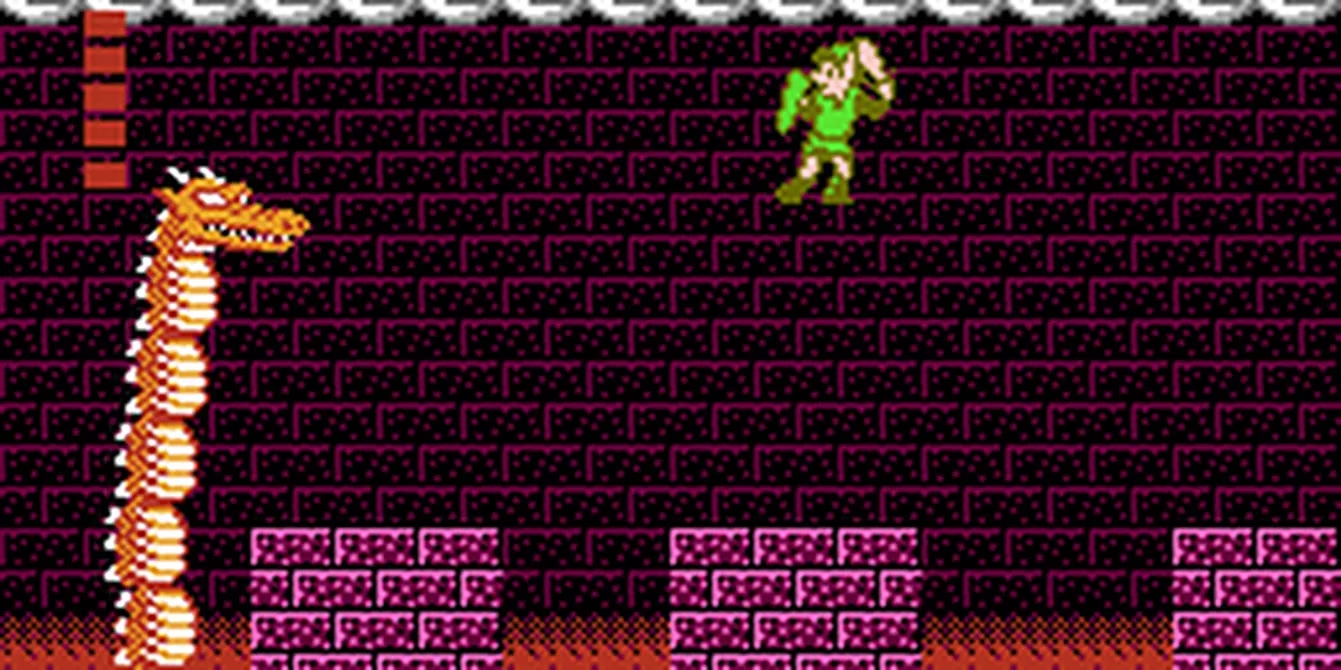
Looking back further, entire structural choices have split opinions. The side-scrolling segments in games like The Adventure of Link and Link's Awakening were a stark departure. For purists, this was a step too far from the franchise's roots. For me, they represented Nintendo's willingness to cross-pollinate ideas from its other iconic series, creating memorable hybrid moments. Similarly, the motion-controlled combat of Skyward Sword was a gamble. When it worked, I felt like I was truly dueling, directing Link's sword swings with my own hand. When it failed to register correctly, it led to moments of pure frustration that a traditional button input would have avoided.
Even within the hallowed dungeons of the series, division exists. The Water Temple in Ocarina of Time is legendary, not just for its difficulty, but for the discourse it generates. Changing the water levels was, in my view, a masterclass in layered, interconnected puzzle design. For others, it was a confusing, backtrack-heavy chore. This debate extends to newer designs like the physics-based puzzles of the Divine Beasts, which some found brilliantly open-ended and others found lacking the thematic cohesion of classic dungeons.
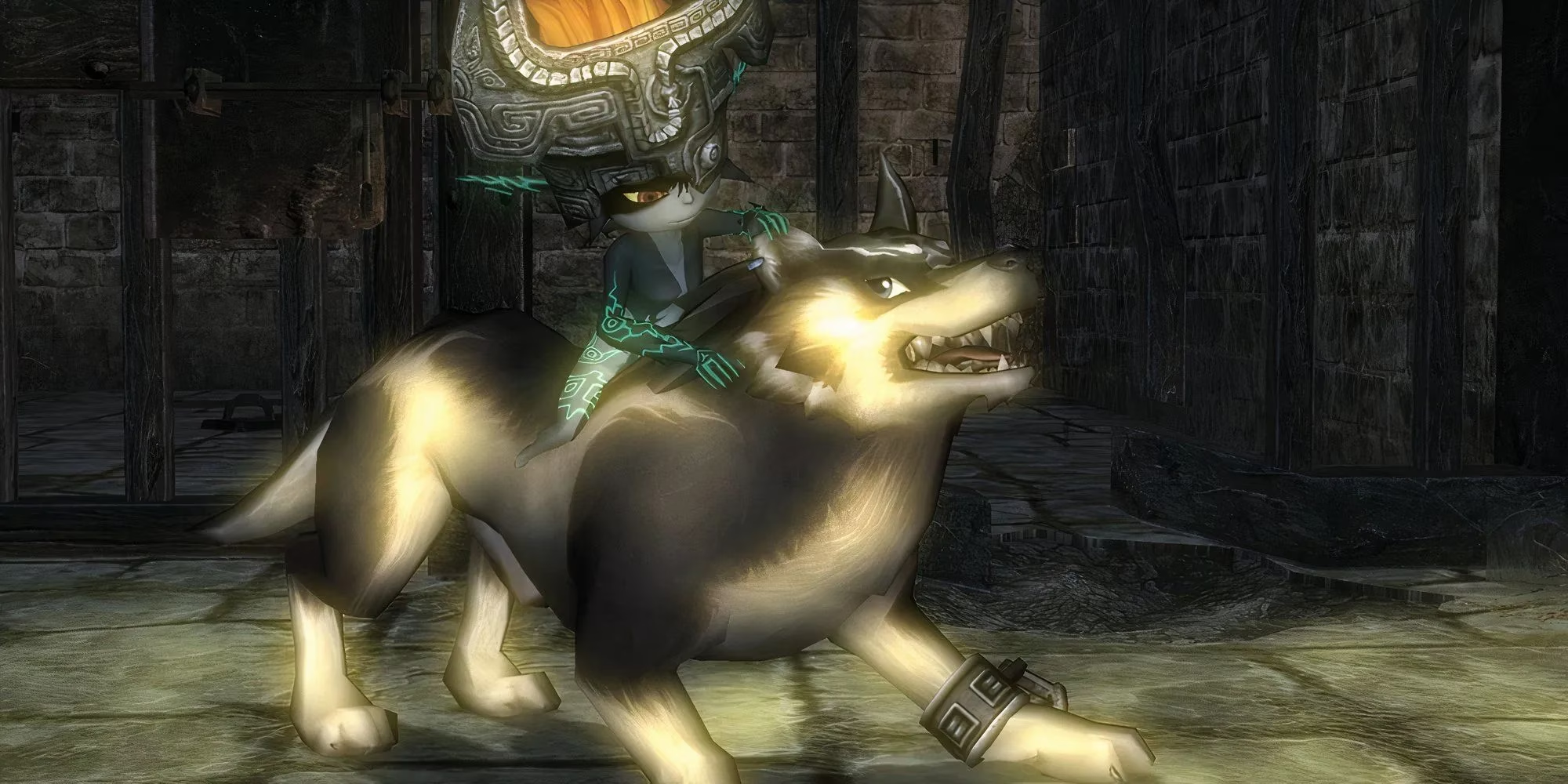
Finally, narrative and tonal shifts have their own divisive power. Twilight Princess and its use of Wolf Link perfectly encapsulate this. I adored the darker aesthetic and the variety Wolf Link brought, especially in the eerie Twilight sections. Yet, I concede that the wolf gameplay could become repetitive, and the potential for more complex mechanics in that form felt untapped. It was a bold swing that landed powerfully for some and felt undercooked for others.
Reflecting on all this from 2026, I see a clear pattern. The Legend of Zelda's greatest strength and its greatest source of internal conflict are one and the same: its relentless refusal to stand still. Every divisive mechanic—from climbing to breaking swords, from three-day cycles to magic glue—represents a risk. For every player like me who embraced the new freedom, there was another who longed for the familiar structure. This ongoing dialogue between tradition and revolution isn't a weakness of the series; it's the proof of its vibrant, passionate life. It ensures that every new release isn't just a game, but an event that challenges our very definition of what a Zelda adventure should be. The debates will undoubtedly continue, and as a fan, I wouldn't have it any other way.