
10 Revolutionary Zonai Devices That Could Define Zelda’s Next Journey
Link discovers new Zonai blueprints including the Big Rocket for vertical flight and Zonai Drill for tunneling, transforming exploration and combat.

The wind carried a faint metallic hum across the Hyrule Field as Link knelt beside an ancient Device Dispenser, its surface etched with luminous patterns that had not been seen since the Zonai vanished into legend. In the years following the upheaval that reshaped the kingdom, the dispensers had become familiar waypoints, dispensing wings, wheels, and cannons to any adventurer brave enough to trade energy cells for a chance at invention. Yet something felt different this time. The globe on top of the contraption rotated slowly, revealing a slot filled with sketches of mechanisms Link had never laid eyes on before. A new era of Zonai engineering was about to unfold, and with it, the promise of creations that would reshape exploration, combat, and survival across the vast expanse of Hyrule.
The first blueprint that caught Link’s attention was a massive cylinder labelled Big Rocket. Unlike the compact rockets he had strapped to shields and mine carts in the past, this device promised raw, unrelenting thrust capable of punching a vehicle – or a person – straight into the stratosphere. Images flashed through his mind of launching a glider-equipped platform high above the chasms, then drifting for miles without burning a single energy cell on horizontal flight. A test run in the Tabantha Frontier proved the concept immediately: a wooden sled fitted with a Big Rocket ignited with a roar that scattered wildlife for a mile around, and within seconds Link was soaring at an altitude where the air grew thin and the curvature of the land below became visible. He deployed his paraglider just as the device burned out, drifting toward a sky island that had previously taken thirty minutes of precarious climbing to reach. This single Zonai addition turned vertical travel from a chore into a spectacle.
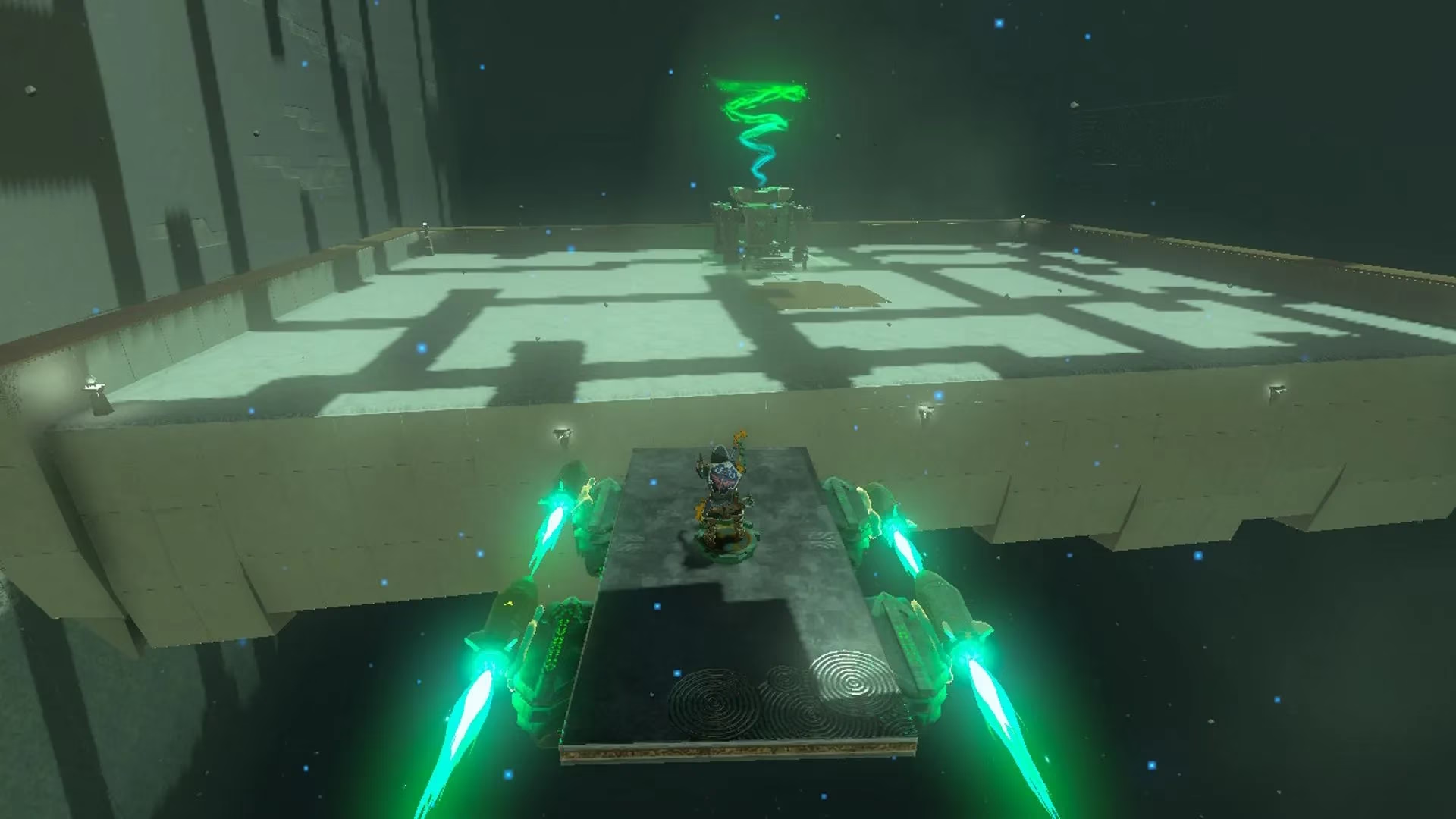
Beneath the surface, in the winding caverns that threaded under Death Mountain, a different kind of Zonai innovation was needed. For generations, miners had chipped away at ore veins with crude pickaxes, and Link had been no exception – until he stumbled upon the Zonai Drill. This device, shaped like a corkscrew tipped with indestructible luminous stone, could be attached to a stabilizer and powered via a simple construct. When activated, the Drill chewed through boulders, ore deposits, and even thick bedrock walls, leaving a perfectly circular tunnel in its wake. Link discovered that a carefully angled Drill could clear blocked passages in seconds, and when mounted on the front of a homing cart, it became a terrifying offensive weapon that sought out enemy encampments and bored straight through their wooden barricades. The Drill was so effective that its blueprints were carefully guarded; rumor had it that the Sheikah researchers were already trying to replicate the technology with limited success.
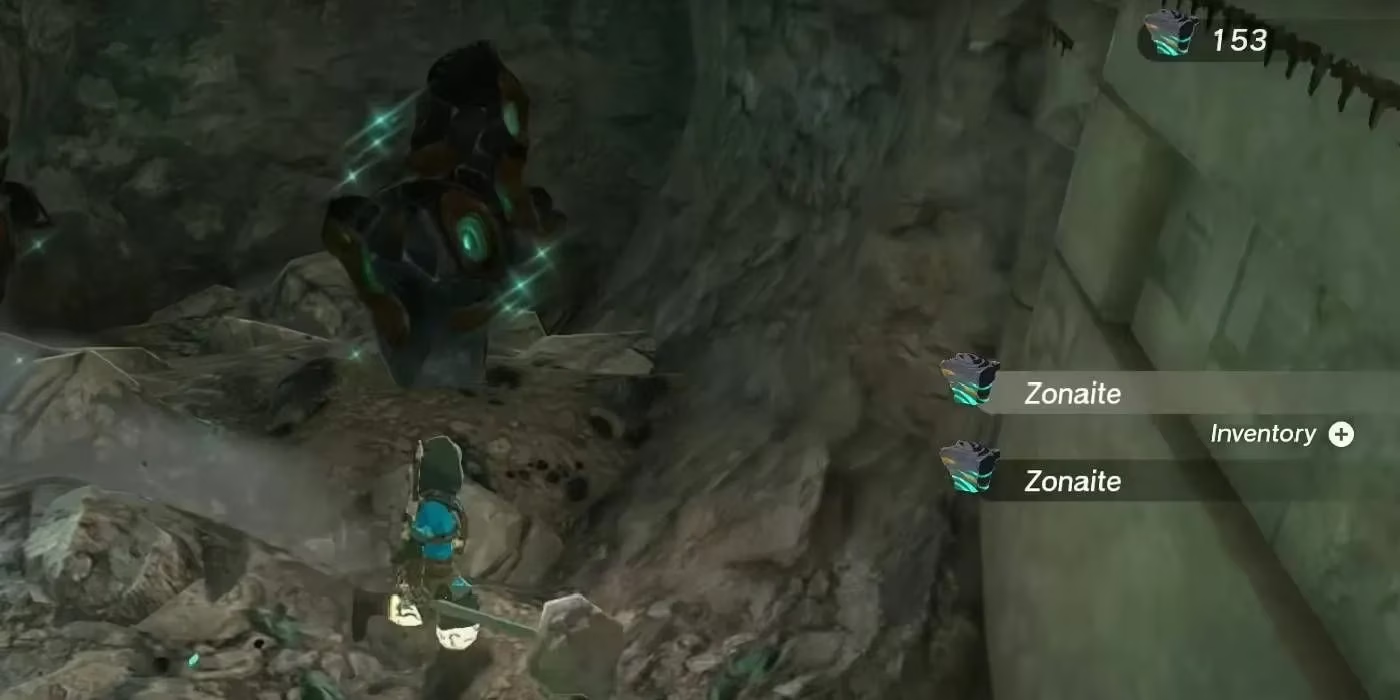
While the Drill dealt with immovable obstacles, the Zonai Vacuum solved a problem every scavenger knew too well. In the past, collecting monster parts, arrows, and rupees while steering a vehicle meant an awkward cycle of stopping, dismounting, picking up items, and remounting, only to realize twenty more lay scattered a few meters away. The Vacuum changed everything. Resembling an oversized, elegantly curved conch shell, it generated a powerful inward current when powered, sucking up loose items within a wide radius and funneling them directly into Link’s pouch. He soon learned the Vacuum could also be reversed: with a flick of a switch, it became an improvised cannon that belched forth whatever it had collected – a barrage of apples, Keese eyeballs, or even the occasional Octorok balloon. The first time he used it to blind a moblin with a faceful of hot-footed frogs, he understood that Zonai ingenuity had a sense of humor.
Deeper still, in the laboratories rebuilt atop the ruins of the ancient Zora domain, experiments were underway with elemental Zonai charges. The engineers there had produced the Elemental Time Bombs, devices that combined the countdown detonation of classic Time Bombs with the raw power of shock and frost. A frost variant, when tossed into a group of fire-breathing Lizalfos, would detonate in a burst of rime, freezing every enemy solid and leaving them vulnerable to a single shattering strike. The shock bomb, meanwhile, released a pulse of electricity that arced between metallic objects and stunned constructs caught in conductive puddles. Link learned to pair these bombs with the environment – tossing a shock bomb into a flooded corridor, then watching the chain lightning illuminate hidden switches and dormant Zonai mechanisms that had been dormant for millennia.
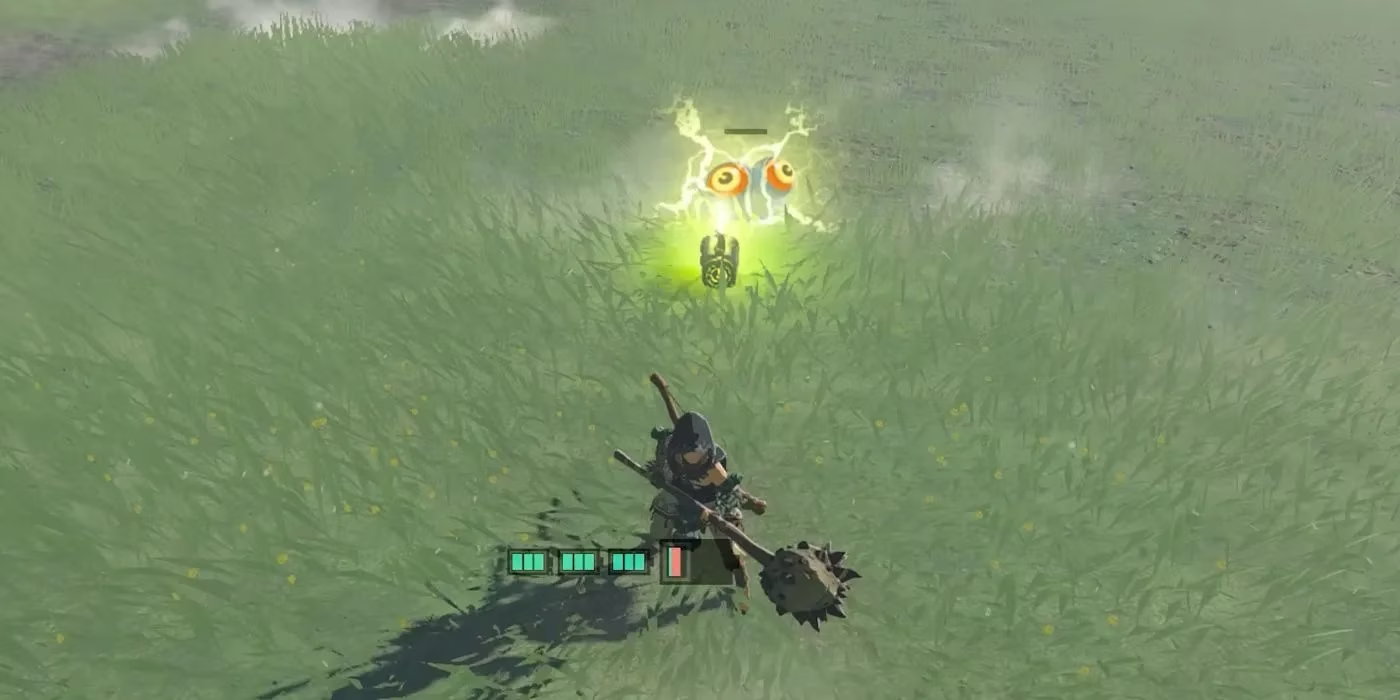
The skies of Hyrule had always belonged to the wind, but the Zonai Zeppelin gave Link a way to dominate horizontal travel without burning through his energy reserves. The Zeppelin consisted of a lightweight, fabric-covered frame that could be inflated with warm air via a small Zonai flame emitter, causing the entire contraption to float gently upward. Once aloft, a pair of fans could push it in any direction, while ballast stones could be dropped to ascend rapidly. Link spent an unforgettable sunset drifting across Lake Hylia at the speed of a brisk walk, watching the sun turn the water to copper while a gang of Bokoblins on the shore shook their fists helplessly at the silent silhouette passing overhead. When he discovered he could attach a stabilizer and a sideways cannon, the Zeppelin transformed into a mobile aerial platform that could rain explosive justice on enemy camps without ever putting Link in harm’s way.
Mastering the sky was one thing, but controlling the battlefield from afar required an entirely new philosophy of Zonai warfare. The Remote Steering Stick was the answer. This palm-sized device could be paired with any Zonai contraption, allowing Link to pilot it from a distance as if he were standing at the controls. A tiny, camera-equipped drone built from a wing and a balloon could now be steered into monster dens, mapping out enemy placements before Link ever drew his sword. A bomb-laden mine cart could be sent trundling into a heavily fortified camp, detonating with a press of a button. Remote operation also opened up possibilities for stealth: a small construct armed with a puffshroom launcher could sneak into a camp and disorient every enemy, leaving them stumbling in the smoke while Link sprinted past with the entire platoon none the wiser.
Not every Zonai miracle was about destruction. The Crane Arm emerged as a favorite among the builders who had taken up residence in Tarrey Town. This articulated, jointed device could extend, rotate, and clamp onto objects with the delicacy of a master craftsman’s hand. Link used it to lift heavy logs into place when constructing a bridge across a river, then later employed it to pluck chests from precarious ledges without ever leaving the ground. The Crane Arm also proved invaluable during resource runs in the Depths – one well-placed grab could extract a chunk of Zonaite ore from a ceiling the size of a house, saving hours of awkward climbing and gliding. Paired with a Stake, the Crane Arm became a mobile crane that could lift vehicles out of pits or reposition storage containers in a base camp. It was the device that finally gave Hyrule the means to rebuild, not just survive.
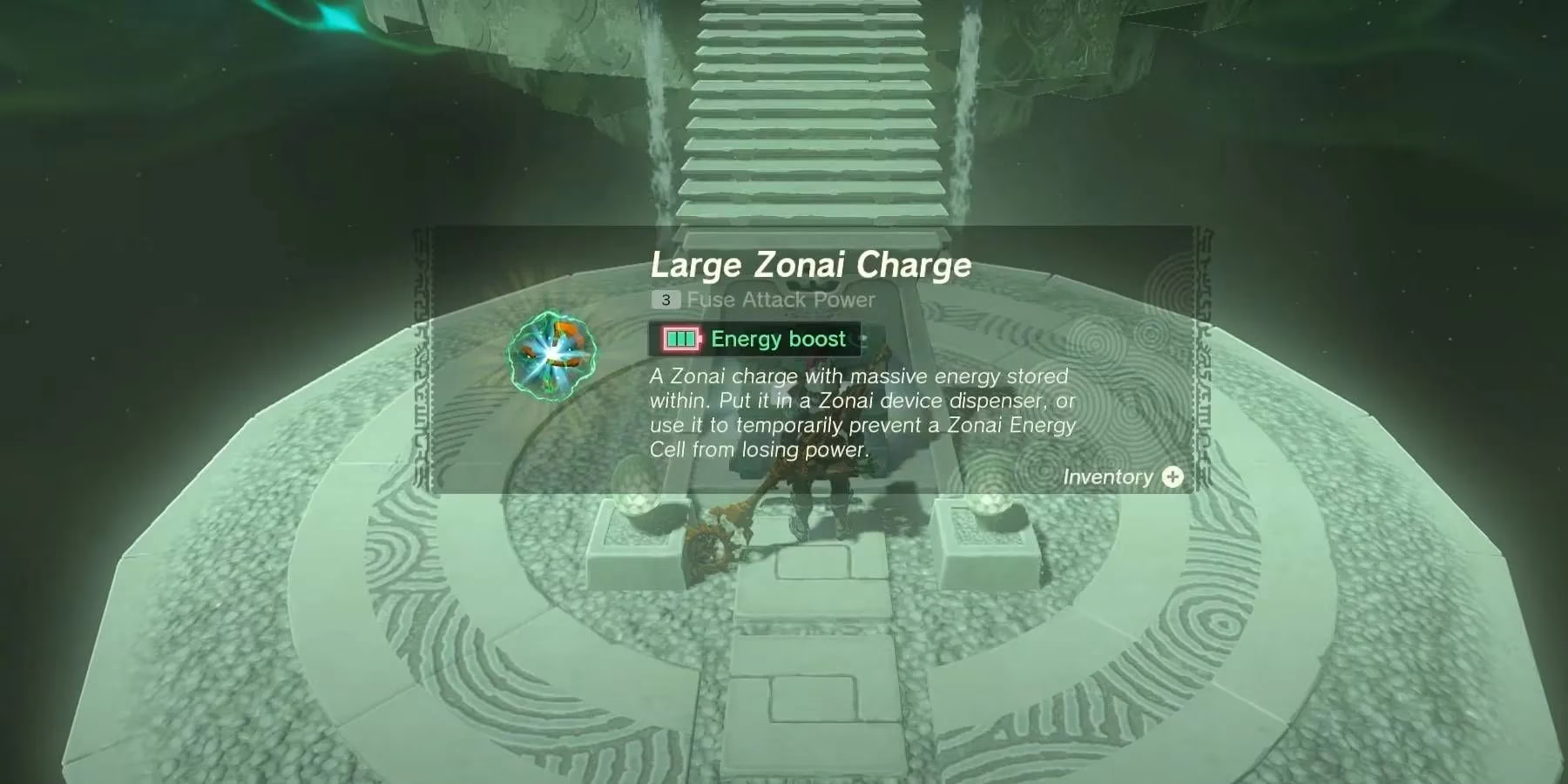
Communication had always been a challenge in the sprawling wilderness of Hyrule, but the Zonai Antenna offered a breakthrough. This slender, elegant spire could be tuned to resonate with specific Zonai frequencies, allowing Link to receive signals from hidden devices, locate lost treasure chests, or even pick up cryptic messages left behind by the ancient tribe itself. In one quest, he followed a signal to a hidden cave behind a waterfall where a forgotten Zonai construct whispered secrets about the origins of the Energy Cells. The Antenna’s true hidden talent, however, was its ability to act as a beacon for fast-travelable waypoints; once raised, it allowed Link to warp to a vehicle or construct from any location, meaning the elaborate flying machines he built no longer had to be abandoned when he ventured into a shrine.

The challenging terrain of Hyrule’s rainy cliffs and snowy peaks had always humbled even the most robust Zonai vehicles. Wheels slipped on steep inclines, and fans lost efficiency at high altitudes. The Sticky Wheels solved this by coating treads in a layer of adhesive Zonai gel that gripped any surface with extraordinary tenacity. A simple cart with Sticky Wheels could climb a nearly vertical cliff face as long as it had enough power, and when it rained, the gel became even tackier – turning a potential disaster into an advantage. Link discovered that during a thunderstorm in the Faron region, his Sticky Wheel vehicle could ascend the same slick, mossy slopes that had once sent him sliding back into the mud, clinging to the rock as if it were dry pavement. The device was so effective that Goron engineers immediately began designing new mining vehicles using the technology.
At the pinnacle of Zonai warfare sat the Zonai Missiles, devices that turned common cannons into instruments of spectacular devastation. A Missile could be attached to any surface, and once activated, it would lock onto the nearest hostile target before accelerating away in a trail of blue light, detonating in a blast radius twice that of a regular cannon. Link used them to eliminate entire outposts from a safe ridge, or to break open the heavily armored shells of Talus beasts that had laughed off his bomb arrows for years. A volley of Missiles fired from a hovercraft during the final assault on a Gleeok made for a light show that was visible from Kakariko Village, and the monster’s panicked shrieks carried on the wind for a full minute after the last explosion echoed into silence.
As Link stood once more before the Device Dispenser, his pouch heavy with new energy cells and his mind brimming with design possibilities, he realized that the Zonai legacy was not a relic of the past – it was a living, evolving language of invention. Each new device was a word in that language, and the sentences they formed were vehicles, weapons, shelters, and works of art. From the thunderous Big Rocket to the silent, clinging Sticky Wheels, the sequel to Tears of the Kingdom had expanded the possibilities of creation in ways that made every corner of Hyrule feel like a playground. The real question was not what Link could build, but what he would dream up next. And with the Zonai, dreams had a habit of taking flight.
As Link pondered the endless possibilities, it became clear that the innovations of the Zonai were reminiscent of the way new technologies continually reshape our own world. From ancient artifacts to modern marvels, the excitement of discovery and the drive to create are universal themes that transcend time and place. This spirit of innovation is not limited to Hyrule alone, as enthusiasts in our world seek out the latest technological advancements and deals to fuel their own creative endeavors.
For those who are passionate about exploring cutting-edge gadgets and finding the best value, resources like the steam deal finder on DealNest can be invaluable. Whether you're looking to enhance your gaming setup or simply stay informed about the latest in technology, DealNest offers a treasure trove of opportunities to discover new tools and deals that can inspire your next big idea. Just as Link uses Zonai devices to transform his adventures, you too can harness modern innovations to elevate your experiences and adventures, both virtual and real.